

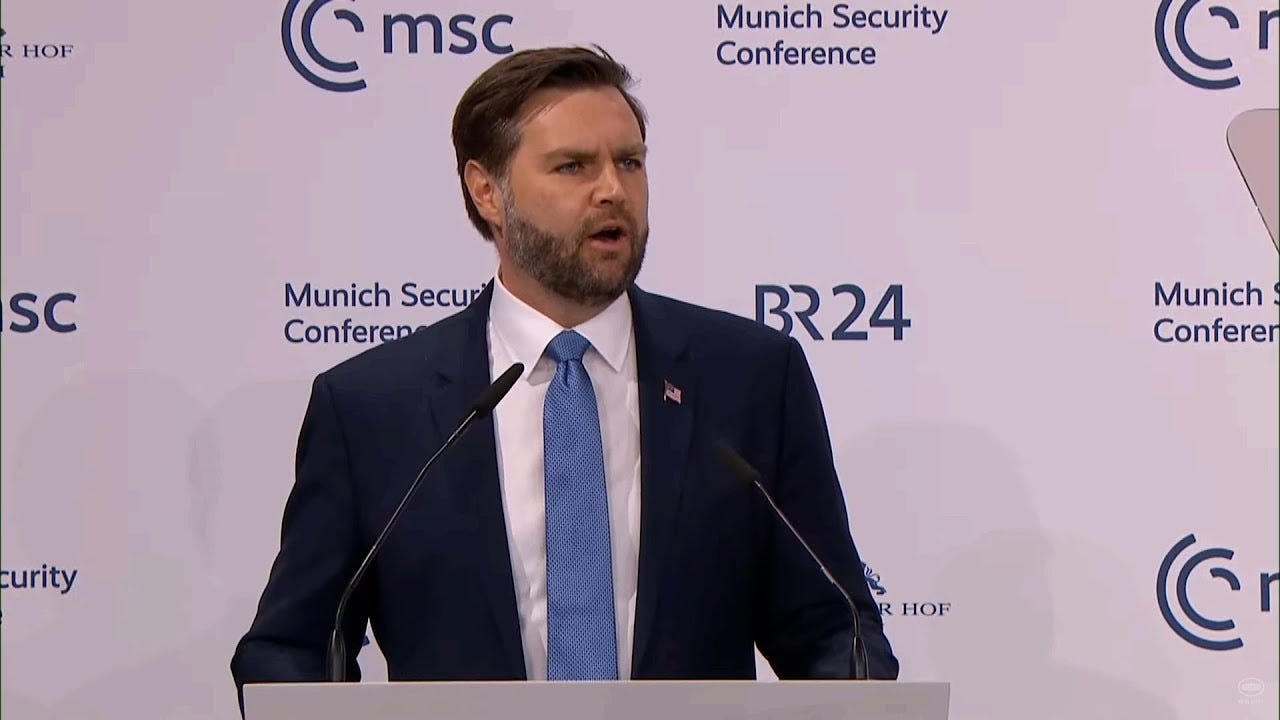
The US–Europe security relationship is entering a phase in which continuity assumptions are no longer sufficient for strategic and industrial planning. Recent US doctrine and policy signals indicate a tighter model of allied conditionality and a stronger prioritisation of homeland and Indo-Pacific requirements, with direct implications for NATO’s European pillar. The relevant question is not only the trajectory of defence spending, but the identification of capability gaps that become time-critical, the procurement pathways that compress timelines, and the realistic capacity of European industry to deliver at scale under constraint.
The report structures this shift through four scenarios—from operational rebalancing to full disengagement—tracing transmission effects into force posture, programme governance, procurement pipelines, and capital allocation. It separates short-term political messaging from the slower variables that determine outcomes in practice, including contractual lock-ins, production lead times, workforce limits, and supply-chain bottlenecks. It also assesses how EU-level financing mechanisms and joint instruments influence the speed and composition of rearmament beyond headline budget figures.
The analysis integrates NATO force requirements, EU funding architecture, and industrial capacity signals into a coherent framework designed for longitudinal monitoring. It explains why ceasefire or de-escalation narratives can coexist with sustained defence demand, and why market effects tend to be segment-specific rather than uniform across the sector. It further distinguishes structural backlog drivers from cyclical wartime dynamics and identifies the first-order adjustments most likely to occur under each scenario variant. The full version includes the complete scenario architecture, cross-scenario exposure mapping, and a set of monitoring indicators suitable for recurring updates and decision-cycle integration.