

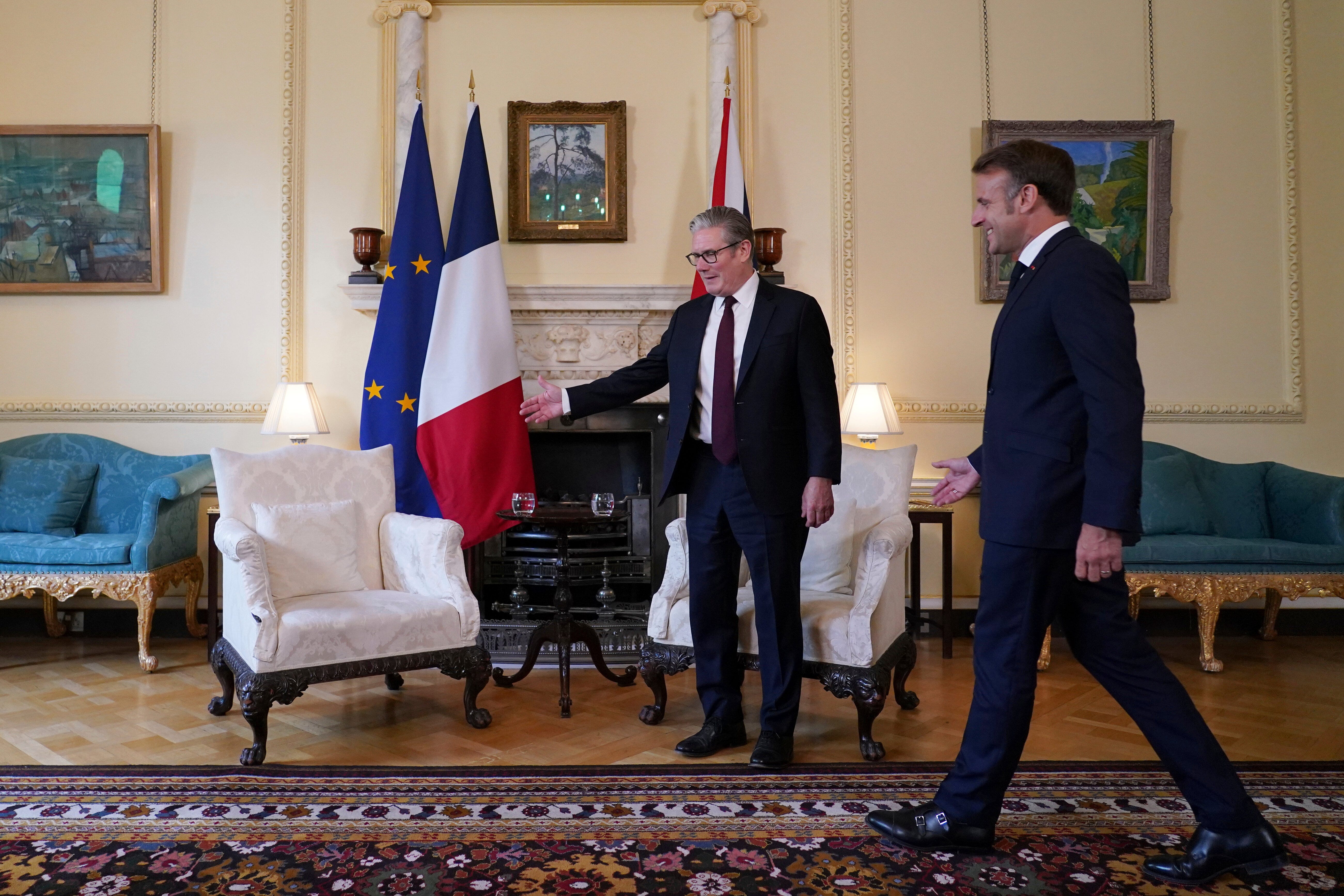
The United Kingdom and France have signed a new defence agreement that marks a significant step forward in bilateral military and industrial cooperation. At the centre of this renewed partnership is the joint commitment to develop the next generation of deep strike and anti-ship missiles, replacing the Storm Shadow cruise missile—one of Europe’s most effective long-range precision weapons. This initiative will support 1,300 highly skilled jobs in the UK and strengthen domestic production capabilities at MBDA’s site in Stevenage, where the current Storm Shadow line will also be upgraded. The move reflects a broader strategy to use defence procurement not only to enhance military capability but also as a driver for national economic growth.
Beyond industrial collaboration, the agreement also redefines nuclear cooperation between the two nations. For the first time, a formal declaration affirms that the British and French nuclear deterrents—though independent—can be coordinated in response to extreme threats to European security. This new understanding signals to adversaries that any aggression against either country may trigger a unified response from both nuclear powers. As Europe’s only nuclear-armed states, the UK and France underscore their role as the backbone of NATO’s deterrence posture, while also committing to uphold the global non-proliferation regime through coordinated research and development.
The partnership is embedded in a broader framework of military integration known as the Combined Joint Force (CJF). Under the Lancaster House 2.0 declaration, the UK and France will now establish a deployable UK-French Corps, capable of commanding large-scale operations with thousands of troops. This is the highest level of ground force coordination ever planned between the two countries. The CJF will also, for the first time, incorporate space and cyber domains into its operational structure. This means that joint forces will be able to draw on satellite, electronic, and digital data in real time, enhancing battlefield awareness and responsiveness across land, sea, air, and beyond.
The agreement also includes a series of ambitious new weapons development programmes. These range from advanced air-to-air missiles for the RAF’s fighter fleet, to high-powered radiofrequency weapons capable of disabling drones and missiles. A specific area of focus is the application of artificial intelligence to missile and drone systems, enabling synchronized strikes and autonomous targeting. This reflects a growing recognition that technological superiority—particularly in AI and electronic warfare—is key to maintaining operational advantage. These programmes are designed to ensure interoperability across NATO and boost Europe’s defence industrial base.
Lastly, the agreement reaffirms the UK and France’s joint leadership within NATO and the broader “Coalition of the Willing” supporting Ukraine. Both countries have committed to further developing NATO’s integrated air and missile defence architecture through the UK-led DIAMOND initiative, which seeks to improve the interoperability of Allied defence systems. This set of commitments signals a shared determination to strengthen European defence capacity, deter potential adversaries, and ensure that Europe is prepared to respond collectively to future crises. By aligning defence policy with industrial strategy, the UK and France are positioning themselves as central pillars of European and transatlantic security.
Sources
New Storm Shadow and missile cooperation to boost jobs as UK and France reboot defence relationship