

The growing military threat posed by Russia and the parallel strategic decoupling from U.S. security guarantees are prompting a significant transformation in Europe’s defense architecture. In this context, the United Kingdom’s decision to join the EU’s €150 billion SAFE (Security Action for Europe) fund marks a crucial development. This initiative, launched in May 2025, aims to accelerate defense procurement across the continent through pooled financing and joint acquisition mechanisms. For the UK, participation offers both industrial opportunities and geopolitical alignment. However, access comes at a cost: British companies benefitting from EU-funded contracts will require London to contribute financially, in proportion to the value gained. The balance between strategic benefits and industrial concessions is now at the center of negotiations.
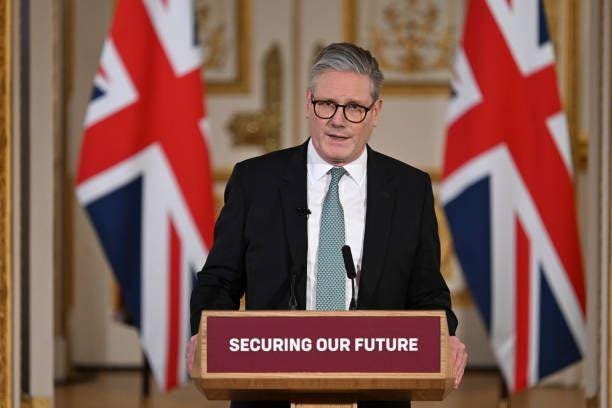
As reported by the Financial Times (July 21, 2025), Prime Minister Keir Starmer has framed UK participation in SAFE as a “reset” of UK-EU defense relations, capable of generating economic and strategic returns. Nonetheless, EU diplomats have clarified that British access to the fund is conditional. A share of each contract awarded to UK defense firms will trigger a corresponding payment by London into the SAFE budget. This reciprocity principle is designed to maintain equitable distribution of costs and benefits among member states and participating third countries. The same framework will apply to Canada and other potential partners. The arrangement reflects the EU’s increasing insistence on economic symmetry within its collective defense industrial policy.
SAFE is part of a broader plan to mobilize €800 billion in new European defense spending by 2030. In this context, the fund enables not only EU members but also designated third countries to engage in joint procurement of critical capabilities such as drones, missile defense systems, and munition stocks. The fund’s loans, leveraging the EU’s collective credit rating, are intended to correct the inefficiencies and redundancies of fragmented national procurement. However, eligibility criteria are strict: to qualify, at least 65% of the value of a product must originate from SAFE members. These include the EU27, Ukraine, Iceland, Liechtenstein, Norway, Switzerland, and any third countries signing dedicated agreements. The UK has completed the first of two required pacts.
The political timing of this arrangement is crucial. With pressure from the U.S. to shoulder more of the security burden and persistent gaps in European readiness, the EU is seeking to establish autonomous instruments of industrial and operational capacity. France, in particular, is pushing for a rigorous mandate that preserves the fund’s European core, while Germany is reportedly more flexible. For the UK, access to SAFE not only opens new commercial avenues but also signals its continued involvement in European defense post-Brexit. Yet, British contributions must come from national budgets, and participation in projects requires partnering with a SAFE country by the July 29 deadline for bid submission.
The structure of SAFE also reflects a shift in strategic governance. Access to the fund is tied to a binding security and defense partnership with the EU, to be followed by a specific implementation agreement. Britain signed the first agreement at the May 2025 London summit. The second is under negotiation, pending the adoption of a formal EU negotiating mandate. All funded projects must be submitted by the end of November, with the European Commission tasked with evaluating and approving them. This procedural layering confirms the EU’s ambition to integrate its defense industrial policy into a coherent strategic framework that includes—but also disciplines—external participants.
Beyond economics, the UK’s involvement in SAFE underscores a broader recalibration of transatlantic and intra-European security arrangements. Rather than standing outside EU defense initiatives, London is opting for structured inclusion—albeit under fiscal and regulatory conditions. This model could serve as a precedent for other NATO members with strong industrial bases but outside formal EU structures. Ultimately, SAFE reflects the convergence of geopolitical urgency and economic coordination. For the UK, this is both an opportunity to shape continental defense and a test of its willingness to engage on equal terms with the evolving European defense ecosystem.