

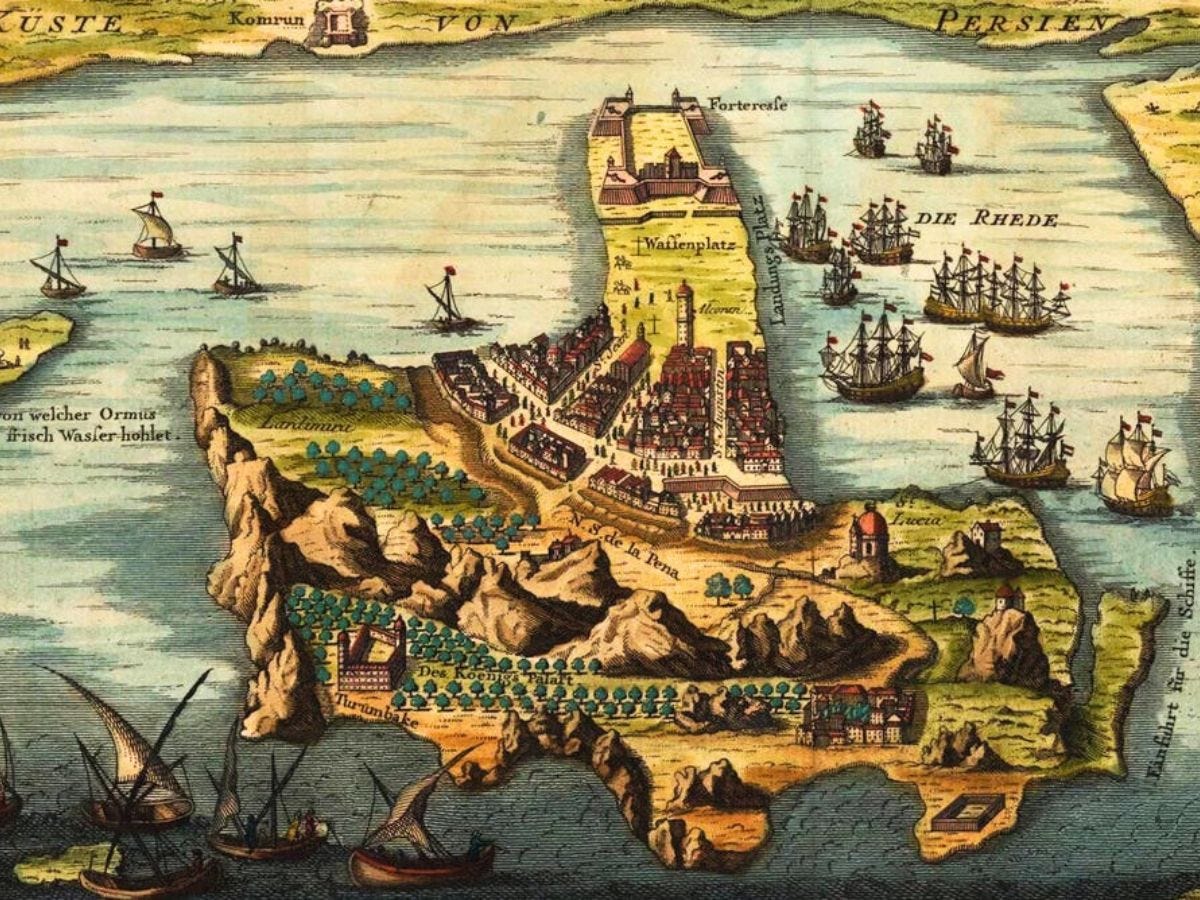
A maritime order is decided at a strait. Carthage's long ruin began not with a defeat in open water but with the war fought over the Strait of Messina and the loss of Sicily that followed; Britain's began with the fall of Singapore in 1942, the fortress built to lock the eastern seas, whose loss severed the empire in two. In each case the thalassocracy did not decline evenly, across the whole sea at once, but broke at a single point — a passage that slipped from its grasp. The question this poses for our own moment is whether Hormuz is that point. In mid-June 2026 the United States and Iran signed, under Pakistani mediation, the preliminary framework known as the Islamabad Memorandum of Understanding; and beneath its clauses on the nuclear file and on sanctions, its maritime core is an agreement about a single channel. The United States undertakes to lift its naval blockade of Iran's ports within thirty days (paragraph 4); Iran undertakes to ensure the "safe passage of commercial vessels, with no charge for 60 days only" from the Persian Gulf to the Sea of Oman, to clear its mines, and to open a dialogue with Oman over "the future administration and maritime services in the Strait of Hormuz" (paragraph 5). Strip away the rest, and what remains is the oldest question of maritime power: who controls the passage, and on what terms others may use it. To see what is at stake one must read the memorandum against what international law says about passage through straits — a body of rules built, from Grotius onward, around the principle of freedom of navigation, which has always been, from Rome onward, the principle of the maritime powers.