

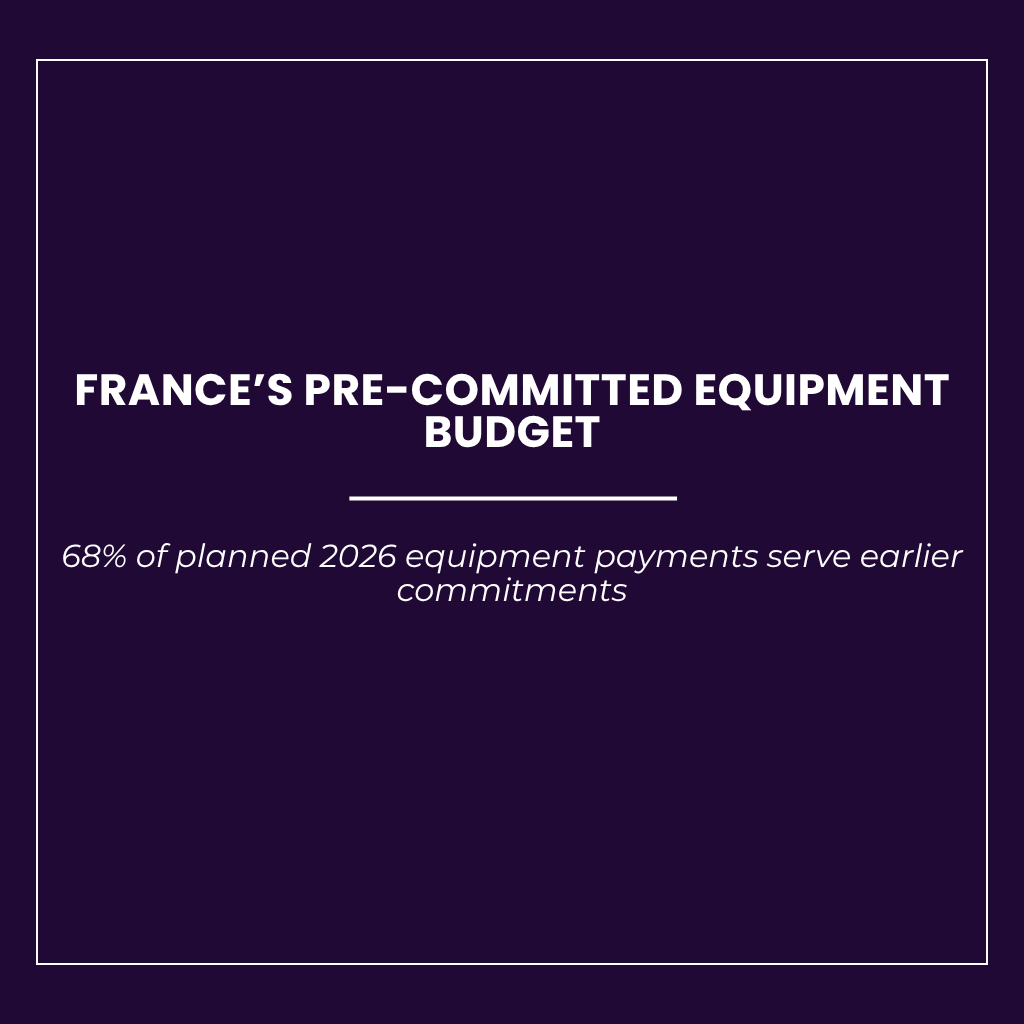
France’s defence equipment budget is rising quickly, and the headline figures are often read as a direct measure of new demand for industry. That reading assumes that each additional euro of annual spending pays for something decided in the same year. French public finance does not work that way. Parliament votes two different quantities for every programme: an authority to enter into legal commitments and an authority to pay. A large armament contract signed in one year creates payments that run for many years afterwards, so the cash spent in any given year is largely the cost of decisions taken earlier, while the commitments made in the same year will weigh on budgets that have not yet been voted. When commitments accelerate, as they did in France in 2025, the two quantities move apart, and the stock of commitments still awaiting payment grows. For suppliers, lenders, investors and public authorities, the practical question is therefore not simply how large the equipment budget has become, but how much of it is already claimed by the past, how much is being pledged to the future, and whether the payment authority that Parliament is expected to vote in the coming years will be large enough to carry both.