

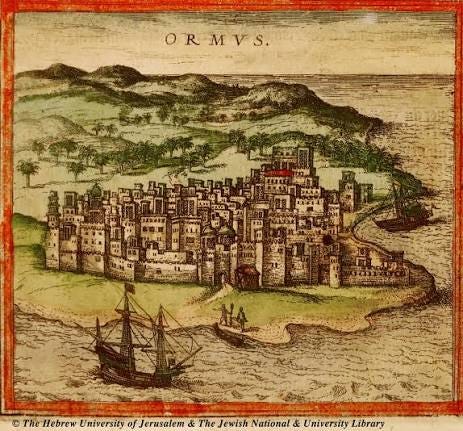
On 13 July 2026 the United States proposed to charge a twenty per cent fee on all cargo transiting the Strait of Hormuz, in exchange for providing security. This analysis argues that the proposal is not primarily a legal or commercial error — though it is both — but a category error: it applies to a systemic power the logic proper to a regional one. A regional power such as Iran treats a strait as a chokepoint to be monetised; a systemic power such as the United States has, for eighty years, treated it as a public good to be underwritten at its own expense, because open sea lanes are a foundation of the order from which its primacy derives. The fee proposal inverts that role, and in doing so produces three consequences: it contradicts the principle Washington had invoked against Tehran three weeks earlier; it validates Iran’s own claim that passage through Hormuz can legitimately be sold; and it signals, to every actor watching, a systemic power ceasing to behave as one. The proposal was quickly withdrawn, which matters for the assessment but not for the diagnosis: as a symptom, the error is instructive whether or not it becomes policy.