

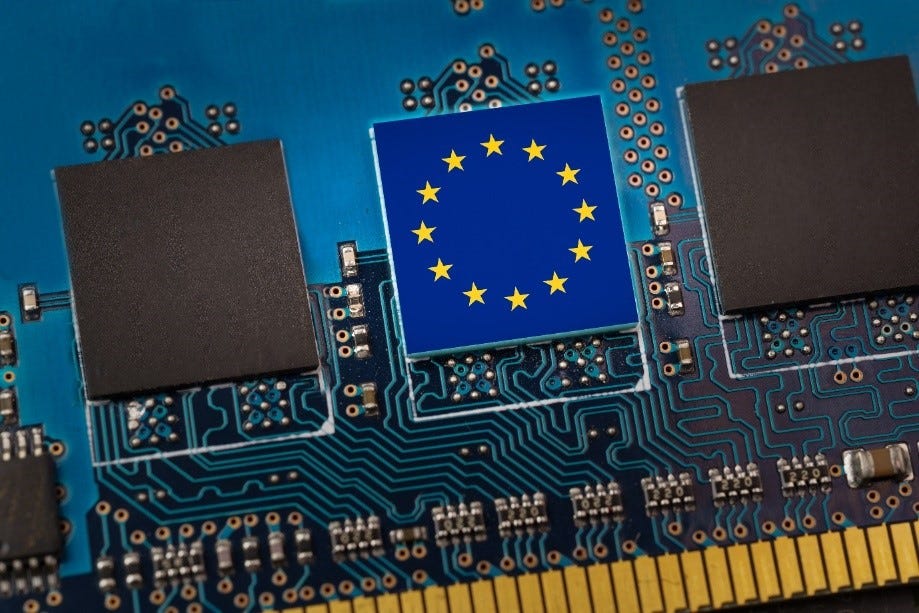
The pursuit of technological sovereignty has become a cornerstone of European defense and industrial policy. This concept refers to the ability of European states to develop, produce, and maintain critical technologies without excessive reliance on non-European suppliers. The COVID-19 pandemic and the war in Ukraine exposed serious vulnerabilities in European supply chains, accelerating efforts to localize production and reduce dependencies, especially in defense. Key policy instruments such as the European Defence Fund (EDF), Strategic Technologies for Europe Platform (STEP), and Horizon Europe have incorporated this strategic goal by incentivizing the development of European-controlled value chains. The EU Industrial Strategy of 2024 explicitly names defense and dual-use technologies among the priority sectors for reshoring and capacity-building. The objective is not merely economic resilience but the preservation of strategic autonomy, allowing the EU and its member states to act without constraints imposed by technology access or supplier leverage.
Future (Unmanned) Air-to-Air Refuelling Capability (PESCO Project)
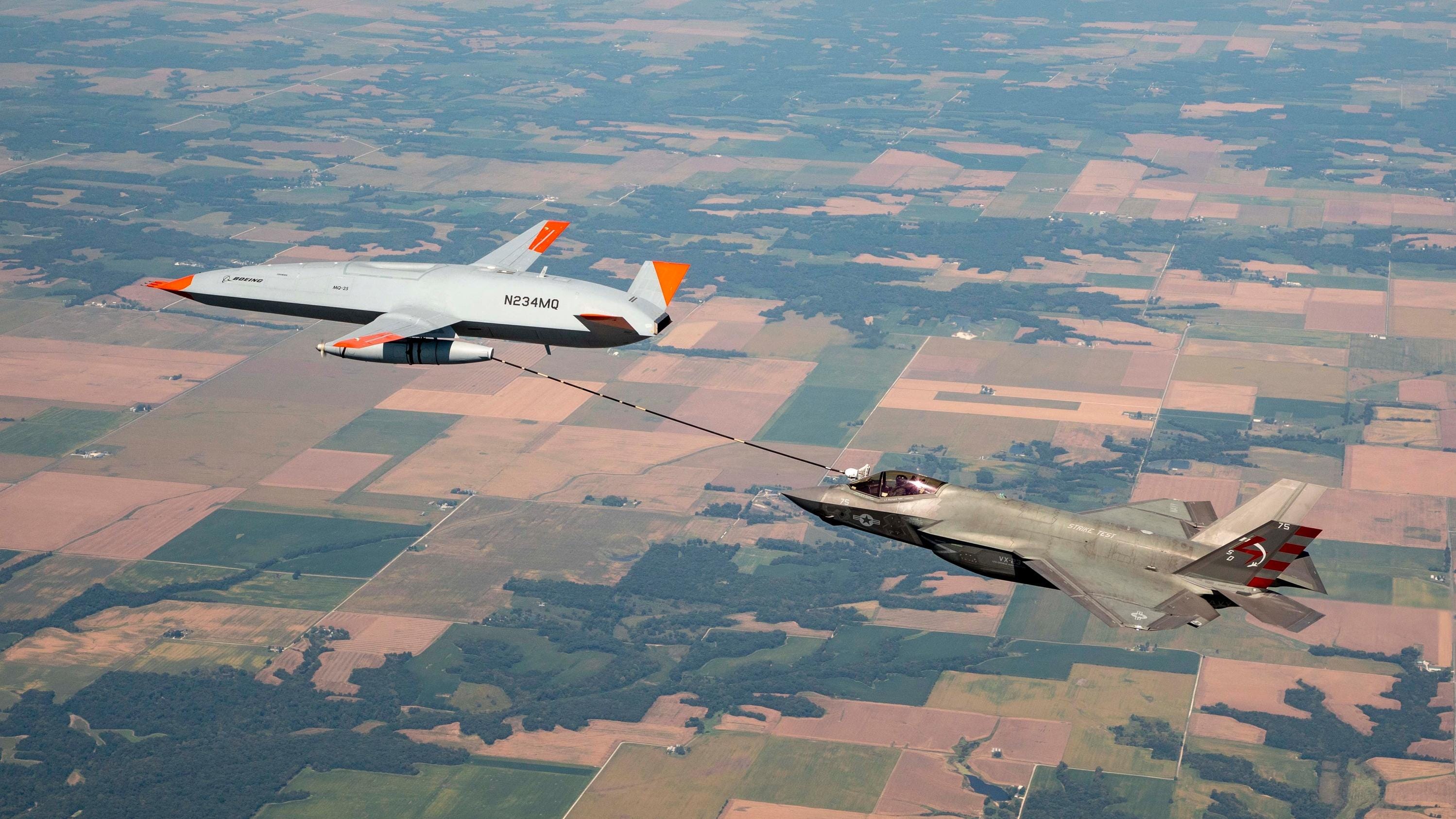
The Future (Unmanned) Air-to-Air Refuelling Capability is a new multinational PESCO project, coordinated by Germany with Spain as partner. According to the official project description, it aims to “address the existing capability gap in air-to-air refuelling through a multi-faceted approach, including the development of unmanned aerial refuelling systems”. Key objectives include reducing Europe’s dependency on external tanker assets, enabling EU states to sustain large-scale air operations, and projecting air power globally with “strategic sovereignty”. The project will build on existing frameworks (e.g. the Multinational MRTT Fleet) to integrate resources and increase cost-effectiveness. In practice it involves assessing commercial tanker solutions and cooperations, and developing new unmanned tanker platforms and automated refuelling technologies.
Unmanned Air Transport of Injured Soldiers (UNATIS) – PESCO 6th Wave Project
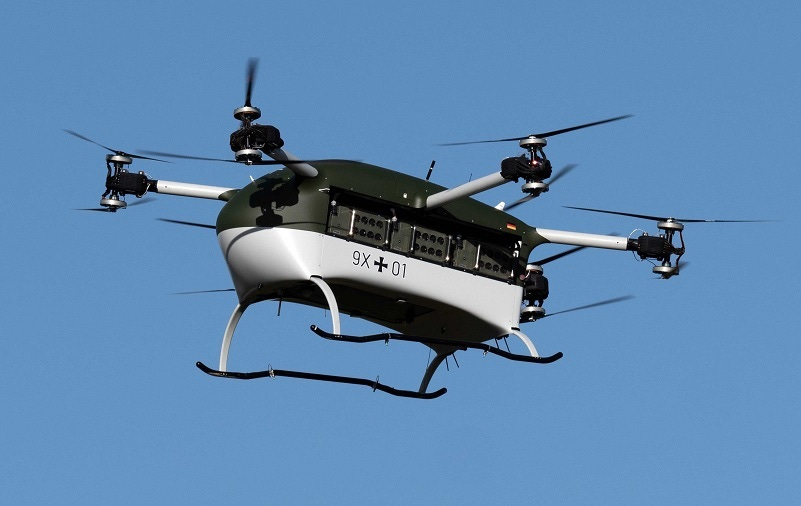
UNATIS is a collaborative EU defence project under the sixth wave of Permanent Structured Cooperation (PESCO) initiatives. Its goal is to develop and qualify a dedicated Unmanned Aerial System (UAS) for the transport of injured personnel from the battlefield. By focusing on unmanned medical evacuation (“medevac”), UNATIS addresses a critical capability gap in high-intensity combat scenarios. The project is driven jointly by Germany and the Netherlands, reflecting a pooling of resources and expertise to improve Europe’s autonomous casualty evacuation capacity. This partnership aligns with PESCO’s wider aim to strengthen the European Defence Technological and Industrial Base by coordinating investments and enhancing interoperability among member states. In essence, UNATIS seeks to field a reliable unmanned air ambulance system that can quickly evacuate wounded soldiers from areas too risky for manned helicopters, thus potentially saving lives even under contested or denied airspace conditions. All planning and documentation for UNATIS are rooted in official 2023 EU defence publications and reflect the EU’s strategic emphasis on innovative military medical support within a cooperative European framework.
Space and Microspace as Emerging Disruptive Technologies in Defense

Space has become a critical operational domain for modern militaries, providing essential services – from global communications and navigation to missile warning and intelligence – that underpin warfighting and strategic deterrence. Since NATO adopted its 2019 Space Policy, Allies have recognized space “as a new operational domain, alongside air, land, maritime and cyberspace,” requiring dedicated attention and resources. By the mid-2020s, emerging space and microspace technologies – especially miniaturized satellite constellations – promise to be disruptive for military operations through 2035. Official programs now emphasize proliferated, layered networks of small satellites to build resilient architectures and enhance real-time support to forces. These trends are driven by rapid advances in launch and satellite manufacturing, as well as heightened concern over anti-satellite (ASAT) and electronic threats from peer competitors. This report examines capability developments, operational impacts, doctrinal shifts, and strategic implications of space/microspace EDTs for U.S. and European security from 2025–2035.
"The Structure of the Defense Industry: An International Survey" edited by Nicole Ball and Milton Leitenberg

The Structure of the Defense Industry: An International Survey, edited by Nicole Ball and Milton Leitenberg, offers a systematic and comparative analysis of the defense industries of ten states across different political systems and economic structures. The central thesis asserts that political decisions, rather than economic imperatives, are the main drivers of military expenditure and arms procurement. While public discourse often invokes economic arguments—such as job creation and industrial growth—as justifications for sustaining or expanding defense sectors, the book challenges these assumptions with empirical data. The editors argue that although economic considerations do play a role, they are secondary to strategic, bureaucratic, and political rationales. The study includes detailed case studies of the United States, the USSR, France, West Germany, Sweden, Czechoslovakia, Italy, China, Israel, and selected developing countries. The analytical framework emphasizes employment, industrial output, capital investment, research and development, profitability, concentration of market actors, and export activity, to determine how defense industries function within national economies and how resilient these sectors might be to demilitarization efforts.