

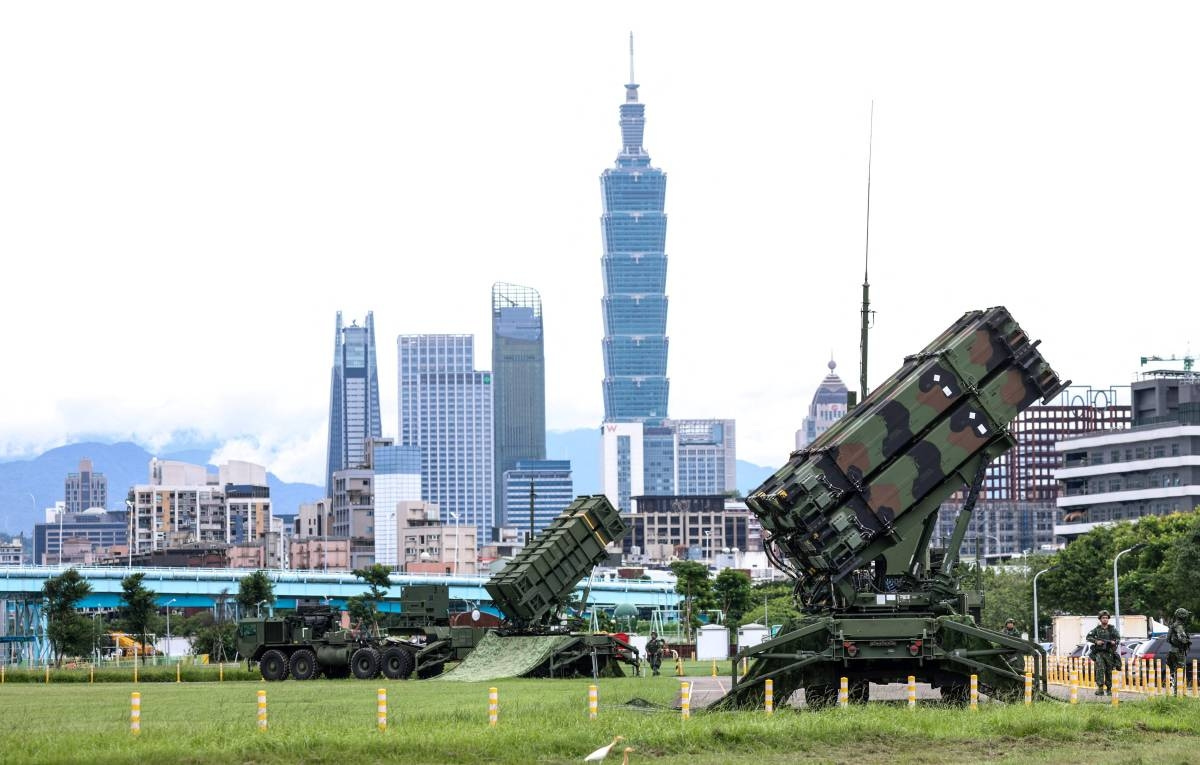
Taiwan has begun deploying U.S.-supplied HIMARS (High Mobility Artillery Rocket Systems) as part of its annual Han Kuang military exercises, marking a significant escalation in the island’s efforts to deter Chinese aggression. For the first time, two HIMARS launchers were publicly maneuvered in Taichung, drawing international attention to Taiwan’s growing long-range strike capabilities. With a range of 300 kilometers, the system can hit Chinese coastal targets, and its deployment is viewed as a strategic milestone in Taiwan’s evolving defence posture. Military officials confirmed that this week’s drills aim to replicate full combat conditions, signaling to China and the global community that Taiwan is prepared to defend itself.
This year’s Han Kuang exercise, considered the most comprehensive in Taiwan’s history, will span ten days and feature both simulated and live-fire combat operations. Senior officers emphasized that concealment of HIMARS units would be vital during wartime, with tactics aimed at evading satellite and drone detection until launch. According to the Ministry of Defence, the drills are unscripted and include scenarios ranging from communications sabotage to full-scale amphibious assaults. The involvement of Taiwan’s elite rocket forces and indigenous Thunderbolt 2000 launchers reinforces its strategy of layered denial, designed to disrupt Chinese invasion forces as they attempt to cross the Taiwan Strait.
Military observers across the region are closely watching Taiwan’s integration of HIMARS, especially after its proven battlefield effectiveness in Ukraine. Regional attachés view the system’s deployment as both a signal of Taiwan’s resolve and a test of its operational readiness. With 11 of 29 HIMARS units delivered in 2024 and live testing initiated in May, Taiwan’s defence doctrine is shifting decisively towards precision-guided long-range strike. The system's ability to threaten Chinese ports and transport hubs has implications for Beijing’s military calculus and will likely factor into future Chinese planning for any potential conflict across the Strait.
The Chinese government has dismissed the Han Kuang drills as provocative posturing, calling them “nothing but a bluff” and restating its long-standing objection to U.S.–Taiwan military cooperation. Nonetheless, Chinese aircraft and naval units have continued to encircle Taiwan, with 14 air force sorties and nine naval ships operating near the island in the last 24 hours. Despite this pressure, Taiwanese President Lai Ching-te reiterated that only Taiwan’s people can determine their future. Analysts believe that the visibility and intensity of this year’s exercises are aimed as much at international reassurance—particularly to Washington—as they are at Beijing.
As tensions in the Taiwan Strait remain high, the HIMARS deployment sends a powerful message: Taiwan is accelerating its transition to a modern, mobile, and survivable force structure. Paired with domestic missile platforms, robust training, and a whole-of-society defence approach, the island is working to create a credible deterrent against coercion. These developments also reaffirm Taiwan’s strategic role in the Indo-Pacific balance, aligning closely with U.S. and regional partners such as Australia and Japan. In the evolving contest over regional stability, Han Kuang 2025 reflects Taiwan’s readiness to assert control over its own defence narrative.