

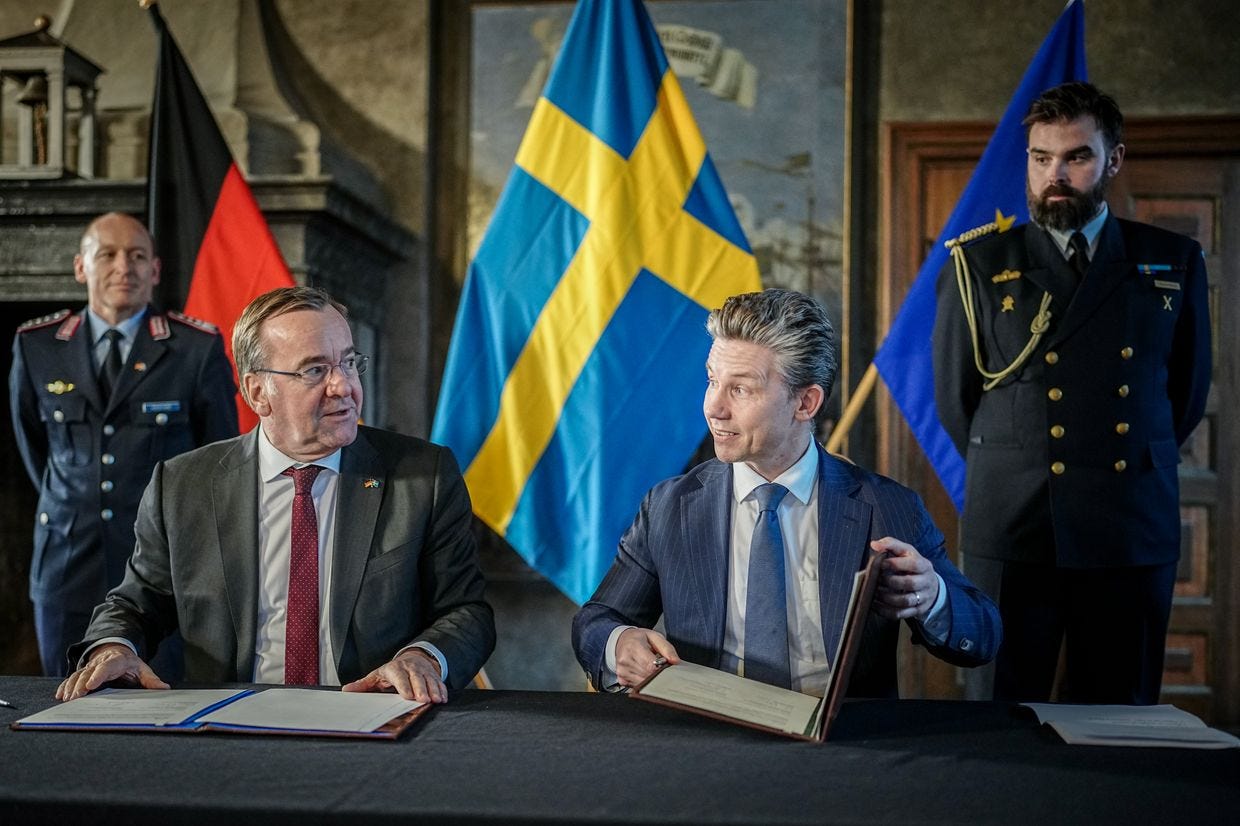
On July 8, 2025, the Swedish Ministry of Defence announced the signing of two substantial contracts valued at over 5 billion Swedish crowns (approximately $526 million) with Rheinmetall Denel Munition and Nammo, aimed at enhancing the operational readiness of Sweden’s artillery forces. The agreements will deliver large volumes of 155mm artillery shells, propellant charges, and extended-range munitions tailored for Sweden’s Archer artillery systems. These procurements mark a critical step in Stockholm’s broader commitment to NATO interoperability and reflect a growing urgency across Europe to reinforce strategic stockpiles amid sustained threats from Russia. Defence Minister Pål Jonson described the acquisition as a “significant investment in national and allied security.”
The contract with Rheinmetall Denel Munition, a South African subsidiary of Germany’s Rheinmetall Group, is worth over 4 billion crowns and includes both standard artillery shells and modular propellant systems. This component is specifically designed to support the Archer 155mm self-propelled howitzer, a mobile artillery platform central to Sweden’s deterrence posture. The separate contract with Norway’s Nammo, valued at around 1 billion crowns, concerns the supply of high-explosive extended-range (HE-ER) projectiles, increasing both the lethality and range of existing platforms. These deliveries are intended not only to replenish depleted inventories but also to align Sweden’s firepower with NATO operational standards.
The contracts follow a broader European trend toward long-term munitions planning, coordinated through joint frameworks such as the European Defence Agency’s Collaborative Procurement Initiative and NATO’s Defence Production Action Plan. With Sweden now a full NATO member, its logistics and procurement strategies are being increasingly shaped by allied stockpile norms and collective burden-sharing arrangements. In this context, bilateral deals with trusted partners like Rheinmetall and Nammo serve a dual purpose: they address urgent national capability gaps while reinforcing Europe’s fragmented defence industrial base. Both suppliers are already embedded in NATO-aligned production ecosystems and maintain certified supply chains across multiple jurisdictions.
These procurements arrive amid growing political support in Sweden for robust defence investment, in line with the government's multi-year defence bill passed in 2024, which raised annual spending above 2% of GDP. The decision to prioritise artillery ammunition reflects operational lessons drawn from the war in Ukraine, where sustained high-intensity warfare has underscored the decisive role of long-range fires. Additionally, Sweden’s geographic position—flanking the Baltic Sea and proximate to Russian military activity—requires a layered deterrence strategy that combines mobile firepower, precision, and endurance. Ammunition stockpiling has thus become a strategic imperative, not only for readiness but also for crisis resilience.
Strategically, these acquisitions position Sweden as a more integrated contributor to NATO's Northern Flank and Baltic defence posture. The deployment of Archer systems supported by Rheinmetall and Nammo ammunition will significantly enhance Sweden’s ability to participate in NATO exercises and joint operations, particularly in the Nordic-Baltic region. From an industrial standpoint, the contracts also support transatlantic supply chain stability, enabling production scale-up and ensuring continued availability of key munitions in Europe. In light of ongoing tensions and operational demands, Sweden’s procurement strategy illustrates how national defence investments—anchored in trusted alliances and industrial cooperation—can serve broader alliance resilience objectives.
Impressive that Sweden’s buying both modular propellant systems and extended-range shells specifically for the Archer platform. That’s not just stockpile padding; it’s targeted, tactical procurement.
What stands out is how this deal stitches together Sweden’s national needs with NATO’s broader logistics fabric. Instead of chasing “domestic production at all costs,” they’re integrating into reliable, certified allied supply chains. That kind of interoperability is what makes a defense posture scalable across borders, not just sustainable at home.
Do you think Europe can pull this off at industrial scale without leaning too hard on American or South Korean capacity? Or will strategic autonomy stall once production hits real wartime tempo?