

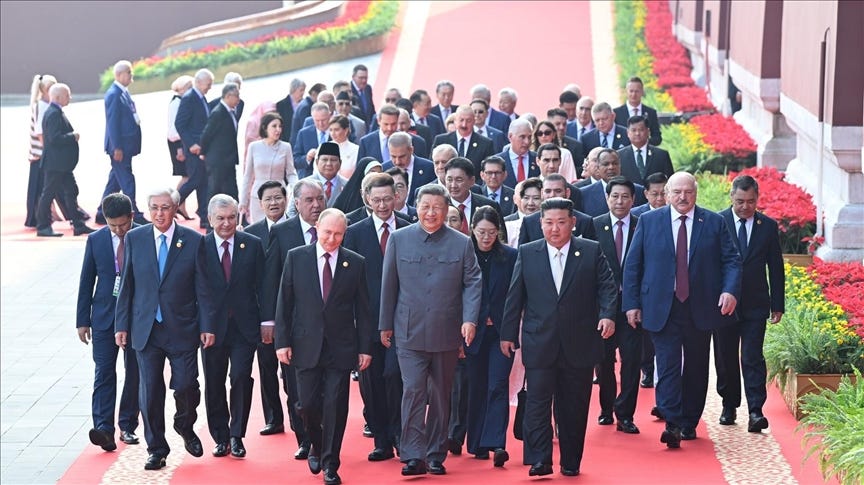
In early September 2025, Beijing hosted an unprecedented gathering of leaders from China, Russia, India, and North Korea – a constellation of powers increasingly aligned in opposition to U.S. and Western influence. The events included a Shanghai Cooperation Organisation (SCO) summit in Tianjin and a massive military parade in Beijing commemorating the 80th anniversary of WWII’s end[1][2]. Chinese President Xi Jinping was flanked by Russian President Vladimir Putin and North Korea’s Kim Jong Un in a show of strategic solidarity notably shunned by Western leaders[3][4]. Indian Prime Minister Narendra Modi also attended the SCO summit hosted by Xi, where images of Modi walking hand-in-hand with Putin and Xi symbolized India’s tilt towards this emerging axis[5][6].
The summit showcased a nascent bloc of anti-Western autocracies (and a hesitant India) coalescing around shared strategic goals. Politically, they espoused an anti-hegemonic vision of global order to counter U.S. “unipolar” dominance[7][8]. Economically, they deepened energy partnerships to reduce reliance on Western markets and bypass sanctions. Militarily, they signaled closer defense cooperation – from Russian and Chinese support for Pyongyang, to North Korean munitions for Moscow – to bolster their security against Western pressure[9][10]. Collectively these arrangements amount to a “hard core” of states seeking to insulate themselves from Western financial, technological and diplomatic coercion, moving toward a model of fortress-like resilience. This analysis examines the summit’s outcomes across energy, diplomacy, and security domains, and assesses the implications of this tightening alignment for the global order and Western policy.