

Defence Finance Monitor is a specialised source of analysis for professionals who seek to anticipate how strategic priorities shape investment patterns in the defence sector. In a landscape shaped by high-stakes political choices and rapid technological shifts, understanding the link between military doctrine, operational requirements, and industrial policy is not a competitive edge—it is a prerequisite.
We analyse how strategic imperatives set by NATO, the European Union, allied Indo-Pacific democracies, and national Ministries of Defence translate into procurement programmes, innovation roadmaps, and long-term industrial priorities. Rather than listing individual companies, we track how clearly defined strategic challenges—such as deterrence gaps, technological dependencies, or capability shortfalls—are converted into funding schemes and institutional demand. Only companies that respond to these challenges become relevant to institutional buyers and, by extension, to investors. This framework has already enabled a growing community of analysts and financial professionals to make more consistent, risk-aware decisions and to avoid costly misalignments.
Building on this methodology, we are developing a structured database of companies analysed and classified according to the strategic-technological criteria set out in our framework. Subscribing to Defence Finance Monitor therefore provides not only access to in-depth reports, but also to a continuously expanding database of European and allied defence firms assessed against clear benchmarks. Each company is positioned according to its alignment with EU and NATO priority capability areas, its contribution to European strategic autonomy, its level of interoperability and deterrence value, and its role in reducing dependencies on non-allied suppliers. Classification also covers technology readiness levels, participation in EU and NATO programmes, intellectual property assets, and dual-use applications. This allows subscribers to compare, benchmark, and identify the most strategically relevant actors within a coherent, transparent, and decision-oriented taxonomy.
Subscribing to Defence Finance Monitor means gaining access to a strategic intelligence service that connects financial decisions with defence priorities. At the core of our work is a structured database of European and allied defence companies, classified according to strategic-technological criteria such as autonomy, interoperability, deterrence, and supply chain resilience. In today’s environment, profitable investment requires more than market data: it requires understanding how limited public resources are channelled toward specific capability gaps, sovereign technologies, and the reduction of non-allied dependencies. By combining in-depth reports with a continuously expanding company database, Defence Finance Monitor enables investors to anticipate demand, benchmark firms against institutional priorities, and avoid costly misalignments.
The New NATO Architecture in the Baltic: Deterrence, Vulnerability, and the Risk of the Opportunity Gap
The accession of Finland and Sweden to the Atlantic Alliance has fundamentally reshaped the military geography of the Baltic, turning a once peripheral region into one of Europe’s central pillars of deterrence. With the closure of the northern flank and the full integration of Scandinavian forces, NATO now controls a strategic corridor linking the Arctic to Central Europe. Yet this new configuration does not eliminate the region’s structural vulnerabilities. Moscow continues to perceive an “opportunity gap,” a period in which NATO’s ability to coordinate, mobilize, and sustain forces lags behind its declared potential. The distance between political deterrence and operational readiness remains the Alliance’s principal risk factor. In this environment, the Baltic functions both as an asset—due to its expanded coalition and technological interoperability—and as a pressure point, where slow decision cycles and fragmented command structures could offer Russia temporary tactical advantages.
Poland’s Maritime Turn: Naval Modernization and the Protection of Logistic Assets
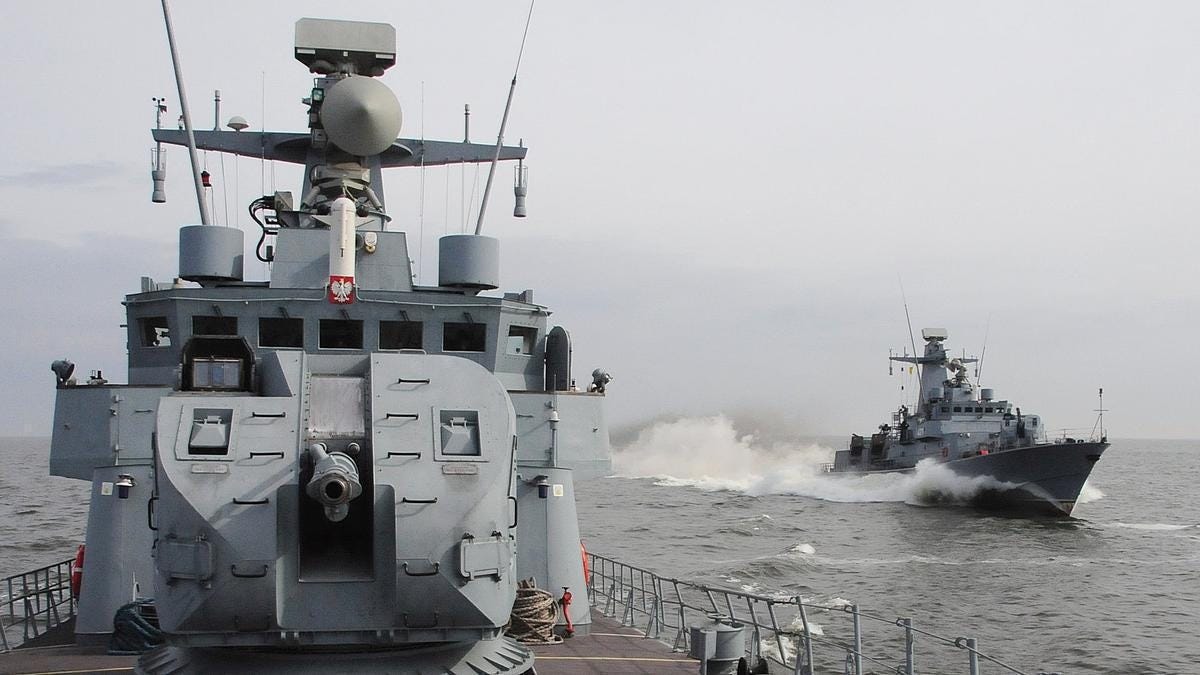
Poland is undergoing a significant transformation in its maritime strategy, repositioning itself as a key naval and logistical actor in the Baltic Sea. For decades, the Polish Navy operated with ageing platforms inherited from the Cold War, focusing primarily on coastal defence and mine warfare. That posture is now changing rapidly. A new generation of programs—ranging from surface combatants to underwater and intelligence-gathering capabilities—is redefining Poland’s maritime identity. The decision to invest heavily in naval renewal reflects both the growing importance of the Baltic as a strategic corridor and the recognition that maritime infrastructure has become an essential component of national security. The laying of the keel for the frigate Wicher at Gdynia shipyard marked not only a symbolic restart of Poland’s domestic shipbuilding industry but also a broader strategic pivot: from coastal containment to open-sea deterrence and logistical protection.
The Governance of Resilience: The Baltic as Europe’s Security Laboratory
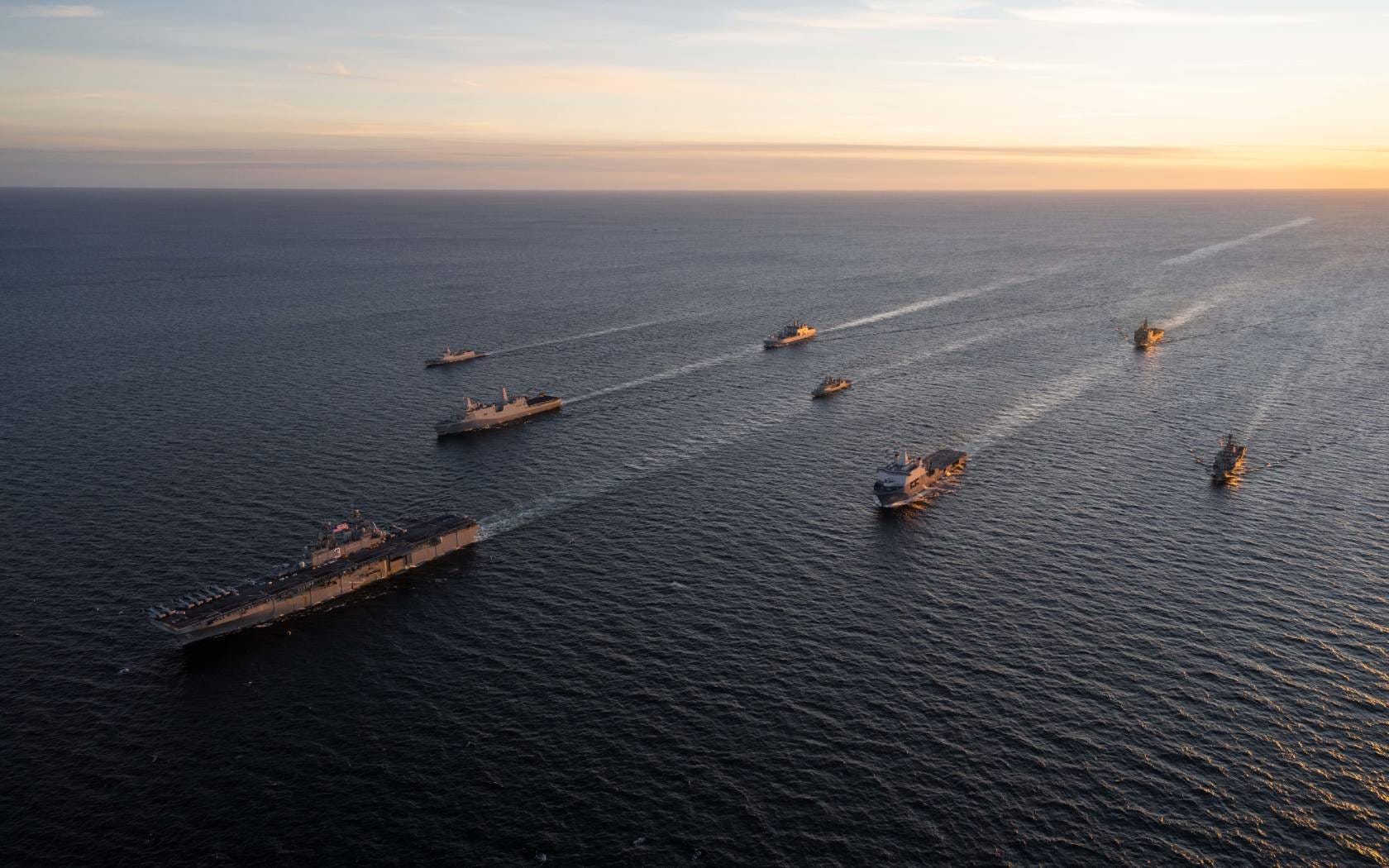
The stability of the Baltic Sea depends not only on military assets or technological infrastructure but on a political and legal framework capable of making reactions predictable and responsibilities measurable. In an environment defined by hybrid threats, sub-threshold attacks, and ambiguity of attribution, deterrence no longer relies on the promise of invulnerability but on the ability to respond swiftly, coherently, and lawfully. The predictability of response itself becomes a form of deterrence: knowing that an attack on a cable, pipeline, or energy terminal will trigger an immediate and proportionate reaction—even without conclusive evidence—reduces the strategic value of aggression. The new security paradigm rests on three interdependent pillars—early warning, physical redundancy, and rapid decision-making—which together transform the Baltic’s geographical exposure into a form of systemic resilience grounded in cooperation, transparency, and speed.