

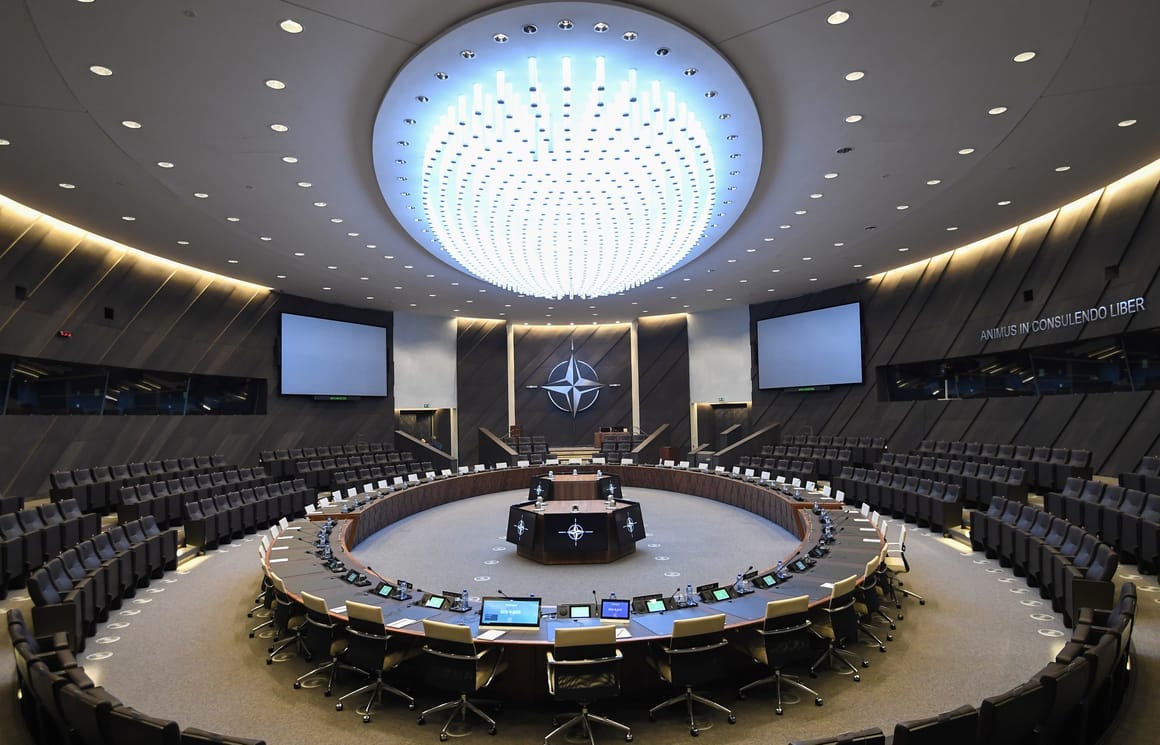
The strategic orientation of NATO on its Eastern flank has become one of the most consequential frameworks through which European and transatlantic defence, industry, investment and research must now interpret their own decisions. For Defence Finance Monitor, understanding this strategic architecture is not ancillary but essential, because every subsequent analysis of industrial filières, technological clusters, capital flows and research ecosystems derives its meaning from the hierarchy of security priorities defined by NATO, the European Union and key allied governments. Deterrence and forward defence are no longer abstract concepts but operational imperatives that determine the scale of future production, the urgency of technological acceleration and the structure of long-term financial commitments across the Alliance. This document is therefore designed as a systematic guide to the strategic foundations that shape demand, risk perceptions and capability development for the coming decade. It reconstructs the threat environment, outlines the shift from a tripwire posture to a denial-based forward defence model, examines the integrated roles of nuclear, conventional and missile elements, and translates these imperatives into capability clusters that subsequently cascade into industrial, technological, financial and scientific requirements. It presents a coherent map of how strategic priorities propagate across sectors, enabling private and academic actors to position themselves within a rapidly evolving defence ecosystem. Its purpose is not to argue policy but to clarify the strategic logic that will govern budgets, procurement and innovation for years to come.
The structure of the document reflects this need for a disciplined and analytically coherent strategic foundation. It begins with a detailed reconstruction of the current security environment as defined in NATO’s Strategic Concept, summit communiqués and regional defence plans, emphasising the drivers of instability and the implications for deterrence credibility. It then examines the doctrinal and operational shift towards forward defence, analysing why high-readiness forces, pre-positioned assets and resilient logistics have become structural components of the Alliance’s posture. A subsequent section explores the integrated role of nuclear, conventional and missile dimensions, showing why their coherence determines escalation control and strategic stability for frontline states. The report then translates these imperatives into capability requirements across land, air, maritime, cyber and space domains, forming the basis on which industries, investors and research institutions must calibrate their priorities. Further sections analyse the industrial filières critical to delivering these capabilities, the emerging technology clusters aligned with NATO EDT priorities, the categories of enterprises engaged in this transformation, and the capital structures that will finance it. It concludes with a comprehensive synthesis and a structured data block designed for insertion into the Defence Finance Monitor knowledge architecture.