

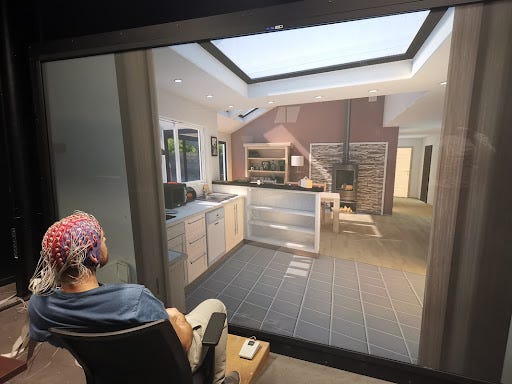
A Belgian deep-tech venture is quietly blurring the lines between neuroscience and virtual reality, aiming to transform how cognitive disorders are evaluated and treated. REHAL-IT, a spin-off of the Université Libre de Bruxelles (ULB), develops immersive software that places patients with cognitive impairments into realistic virtual scenarios for assessment and rehabilitation[1][2]. Born at the crossroads of academic research and interactive technology, this young company has attracted attention not only in health circles but also among strategists interested in Europe’s technological autonomy. Its flagship platform, known as R.O.G.E.R., was co-developed by university researchers, clinicians, and a Belgian game studio to create life-like cognitive training exercises[2]. REHAL-IT’s novel approach – harnessing VR “serious games” for cognitive therapy – hints at a dual-use potential that could support both civilian healthcare and military resilience. As Europe strives for strategic autonomy in critical technologies, even niche healthcare innovations like REHAL-IT’s may play an outsized role in reducing reliance on foreign providers and strengthening the human dimension of defense readiness. Such prospects make this unassuming start-up a compelling subject for a deeper strategic-technological analysis.