

Introduction
For years, sustainable finance followed an exclusionary paradigm that treated all defence-related investments as incompatible with ESG principles. Many ESG funds reflexively blacklisted defence companies on ethical grounds, often citing involvement in “controversial weapons” as a rationale for exclusion. This blanket approach is now being fundamentally re-evaluated. A confluence of geopolitical crises and regulatory shifts in Europe has forced policymakers and investors alike to distinguish between truly illicit armaments and the broader defence sector that underpins liberal democracies’ security. The result is a nascent consensus: ESG frameworks must adapt to include responsible defence investments, ending the automatic taboo against the defence industry.
This position paper, authored by Defence Finance Monitor, argues that Europe is witnessing the end of an era in which defence spending was synonymous with unsustainability. We marshal evidence from official EU strategies, NATO and UN frameworks, and European financial regulators to show that only a narrow subset of armaments (those banned by international law) remain beyond the ESG pale. Meanwhile, European leaders are openly framing defence capabilities as vital to peace and democratic values – a strategic backbone rather than a pariah. Regulators including BaFin, the European Central Bank (ECB), and the European Investment Bank (EIB) have begun adjusting guidelines and policies to reflect this reality. In what follows, we compare definitions of “controversial weapons” across key regulatory and security frameworks, examine the EU’s strategic doctrine positioning defence as essential, and review recent pronouncements by financial authorities that integrate defence into the ESG taxonomy. The evidence makes clear that sustainable finance can no longer ignore Europe’s defence imperatives.
From “Controversial Weapons” to Responsible Defence Investment
A lynchpin of the old exclusionary approach was the category of “controversial weapons.” ESG policies and regulations have used this term to delineate armaments so indiscriminate or inhumane that no responsible investment should touch them. Notably, the EU’s Sustainable Finance Disclosure Regulation (SFDR) and related guidelines codify a specific, narrow definition. According to SFDR’s technical standards (as clarified by ESMA in 2024), “controversial weapons” include only those weapons outlawed by international convention: anti-personnel landmines, cluster munitions, chemical weapons and biological weapons. These are the same categories of arms widely condemned under United Nations disarmament frameworks – for example, anti-personnel mines are banned by the Ottawa Treaty, cluster munitions by the 2008 Convention on Cluster Munitions, and chemical and biological weapons by the 1997 Chemical Weapons Convention (CWC) and 1975 Biological Weapons Convention (BWC) respectively. NATO policy aligns with these prohibitions: all NATO member states are parties to the CWC and BWC, and Allies have declared that “any use of chemical weapons, under any circumstances, is a breach of international law”. NATO has likewise supported efforts to eliminate legacy minefields and cluster munitions; indeed, 24 of 31 NATO countries have joined the Cluster Munitions Convention, reflecting a broad rejection of those weapons’ use. There is essentially unanimous agreement that such controversial weapons have no legitimate role – militarily or morally – and ESG investors and regulators rightly continue to exclude companies involved in them.
Crucially, however, this “controversial weapons” definition is narrowly drawn. It does not encompass conventional defence equipment or services in general, nor even certain classes of strategic arms. Notably, nuclear weapons – often lumped into exclusion lists by ESG funds in the past – are absent from the SFDR/ESMA definition. This omission reflects the geopolitical reality: nuclear arms, while highly destructive, are not categorically banned by international law for the states that possess them. NATO’s doctrine explicitly maintains a role for nuclear deterrence: “As long as nuclear weapons exist, NATO will remain a nuclear alliance,” states the Alliance’s strategic policy, even as Allies pursue arms control and eventual disarmament goals. In other words, what some ESG investors label “controversial” (such as a NATO member’s nuclear warheads or a submarine-launched missile) is viewed by European governments as a regrettable necessity for deterrence and peace. Similarly, conventional weapons like fighter jets, tanks, naval ships, and firearms – the bread and butter of national defence – are not prohibited by any UN convention. Under UN and NATO frameworks, these are considered legitimate means of self-defence when used in accordance with international humanitarian law. The effect is a significant gap between traditional ESG exclusions and official security policy: ESG funds often went well beyond the international consensus by excluding all defence contractors, whereas regulators now emphasize only truly outlawed weapons as unacceptable. Indeed, new EU guidance on sustainable fund names confirms that “only weapons banned by international law” (e.g. cluster bombs, chemical and biological weapons) must be excluded from funds marketed as sustainable. Conventional defence activities per se are no longer automatically off-limits in the eyes of European regulators.
This recalibration is illustrated by a recent change in Germany. The German fund industry’s voluntary ESG target market code formerly barred any fund labeled “sustainable” from investing in companies earning over 10% of revenue from weapons. In September 2024, that rule was overturned. “Since the Russian attack on Ukraine, there is a broad societal debate about expanding the defence industry to defend our democratic constitutional order,” explained the German Investment Funds Association (BVI). “By excluding defence financing in the ESG code, we have so far stifled that debate – we now want to enable it for fund managers and investors.” The BVI noted that when the code was first adopted, there were no EU-wide rules on arms in sustainable funds; now there are. As of May 2024, ESMA’s guidelines for funds’ ESG names stipulate only internationally banned weapons are forbidden in sustainable funds. This brings Europe’s sustainable finance rules into alignment with global norms: it carves out cluster munitions, landmines, chemical and biological arms as beyond the pale, but does not require a blanket divestment from all defence manufacturers. The revision acknowledges that investing in a fighter jet or cybersecurity company is not morally or legally equivalent to bankrolling cluster bomb production. In sum, Europe’s definition of what counts as a “controversial” armament is now precise and limited – a cornerstone for reclassifying acceptable defence investments within ESG.
Europe’s Strategic Doctrine: Defence as Essential to Liberal Democracies
While regulators narrowed the scope of exclusion, Europe’s political leaders have been unequivocal in reframing defence as a vital positive good – “Europe’s strategic backbone” – in the current security environment. The EU’s own strategy documents and high-level speeches underscore that a strong defence sector is indispensable for protecting citizens, values, and democracy. The EU Strategic Compass for Security and Defence (2022) marks this shift in tone. It bluntly concludes that “the defence of Europe requires a comprehensive concept of security”, combining diplomacy with hard power. High Representative Josep Borrell wrote in its foreword: “Europeans will continue to favour dialogue over force… But if you want dialogue, diplomacy and multilateralism to succeed, you need to put power behind it”. This is a striking admission that soft power must be backed by military muscle – a far cry from the early 2000s rhetoric when the 2003 European Security Strategy optimistically declared Europe “has never been so secure.” In 2022, by contrast, EU leaders openly recognized a fast-worsening threat landscape, aggravated by Russia’s invasion of Ukraine. The Strategic Compass calls for nothing less than a “quantum leap” in European defence capacity, urging member states to “invest more and better in defence capabilities and innovative technologies, both at the EU and national levels”. It sets concrete targets: developing a 5,000-strong rapid deployment force, conducting regular joint exercises, and significantly increasing defence expenditures across the Union. The document emphasizes strengthening Europe’s “resilient, competitive and innovative European Defence Technological and Industrial Base”, achieving technological sovereignty in critical areas, and mitigating strategic dependencies on foreign powers. In short, bolstering the defence industry is now an official EU policy objective – tied directly to safeguarding European security and values.
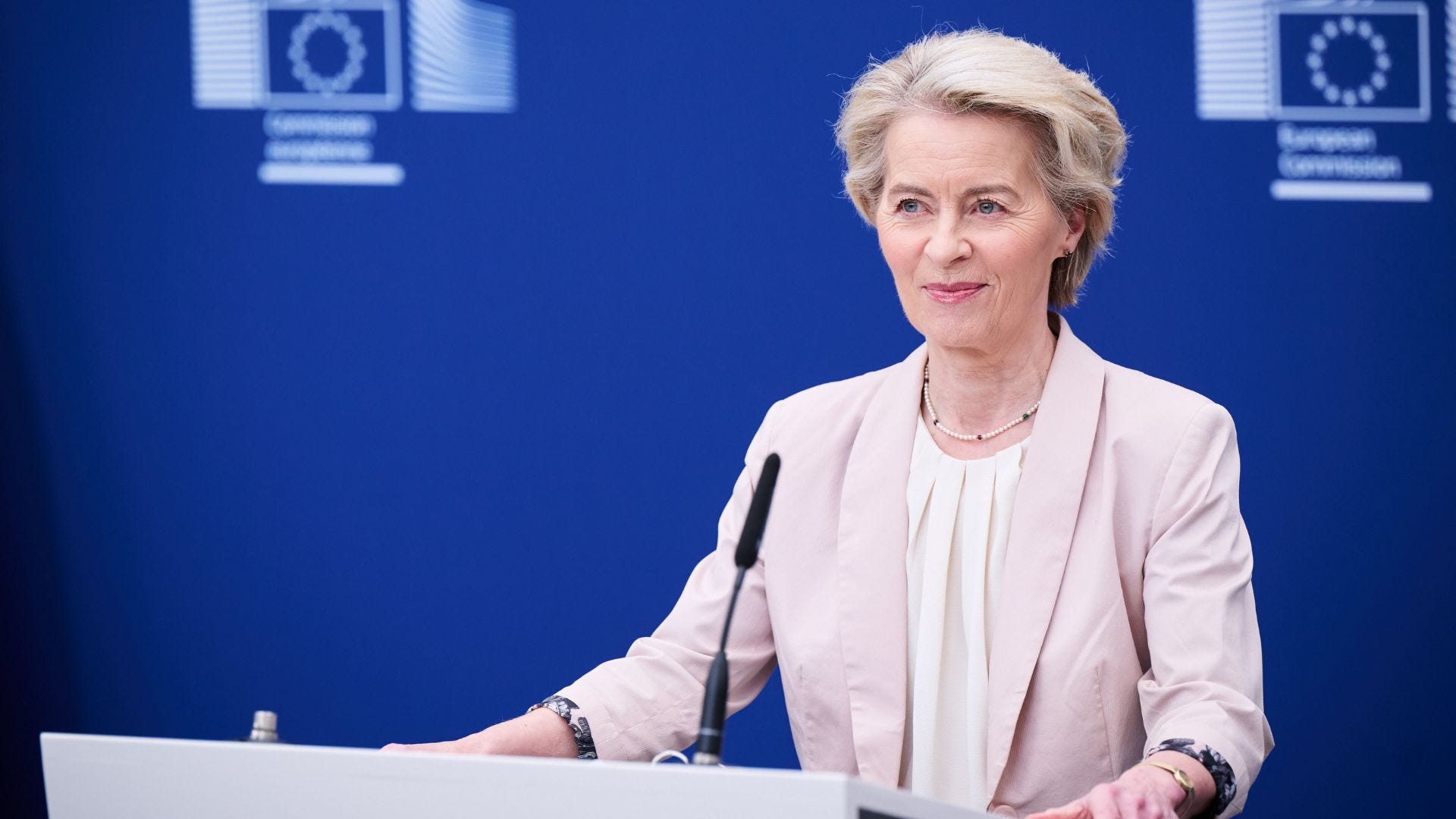
EU leaders’ speeches drive the point further. European Commission President Ursula von der Leyen’s landmark address to the European Parliament, aptly titled “ReArm Europe,” made the case that Europe’s peace and freedom depend on a sustained surge in defence investment. “We thought we were enjoying a peace dividend, but in reality we were just running a security deficit. The time of illusions is now over. Europe is called to take greater charge of its own defence – not in some distant future but already today,” von der Leyen told MEPs in 2025. Referencing the wake-up call of Russia’s aggression, she declared: “In this more dangerous era, Europe needs to step up… We need a surge in European defence. And we need it now”. The Commission President then unveiled the “REARM Europe” plan, a comprehensive financial strategy to unlock “up to EUR 800 billion” for defence across Europe. Its logic, she explained, is simple: “to pull every single financial lever we have to strengthen and fast-track our defence production”. The plan includes easing EU fiscal rules to accommodate defence spending (through a special “escape clause”) and creating a new EU financial instrument – “SAFE: Security Action for Europe” – to provide €150 billion in loans for joint defence projects. Von der Leyen also highlighted the role of private capital: “REARM Europe includes measures to mobilise private investment, with the European Investment Bank, and our upcoming Savings and Investments Union”. In her words, “we have the economic power. And now, finally, we have the political will, too.” This extraordinary commitment at the highest level of the EU sends a clear message: funding defence is not antithetical to European ideals – it is now seen as integral to preserving them. As von der Leyen put it, “it is time to build a European Defence Union that ensures peace on our continent through unity and strength”.
National leaders echo this framing. Germany’s Zeitenwende (historic “turning point”) on defence is one example, with unprecedented budgets for the Bundeswehr and a public narrative of moral responsibility to uphold peace by deterring aggression. France and Italy have similarly increased defence spending and called for European industrial cooperation in arms production. Even traditionally neutral or pacifist-leaning EU members now voice support for a strong collective defence. The underlying rationale across these statements is that liberal democracy’s survival requires hard security, and thus supporting the defence sector can be a socially and ethically positive investment – protecting human rights and peace by preventing hostile powers from dominating Europe. This represents a profound shift from the era when defence stocks were chiefly seen as lucrative but ethically tainted. Today, they are being reframed as investments in resilience: for example, funding a company that manufactures air defense systems or cyber defence tools can be cast as “achieving security of supply and reducing strategic dependencies” – an ESG-aligned objective if defined in terms of safeguarding societies. In summary, Europe’s strategic doctrine now treats defence capability as foundational to sustainability (in the broad sense of sustaining peace, democracy, and rule of law). This strategic consensus provides essential political cover for reclassifying defence within ESG frameworks.
The End of Blanket Exclusions: Regulatory and Financial Convergence
In tandem with the strategic shift, European financial regulators and institutions are dismantling blanket exclusions and actively integrating defence considerations into ESG and investment policies. Nowhere is this more evident than in recent guidance from supervisory authorities. Germany’s financial regulator BaFin has explicitly addressed the inclusion of defence stocks in sustainable funds – something that would have been nearly unthinkable a few years ago. In May 2025, BaFin “strongly urged asset managers to be transparent about adding defense holdings to funds marketed as sustainable,” amid concerns that a sudden increase in such allocations could catch some clients off guard. This followed the BVI’s relaxation of exclusionary standards noted earlier. Rather than prohibiting the practice, BaFin’s focus was on clear disclosure: if a so-called ESG fund now includes defence industry exposure, investors must be duly informed. The subtext is that BaFin does not deem conventional defence investments illegitimate in a sustainable fund – it simply insists on truth-in-labeling so that customer expectations align with fund contents. BaFin President Mark Branson has remarked that regulators “are not the environmental, ethical or social police,” emphasizing that their role is not to impose moral judgments but to ensure compliance and transparency. In practice, this means German authorities will not blacklist defence across the board; they will, however, crack down on any greenwashing – for example, a fund calling itself “green” while secretly financing arms without disclosure. This balanced approach reflects a new regulatory norm: defence investments are permissible within ESG, provided they exclude truly controversial weapons and are communicated openly to stakeholders.
European supranational institutions are likewise adjusting course. The European Central Bank (ECB), while maintaining its mandate of price stability, has acknowledged the macroeconomic reality of higher defence spending and even the possibility of new financing mechanisms at the EU level. President Christine Lagarde noted in March 2025 that with the EU loosening fiscal rules and mobilizing loans for defence, “the shift to more of a war economy is presenting officials with new policy challenges.” She made clear that the ECB will not directly subsidise or purchase military expenditure – “this is not the purpose of the ECB… There is a European Investment Bank [for that]” – but she also indicated the Bank must monitor the economic impact. “A huge increase in military spending is likely to boost the economy and we will have to assess its impact,” Lagarde told reporters. Notably, she explicitly pointed to the EIB as the institution whose purpose is to support such investments, drawing a line between monetary policy and fiscal tools. Her comments underscore that defence spending is now an accepted part of the European economic landscape, significant enough that the central bank factors it into forecasts (e.g. higher demand, potential inflationary effects). Moreover, the mention of the EIB signaled that Europe’s financial architecture has room for defence financing – just not via the central bank’s balance sheet. Indeed, voices from within the Eurosystem have even advocated creative approaches: the Governor of the Bank of Greece mused that if the EU politically prioritizes defence, the ECB could “discuss support for the defence industry” in exceptional ways. While the ECB will rightly stay within its mandate, its leadership does not question the legitimacy of the EU’s defence ramp-up; rather, they treat it as a given, to be handled by the appropriate financial arms of the EU.
The European Investment Bank has arguably made the most dramatic pivot. The EIB (the EU’s development and investment bank) historically steered clear of funding military projects, due to a combination of mandate limitations and ethical concerns. That stance has decisively changed. In March 2025, the EIB’s Board of Directors “agreed a series of measures to further boost investment in security and defence”. The Bank announced it is lifting its self-imposed limits on defence financing and broadening the scope of eligible defence projects, in line with guidance from EU heads of state. “The message of European leaders is clear: we must strengthen Europe’s security and defence capabilities. Today’s decisions show that the EIB is part of the solution,” said EIB President Nadia Calviño. Practically, this means the EIB will finance a wide array of defence-related investments – from dual-use infrastructure to equipment – with only minimal exclusions remaining. The Board resolved “to ensure that excluded activities are as limited as possible in scope”. In other words, except for activities that breach fundamental humanitarian norms (e.g. production of banned weapons), the EIB is now open for defence business. The Bank folded its previous pilot program (the €8 billion “Strategic European Security Initiative”) into a permanent, open-ended financing envelope for security and defence, with no predefined cap on volumes. Going forward, the scale of EIB support in this area will be determined by policy priorities and demand, not by restrictive quotas. EIB financing will cover projects such as military logistics and infrastructure (e.g. barracks, supply depots), land, air, and naval platforms (vehicles, drones, helicopters, ships), surveillance and targeting systems (radars, satellites, advanced avionics), cyber defence and space security, protective equipment, de-mining technologies, and more. The range of eligible items essentially spans the full spectrum of conventional defence capability, minus proscribed weapon categories.
To put ambition to numbers, the EIB expects to at least double its investments in security and defence projects in 2025, reaching a new record level. It also established defence as a formal public policy goal of the Bank, ensuring parity with other priority sectors like climate action or SMEs. By integrating security and defence into its core objectives, the EIB sends a powerful signal to capital markets and investors: financing defence is now part of mainstream European policy and carries the legitimacy of EU institutions. This shift was reinforced by a joint letter in 2024 from 19 EU member states (including France, Germany, Italy, Spain, and Finland) calling on the EIB to step up defence financing. With shareholder backing, the Bank moved swiftly. It even partnered with the European Defence Agency (EDA) to get expert guidance on defence investment projects, an unprecedented collaboration between a financial arm of the EU and a military-focused agency. All of these steps underscore a reality unthinkable a decade ago: Europe’s own “green bank” now actively supports the “strategic autonomy” and security of the Union. From an ESG classification standpoint, this is a paradigm shift – defence is not automatically “brown” or excluded; rather, it can be “EU Green & Secure”, provided it meets governance and international law criteria.
The convergence of policy and finance is further evidenced by alignment at the EU level. The European Commission’s sustainable finance clarifications have acknowledged defence’s role. For instance, recent Q&A by the Commission clarified that activities supporting defence objectives can satisfy the “do no significant harm” principle of sustainable investment if they respect human rights and international norms. Additionally, the upcoming update of the EU Taxonomy (which thus far has focused on environmental objectives) is expected to consider “strategic sectors” like defence and cyber under a possible future social or resilience taxonomy. Early indications suggest that ensuring freedom and security might be recognized as contributing to the social good, akin to how renewable energy contributes to environmental goals.
Conclusion: Defence-ESG Convergence and the New Definition of Sustainability
The evidence assembled above points to a decisive conclusion: the blanket exclusion of defence from ESG investment is ending. Europe is actively reclassifying defence – not as a vice to be screened out, but as a strategic sector to be engaged with responsibly. The “exclusionary paradigm” that once treated all defence spending as unsustainable is giving way to an inclusionary paradigm, one that differentiates between the types of defence activities (excluding the egregious weapons, but supporting the rest) and recognizes the purpose of defence in protecting society. In regulatory terms, this means sustainable finance standards now formally exclude only internationally banned weapons and war crimes – everything beyond that is judged on context and conduct. In strategic terms, EU and NATO doctrines underscore that a robust defence industry is fundamental to peace, stability, and the defense of human rights in Europe. And in financial terms, institutions from BaFin to the EIB are adapting rules to integrate defence on a transparent, principled basis rather than shunning it.
This convergence does not imply that “anything goes” for defence in ESG. On the contrary, it imposes a disciplined framework: defence companies must still meet governance and ethical standards (e.g. no involvement in prohibited weapons or human-rights abuses), and ESG investors will demand proof that these firms manage environmental and social risks properly (for example, minimizing environmental damage from operations, or ensuring AI weapons are under human control). What has changed is that the nature of the conversation is different – it is no longer “defence: in or out?” but rather “how and under what conditions can defence be compatible with sustainability objectives?” This is a far more nuanced question, and one that Europe’s decision-makers are now tackling head-on. By anchoring defence within the concept of “sustainability” (broadly defined to include security of societies), Europe is essentially updating the very definition of ESG for the 21st century. Sustainable investment is not only about carbon footprints and labor rights – in the European context, it is also about safeguarding the social order, democratic institutions, and peace. A defence contractor enabling a nation to defend itself against aggression may thus be seen as contributing to the “S” (Social) and “G” (Governance) pillars by underpinning national security and stability, whereas previously it might have been summarily excluded despite such contributions.
For financial professionals and ESG analysts, the implications are profound. Portfolio policies will need revision to align with the new guidelines: rather than flatly excluding all “Aerospace & Defense” stocks, investors will need to apply screens for specific activities (e.g. exclude any revenue from cluster munitions or landmines, but allow revenues from cybersecurity or defense communications systems). They will also need to engage with defence investees on ESG issues like any other sector – prompting, for example, disclosures on ethical supply chains or climate impact of military technology – rather than avoiding the sector entirely. Institutional decision-makers, from pension fund trustees to bank risk officers, will similarly need to recalibrate risk models that previously scored defence exposure as a pure reputational negative. Going forward, a nuanced risk-opportunity calculus is needed: Europe’s rearmament can present growth opportunities for industries and investors, but also comes with geopolitical and ethical complexities that must be diligently managed.
As Defence Finance Monitor, we position ourselves at the forefront of this ESG-defence convergence. Our analysis shows that Europe is crafting a model wherein defence is financed and governed in line with ESG principles, not outside of them. The end of the old exclusionary paradigm is not a lowering of standards, but rather an evolution of sustainable finance to incorporate security as a fundamental component of sustainability. In the European context, a nation that cannot defend its sovereignty or uphold the rule of law cannot achieve long-term social or environmental goals – thus, investing in its defence can be as vital to sustainability as investing in renewable energy or education. This thesis-driven reframing is now backed by the official documents and decisions cited throughout this paper: from Ursula von der Leyen’s rallying cry to “ReArm Europe”, to the EU Strategic Compass’s call for collective strength, to the EIB’s new policy treating defence as part of its mission.
In conclusion, ESG can no longer afford to ignore Europe’s strategic backbone – the defence sector. Instead, ESG must actively engage and shape it. This means channeling capital to defence projects that enhance security and adhere to legal and ethical norms, while continuing to exclude activities that violate fundamental humanitarian principles. It means recognising defence firms as potential contributors to a sustainable society (when properly regulated), rather than as pariahs. Europe’s regulators and leaders have set the direction, acknowledging that democratic security and sustainability are interdependent. Financial professionals should follow suit, updating investment policies to reflect this new reality. The era of simplistic divestment from all things defence is over. A more sophisticated era of “sustainable defence finance” has begun – one in which Europe’s strategic backbone is strengthened with full ESG oversight, transparency, and purpose. Defence Finance Monitor will continue to provide authoritative guidance in this space, as Europe leads the way in uniting the goals of security and sustainability for the betterment of its citizens and the preservation of peace.
Sources: European External Action Service – Strategic Compass for Security and Defence; Ursula von der Leyen, “ReArm Europe” speech; ESMA Sustainable Finance Guidelines Q&A; NATO declaratory policy and arms control statements; BaFin communications on ESG funds and defence holdings; Christine Lagarde comments on defence spending; European Investment Bank press release on defence financing; German BVI interview on lifting arms exclusions.