

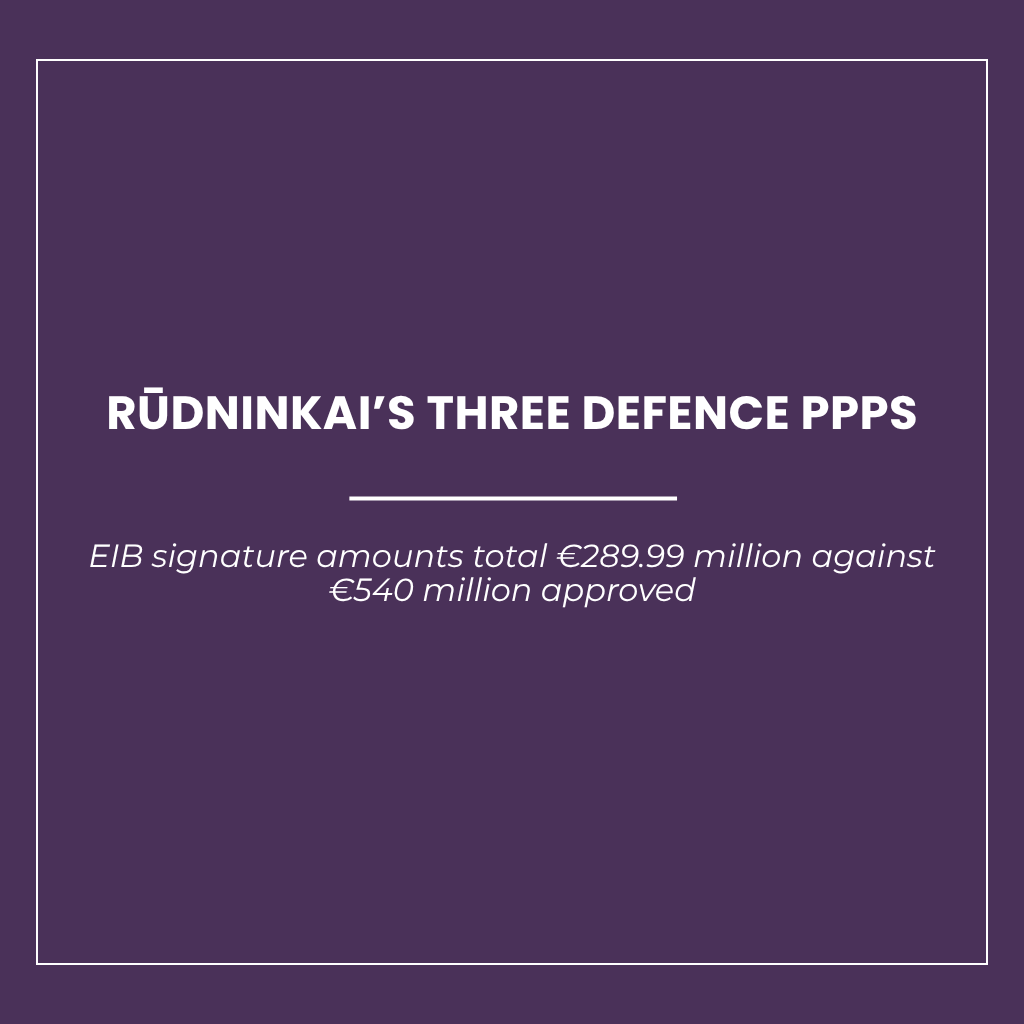
Permanent forward defence is a fiscal commitment before it is a military one. A decision to station an allied formation on a host state’s territory converts, within very few budget cycles, into a requirement for land, accommodation, command facilities, workshops, storage, training areas, utilities and a maintenance obligation that must run for as long as the deployment itself. The host state has to produce that infrastructure on a timetable set by the force it has agreed to receive rather than by its own capital programme, and has to pay for it from a defence budget simultaneously absorbing equipment, ammunition, military mobility and personnel. Where the sums are large enough and the deadline short enough, the binding constraint ceases to be whether public money exists in principle and becomes whether the requirement can be expressed in a form that lenders and equity investors will actually fund. That reframing is what makes the second phase of the Rūdninkai military campus in Lithuania worth examining closely. It is among the first occasions on which a European state has taken a strategically non-discretionary military infrastructure requirement, divided it into discrete contractual units, and financed those units in the project-finance market. The question it poses is not whether private capital can be attracted into defence infrastructure, because it plainly can, but what a host state actually transfers when it does so, and what it necessarily retains.