

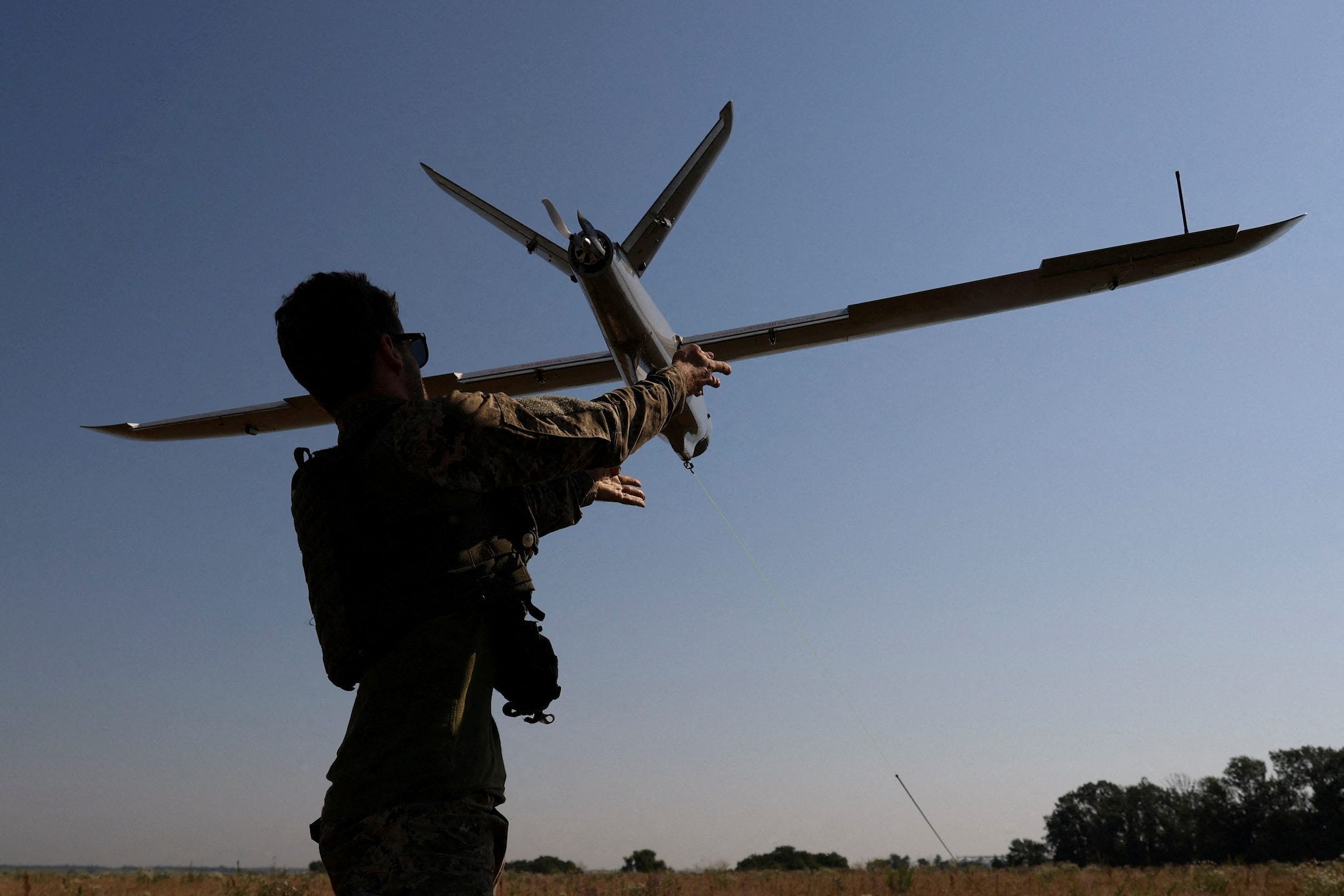
The U.S. Department of Defense has unveiled a comprehensive strategy to increase the scale, speed, and effectiveness of military drone deployment, drawing heavily from Ukraine’s battlefield experience. The plan follows Executive Order 14307, signed by President Donald Trump, which directs the Pentagon to support domestic drone manufacturing and streamline fielding procedures. Defense Secretary Pete Hegseth emphasized the urgency of removing bureaucratic constraints and delegating procurement authority directly to frontline commanders. The overarching goal is to ensure U.S. forces can access low-cost, AI-enabled drones rapidly and at scale, reflecting lessons learned from modern conflict.
At the heart of the new strategy is the recognition that drones have redefined contemporary warfare. In Ukraine, unmanned systems have become central to reconnaissance, targeting, and strike operations, drastically reducing decision-making cycles. The U.S. aims to replicate this model by creating a more responsive procurement system that bypasses traditional obstacles. Inspired by Ukraine’s DOT-Chain Defence marketplace, which allows units to order drones directly, the Pentagon will empower combat leaders to acquire tailored systems with minimal administrative friction. This shift is designed to close the gap between development and deployment and increase battlefield adaptability.
The Department of Defense outlined three priorities for implementation: reinforce the domestic drone industry, deploy cost-effective unmanned systems, and integrate drone combat scenarios into military training. Hundreds of U.S.-made drone models will be pre-approved for acquisition to reduce lead times. Emphasis will be placed on small, attritable drones equipped with artificial intelligence for autonomous operations. From 2026, drone-versus-drone exercises will become a standard component of force-on-force training, with a focus on decentralizing innovation and giving field units greater tactical autonomy in shaping their capabilities.
The approach aligns with earlier efforts such as the Replicator initiative, launched in 2023, which aimed to produce thousands of autonomous systems for air, land, and sea operations. While Replicator emphasized scaling production, the new directive targets integration and speed of use. Defense contractors like AeroVironment, already involved in Replicator through platforms such as the Switchblade 600, are expected to play a key role. Funding structures are also being adapted to support faster acquisition, and private sector innovation is being encouraged through partnerships modeled on Ukraine’s Brave1 platform. The objective is to reduce time-to-field for new technologies and expand use-case scenarios in real-time.
Global competition provides a further rationale for the initiative. Russia, China, and Iran have all made substantial advances in developing and deploying low-cost drones, often optimized for asymmetric warfare and export markets. The Pentagon’s new direction is not just about keeping pace technologically but adapting operational doctrines and institutional processes to new realities. Ukraine’s ability to innovate rapidly under fire has highlighted the value of distributed decision-making and responsive logistics. By embracing this model, the U.S. aims to restore its leadership in unmanned systems and ensure its military remains agile and technologically dominant in the face of evolving threats.
Source
Pentagon embraces Ukraine-inspired model to boost small drone fielding and use