

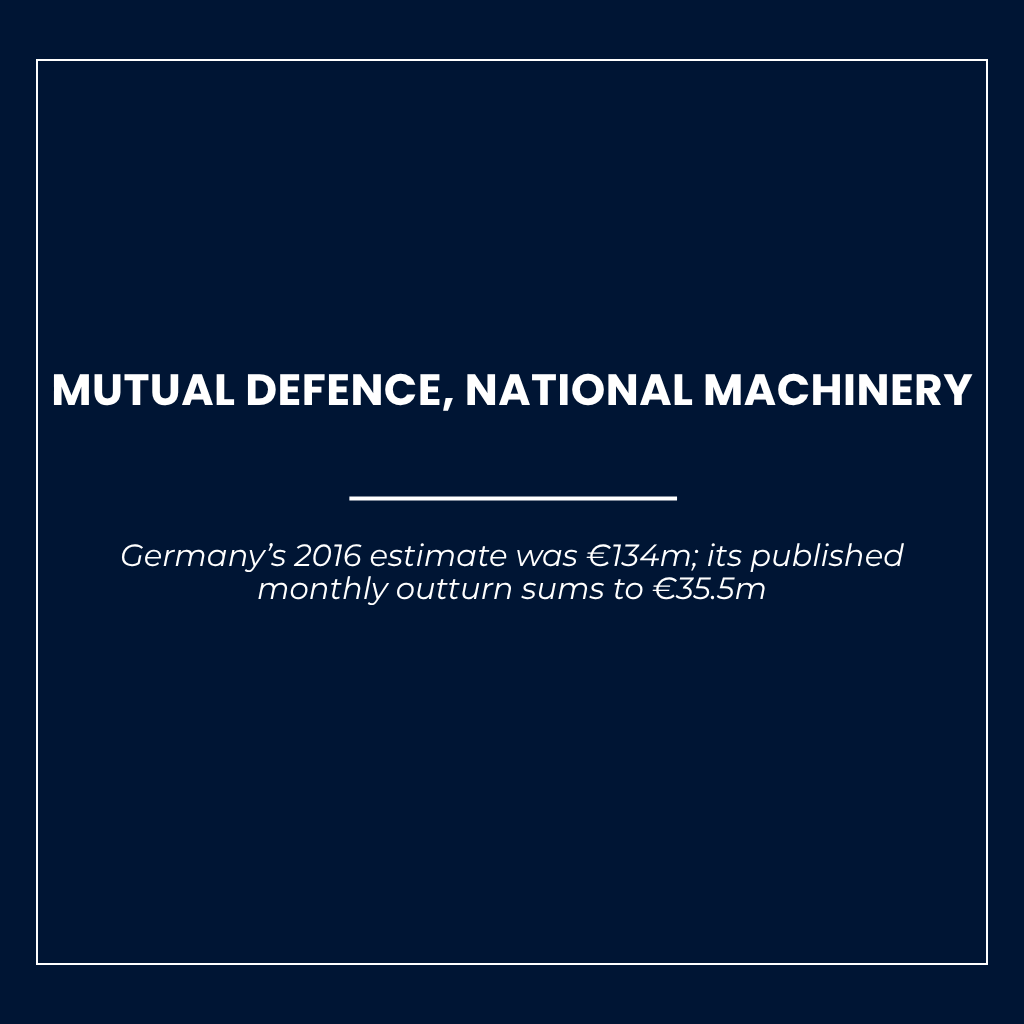
In November 2015, days after the Paris attacks of 13 November, France became the first Member State to invoke the mutual assistance clause of the Treaty on European Union. Defence ministers meeting in Brussels gave it unanimous political support. They took no collective decision and created no common operation. What followed was a set of national responses, each authorised, financed and executed through its own channels. Germany’s government asked parliament to approve up to 1,200 personnel and estimated the additional cost for 2016 at about €134 million. The defence ministry’s own monthly figures, published three years later, add up to roughly a quarter of that amount for the year. Other states offered ships, aircraft support, staff officers, transport capacity and money, some within days and some after parliamentary votes. In the decade since, the clause has acquired a political vocabulary of exercises and “operationalisation”, and European states have built pooled and contracted capabilities that could in principle serve a future request. The Treaty text, however, still creates an obligation without saying who decides, who pays, which assets are released or on what legal terms foreign forces are received. The open question is therefore not whether Europe has a mutual defence commitment. It is whether the decisions, legal arrangements, funding authority and rights of access that turn the commitment into usable assistance exist before they are needed, or have to be assembled after an attack.