

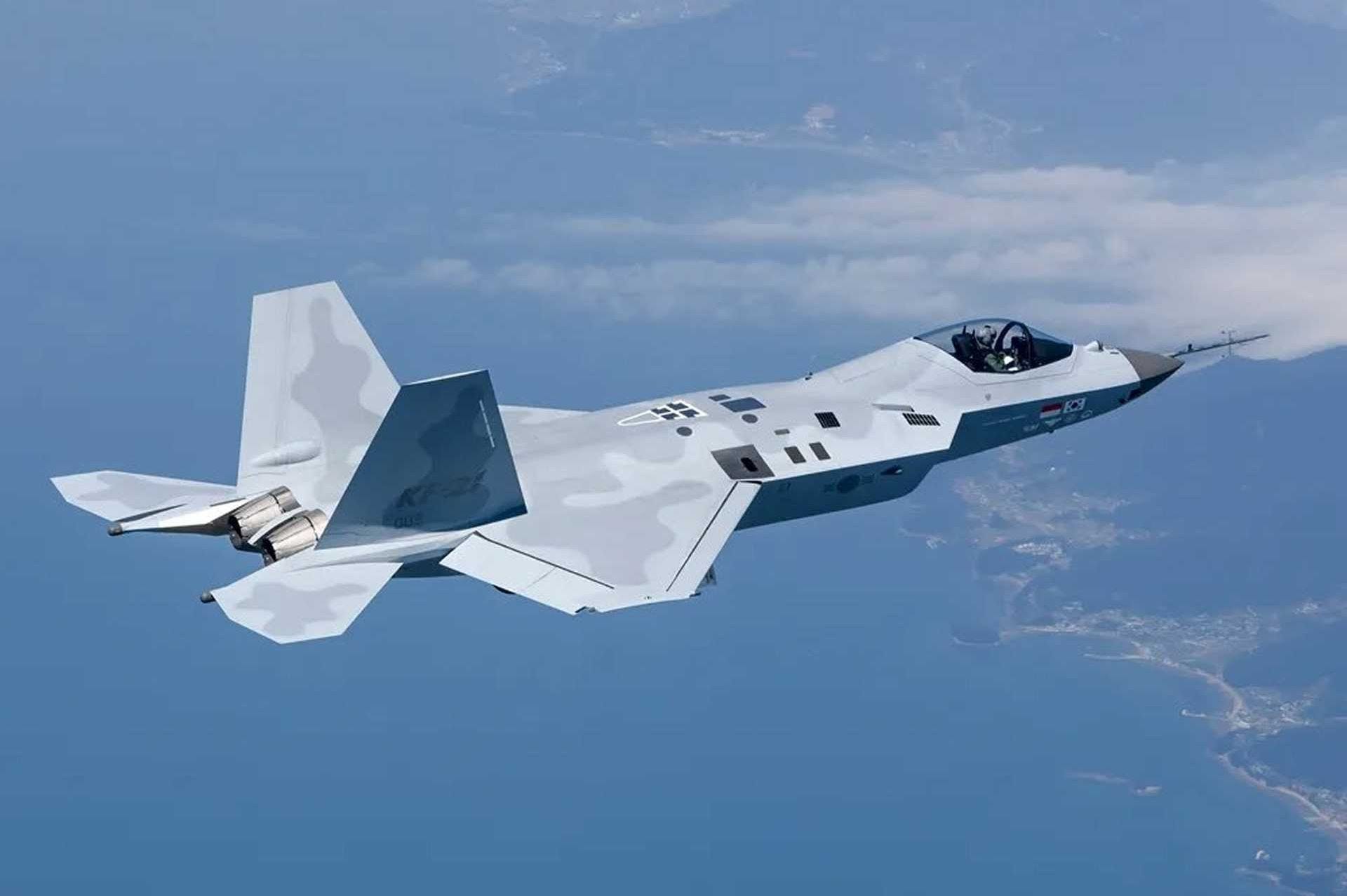
At IndoDefense 2025, South Korea and Indonesia signed a revised agreement that resets Jakarta’s financial commitment to the KF-21 Boramae fighter jet programme, ensuring continued Indonesian participation while alleviating long-standing budgetary strain. The new terms reduce Indonesia’s contribution from 1.6 trillion won ($1.17 billion) to 600 billion won ($438 million), and include an updated payment schedule and permission for partial compensation through commodities such as palm oil and coffee. Despite the financial adjustment, Indonesia retains its industrial role through PT Dirgantara Indonesia (PTDI), which will continue manufacturing components and supporting future operations for the 48 aircraft allocated under the programme.
The agreement, reached during a trilateral meeting in Jakarta between South Korean Defence Minister Shin Won-sik, Indonesian Defence Minister Prabowo Subianto, and Hanwha Aerospace CEO Son Jae-il, ends a prolonged impasse over unpaid contributions and secures the only foreign partnership in South Korea’s flagship aerospace project. First initiated through a 2010 memorandum of understanding and formally launched in 2015, the KF-21 programme originally allocated 60% of the funding to the South Korean government, 20% to KAI, and 20% to Indonesia. However, Indonesia began falling behind on payments in 2019, contributing only 278.3 billion won by late 2023—less than half of its commitment—prompting public pressure from Seoul and the threat of ejection from the programme.
Strategically, the revised deal reflects a pragmatic recalibration of industrial partnership dynamics in an era of fiscal constraints and geopolitical diversification. For Indonesia, the ability to maintain access to advanced 4.5-generation fighter capabilities without full financial exposure is a significant achievement. With multiple procurement pathways under review—including deals for Rafale F4, F-15EX, TAI KAAN, and possibly Chinese J-10C aircraft—Jakarta is positioning itself as a neutral but diversified aerospace customer. The KF-21’s blend of sovereign technological content, industrial participation, and flexible financing makes it an attractive hedge for Indonesia’s long-term force structure.
For South Korea, the revised agreement removes a source of strategic ambiguity that has cast a shadow over the KF-21’s international credibility. Now led by Hanwha Aerospace, the programme has gained renewed momentum, with six prototypes undergoing flight testing and production set to begin in 2026. Jakarta’s reaffirmed involvement strengthens Seoul’s export case in other emerging markets by showcasing a flexible, cooperative model of fighter development. Furthermore, Indonesia’s continued industrial role—anchored in component production and logistics infrastructure—demonstrates a working template for equitable defence-industrial co-development with nations seeking capability without full sovereign production.
The inclusion of a barter mechanism within the revised framework—allowing Indonesia to offset part of its obligations through palm oil and other commodities—adds a notable innovation in structuring international defence agreements. This approach may become increasingly relevant in future bilateral programmes, particularly when dealing with emerging economies facing balance-of-payment pressures. The agreement preserves not only the aircraft transfer but also strategic trust between Seoul and Jakarta, underscoring the importance of adaptive cooperation models in high-value, multi-year defence partnerships.
In conclusion, the June 2025 agreement safeguards the structural integrity of the KF-21 programme while introducing new flexibility into the political economy of international aerospace cooperation. Indonesia secures cutting-edge platforms, retains a meaningful industrial role, and avoids the reputational costs of withdrawal. South Korea retains a crucial partner, unlocks programme continuity, and strengthens its case for broader exports. The renegotiation stands as a case study in the strategic management of risk, partnership, and opportunity in the evolving global fighter aircraft market.