

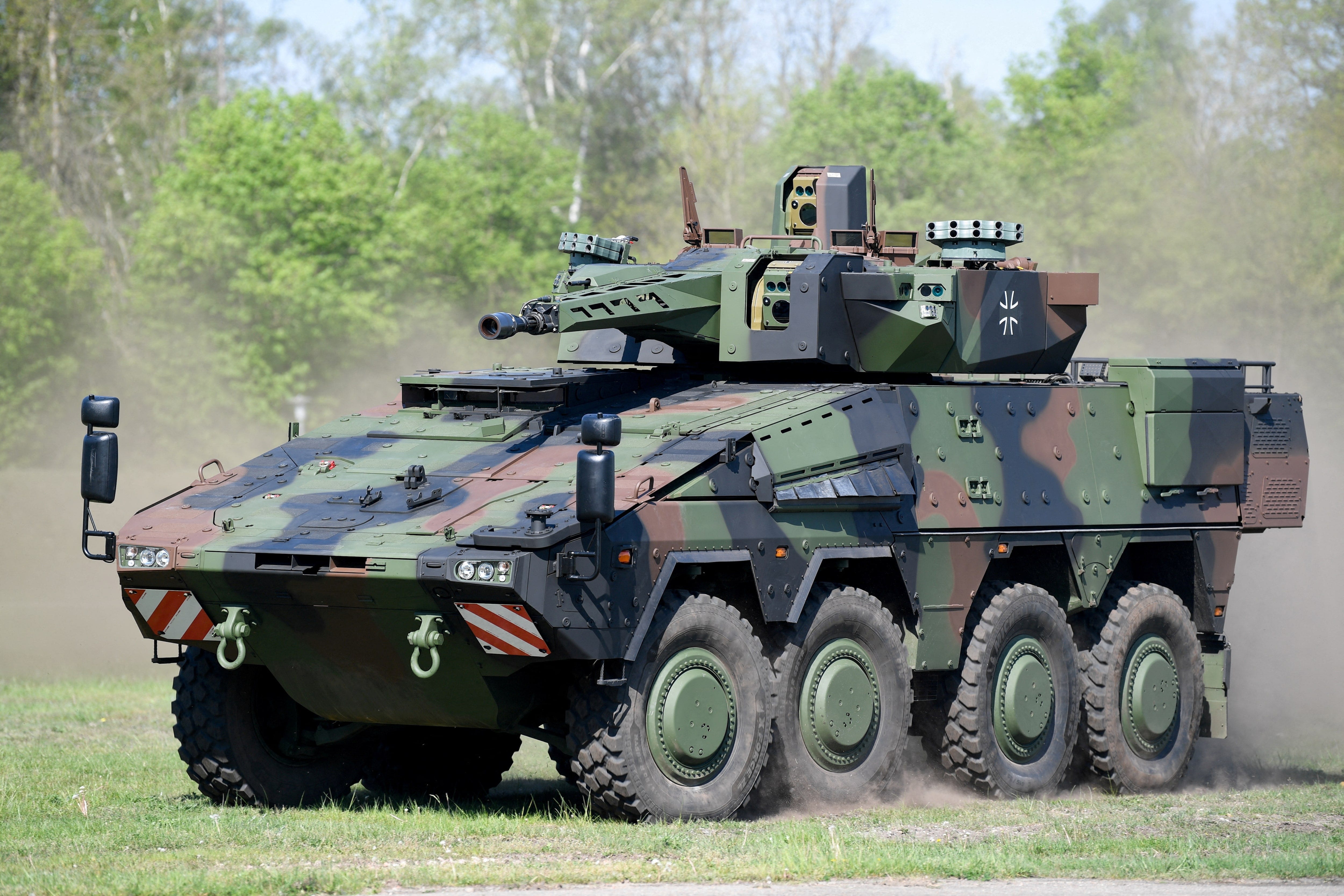
Germany is preparing to undertake one of the most significant rearmament efforts in its post-war history. The redefinition of Europe’s security environment, triggered by Russia’s war against Ukraine and reinforced by growing doubts about the durability of U.S. security guarantees, has led Berlin to adopt a more assertive military posture. After decades of underinvestment, the Bundeswehr finds itself needing to fill critical capability gaps across all domains. Chancellor Friedrich Merz has positioned defence revitalisation as a core pillar of his political agenda, linking it to the broader goal of restoring Germany’s credibility as a military power within Europe and NATO. The objective is not symbolic: it reflects a strategic shift towards building Europe’s most capable conventional force by 2030. This change entails not only increased spending, but a radical transformation of procurement scale, speed, and ambition.
According to Reuters (July 30, 2025), Germany is preparing multi-billion-euro orders for major platforms, including 20 additional Eurofighter jets, up to 3,000 Boxer armoured vehicles, and 3,500 Patria infantry fighting vehicles. The Boxer procurement, involving KNDS and Rheinmetall, is estimated at €10 billion, while the Patria vehicles are valued at €7 billion. The Eurofighter package could cost between €4 and €5 billion. Deliveries are expected over the next decade, making this one of the most extended and comprehensive military procurement plans since reunification. These orders are part of a broader policy to reduce dependence on the United States and to position Germany as a central pillar in European defence. Merz’s initiative follows parliamentary approval of a constitutional exemption allowing defence investments to bypass debt ceiling constraints—significantly increasing Germany’s regular defence budget, which is projected to rise to €83 billion in 2026.
The planned acquisitions span multiple operational domains, reflecting a desire to restore comprehensive military capabilities. The Eurofighters will reinforce the Luftwaffe's air superiority and multi-role strike capacity, addressing concerns about the ageing Tornado fleet. The Boxer and Patria vehicles aim to rebuild ground force mobility and protection, essential for NATO’s forward presence and rapid reaction operations. Moreover, the Ministry of Defence is also moving to expand Germany’s ground-based air defence, with additional IRIS-T systems and several hundred SkyRanger platforms to counter drone threats. These systems are intended to ensure layered protection for both fixed installations and manoeuvring formations. This multi-domain approach signals a shift from symbolic deployments to a more robust force structure designed for sustained, high-intensity operations in the European theatre.
This procurement surge also carries significant industrial and geopolitical implications. Domestically, it will strengthen Germany’s defence industrial base, particularly through Rheinmetall and KNDS, while generating long-term employment and technological spillovers. It also provides an opportunity to deepen European defence integration, especially with Finland and other Patria stakeholders. Politically, Germany’s ambition to lead in conventional military capabilities positions it as a more assertive actor within NATO and the EU. Yet this leadership role requires consistency: past defence plans often failed to meet timelines or encountered internal political resistance. This time, Merz’s government appears determined to overcome institutional inertia, building on the political capital accumulated after the February 2022 Zeitenwende speech, which marked the beginning of Germany’s strategic reassessment.
Despite the scale of investment, the gap between ambition and current capability remains substantial. In 2022, the Bundeswehr’s operational readiness was heavily criticised by its own leadership. Many units lacked basic equipment, munitions were insufficient for prolonged conflict, and procurement processes were chronically delayed. The coming decade will be decisive in determining whether Germany can translate financial input into deployable military power. The new procurement packages must be implemented with strict project management and real accountability. If successfully executed, this effort could restore credibility and operational resilience to a force long seen as underprepared for peer-level threats. However, failure to deliver on time or on cost would reinforce scepticism among NATO partners and undermine the very leadership position that Berlin seeks to assume.
Germany’s rearmament drive must also be assessed in light of evolving NATO standards and European defence commitments. Merz has pledged to meet NATO’s new benchmark of 3.5% of GDP for defence by 2029—significantly ahead of most allies. While this would place Germany among the highest spenders in absolute terms, spending alone does not equal capability. The focus must shift toward creating modular, interoperable, and sustainable force packages. Equally important is ensuring that Germany’s strategic ambitions align with operational planning at both NATO and EU levels. The return of large-scale land warfare to Europe’s borders requires a recalibration of logistics, mobility, and readiness. Germany’s ability to lead by example—financially, technologically, and militarily—will determine its future standing not only as Europe’s economic engine, but as a reliable pillar of its defence architecture.