

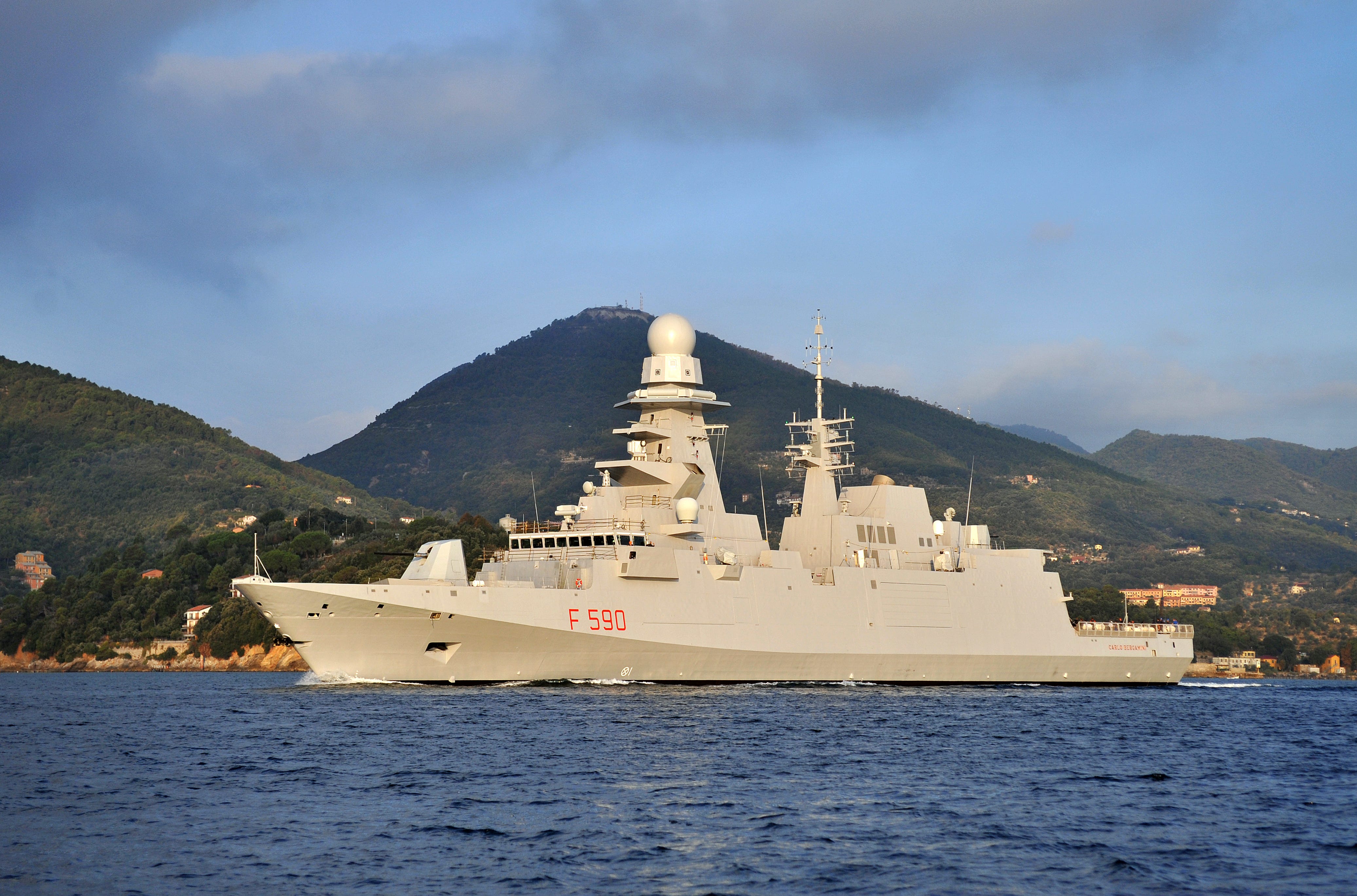
The €764 million Through Life Sustainment Management 2 (TLSM2) contract signed on 24 June 2025 between Orizzonte Sistemi Navali (OSN) and OCCAR represents a key milestone in the consolidation of Italy’s naval sustainment capability. The agreement formalises a five-and-a-half-year support programme for the Italian Navy’s FREMM-class frigates, reinforcing a long-standing public-private partnership between the Navy, OSN (a joint venture of Fincantieri and Leonardo), and key industrial players such as MBDA, Elettronica, and TMDS. The contract also includes options worth approximately €335 million and sub-contracts for Fincantieri (€265 million) and Leonardo (€190 million), anchoring the programme in Italy’s broader defence industrial base.
From a strategic perspective, TLSM2 reflects a growing understanding within NATO and EU frameworks that sustainment is no longer a peripheral function but a core pillar of force readiness and national resilience. In the context of intensifying maritime competition and growing demand for forward-deployable surface combatants, the FREMM class remains a technological benchmark in multi-mission naval warfare. Ensuring continuous availability, material readiness, and predictive maintenance across the class is therefore not only a national priority but a capability multiplier for allied operations in the Mediterranean and beyond.
The contract also introduces a more integrated sustainment model, embedding industrial personnel, digital service layers, and predictive logistics into the Navy’s support infrastructure. By making use of the Navy’s digital platforms for maintenance tracking, planning, and reporting, TLSM2 aligns with NATO’s broader push toward condition-based maintenance (CBM+) and digitally enabled fleet management. This approach ensures more efficient use of maintenance windows, reduces unscheduled downtime, and enhances long-term cost-effectiveness—a model increasingly promoted by OCCAR across multinational platforms.
On an industrial level, TLSM2 reinforces the strategic role of OSN as the anchor platform integrator for Italy’s surface combatant fleet. Giovanni Sorrentino (OSN), Pierroberto Folgiero (Fincantieri), and Carlo Gualdaroni (Leonardo) have all emphasised that post-delivery support is becoming as crucial as shipbuilding itself. Indeed, the programme serves as both a vertical integration mechanism for Italy’s naval prime contractors and a stabilisation instrument for the national defence supply chain, including small and medium-sized enterprises in electronics, propulsion, and structural components. The explicit goal is to strengthen Italy’s sovereign capabilities in naval sustainment at a time when allied dependence on U.S. logistical structures is being re-evaluated.
Strategically, the TLSM2 contract enhances Italy’s positioning as a reliable maritime contributor to NATO and EU security frameworks. The FREMM frigates already form the core of joint operations under NATO Standing Maritime Groups (SNMG) and EU naval missions, and the integration of digital sustainment into operational planning ensures longer deployments, faster regeneration cycles, and better alignment with mission-specific configurations. The programme also sets a precedent for lifecycle support models that could be extended to next-generation platforms such as the PPA and the European Patrol Corvette.
In conclusion, the TLSM2 contract is more than a logistics agreement—it is a critical infrastructure investment in Italy’s strategic autonomy and operational continuity. It binds together high-end industrial capacity, Navy-anchored digital logistics, and transnational programme governance under OCCAR. At a time when European navies face both operational strain and pressure to reduce dependency on external suppliers, Italy is quietly positioning itself at the forefront of sustainment-centred defence industrial policy. The FREMM case may soon become a reference model for European navies seeking to harden readiness while reinforcing national and allied production ecosystems.