

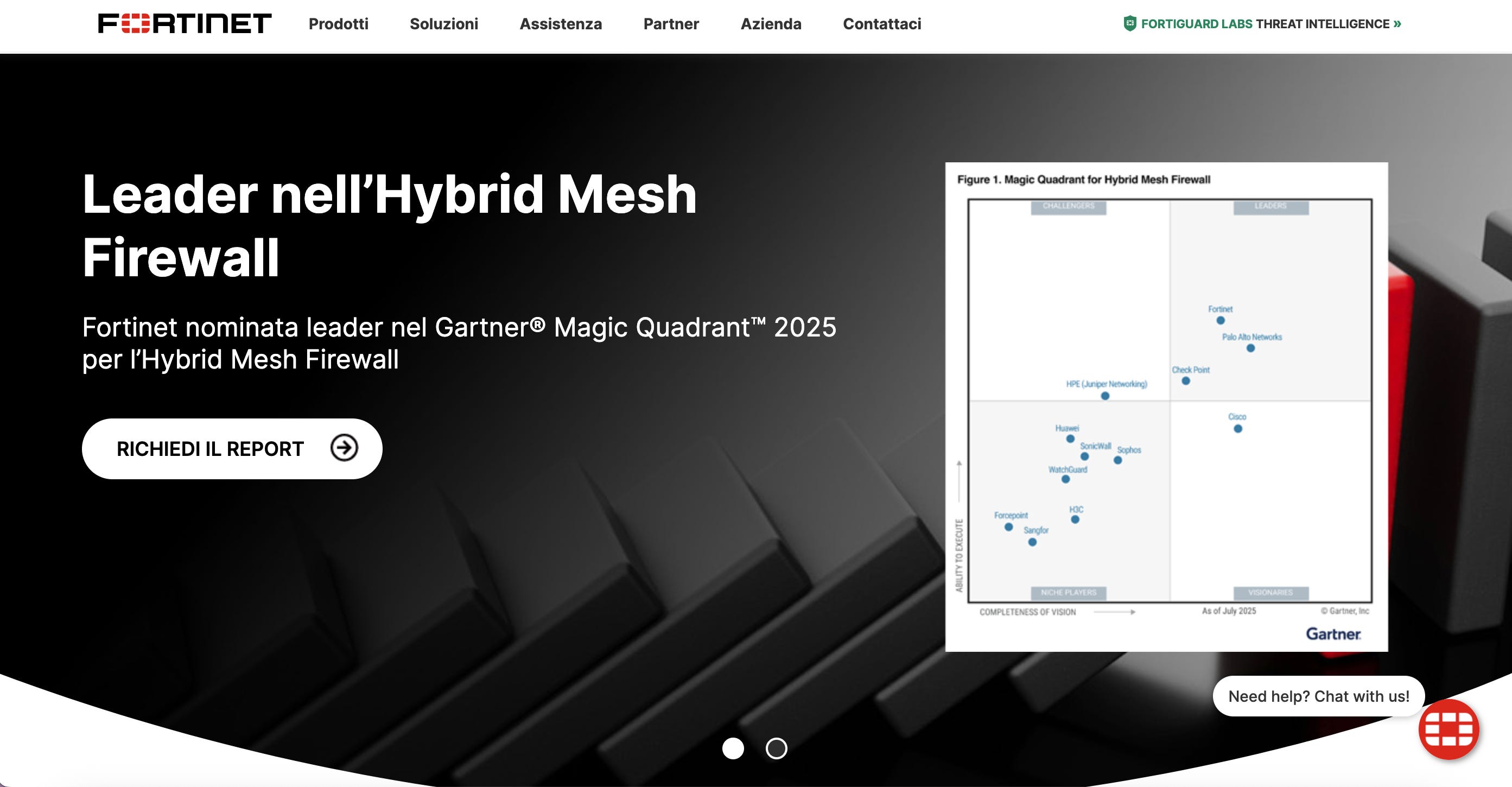
Fortinet, Inc. is a prominent American cybersecurity company founded in 2000 by Ken and Michael Xie[1]. Headquartered in Sunnyvale, California, it operates globally with offices in North America, Europe and Asia[2]. Best known for its FortiGate firewalls and integrated network security appliances, Fortinet markets a broad “Security Fabric” of interconnected products designed to protect enterprises and critical infrastructure[3]. With a portfolio of over fifty products and nearly 890,000 customers worldwide[4], Fortinet wields significant influence in cybersecurity. Its technologies are extensively used in commercial and government networks, including partnerships with NATO and national governments. Against the backdrop of Europe’s drive for digital sovereignty and defence autonomy[5], Fortinet’s role raises strategic questions: it offers a non-Chinese alternative for key cyber capabilities, yet is an American supplier. This report examines Fortinet’s corporate profile, technology offerings and partnerships, assessing how its capabilities align with European Union and NATO priorities – including interoperability, deterrence and dependence reduction. It highlights both the ways Fortinet’s solutions could bolster Europe’s cyber defenses and the gaps that arise from its U.S. origins and supply chains.