

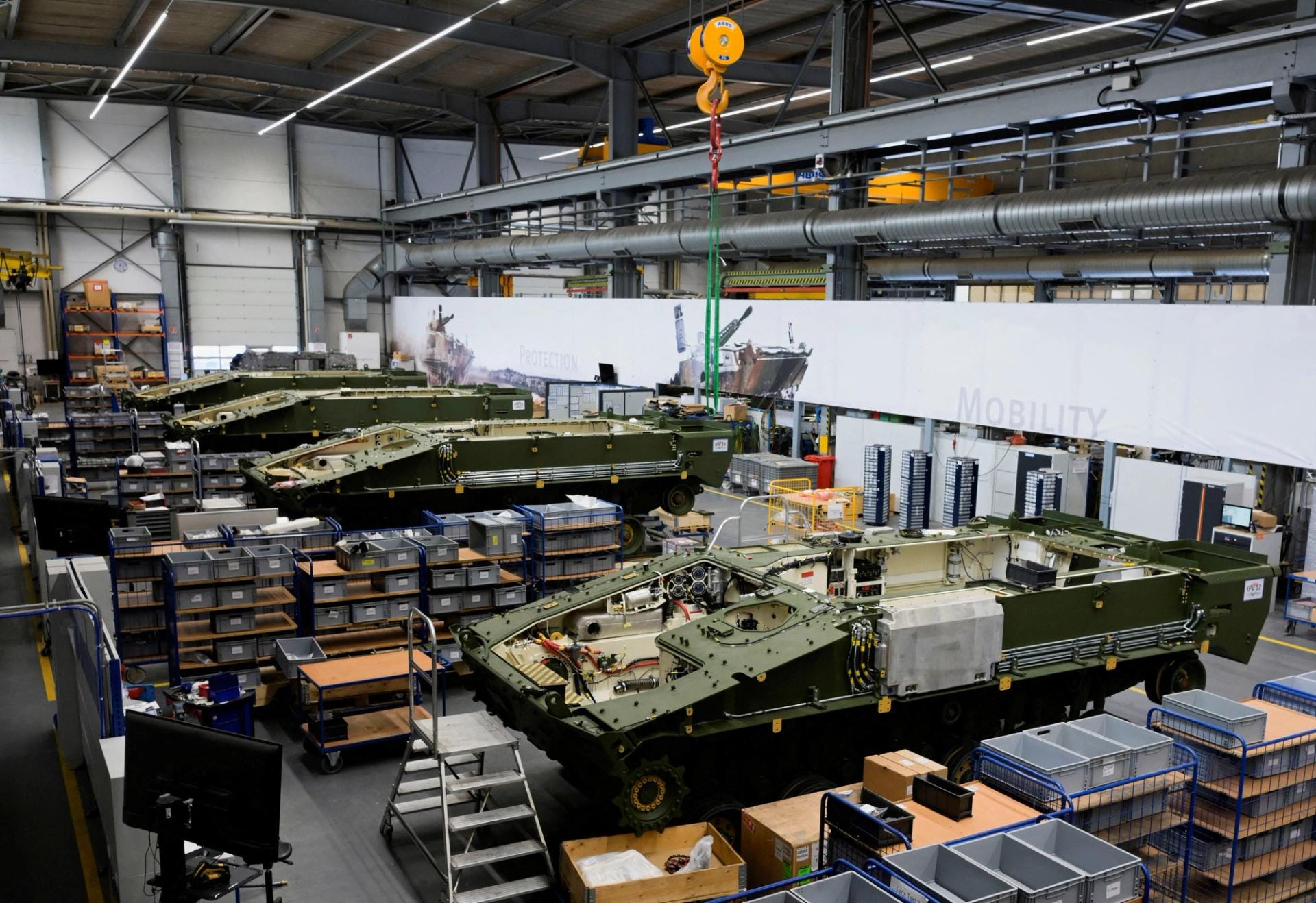
As Europe dramatically increases defence spending, attention is turning to the continent’s fragmented defence industry – and whether it can consolidate to meet new demand and compete globally. Europe’s defence sector remains splintered along national lines, with numerous mid-sized firms and duplicate development programs in different countries. This fragmentation is inefficient and subscale relative to the U.S., where giants like RTX and Lockheed Martin dominate. For example, Europe currently has three separate fighter jet models (Eurofighter Typhoon, France’s Rafale, and Sweden’s Gripen) dividing a market that in the U.S. is served largely by the F-35 alone. European nations each maintain their own tank, warship, and artillery projects in many cases. This landscape poses major consolidation challenges even as governments pour money into new projects. “Europe would struggle to fight a major war with Russia in the short term” under the current fragmented model, warns one analysis, highlighting how duplication and lack of scale hinder output. Indeed, during the Ukraine war, Europe has at times struggled to rapidly supply standard ammunition and equipment because of diverse inventories and limited cross-border production coordination.
