

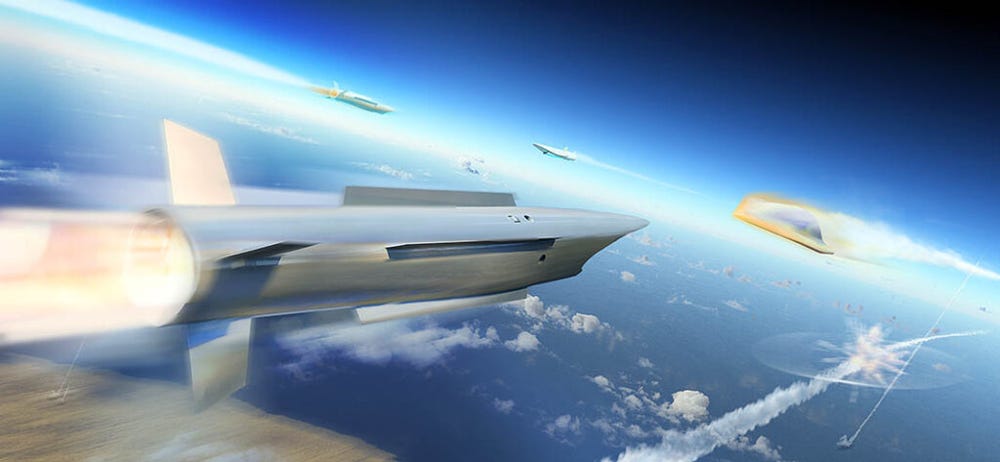
The development of a European counter-hypersonic interception capability constitutes a strategic response to the long-term evolution of high-speed, manoeuvring threats and to the objective of strengthening European strategic autonomy. Current efforts are deliberately structured around two parallel initiatives with distinct institutional and industrial logics. HYDIS is an OCCAR-managed programme launched under the auspices of the TWISTER PESCO initiative, with a consortium led by MBDA France as prime contractor and organised around a highly integrated industrial model; it is co-funded by the European Defence Fund and by the participating nations. EU HYDEF, by contrast, is an EDF project coordinated by SMS on behalf of the participating states, with Diehl Defence acting as technical lead for the interceptor design within a more distributed, functionally segmented industrial configuration. While both initiatives address the same post-2035 hypersonic threat environment, they do so through different governance frameworks, funding instruments and approaches to industrial integration, as reflected in the relevant OCCAR and European Defence Fund documentation.
This report provides a structured industrial mapping of these two pathways, examining how consortium architectures, supplier dependencies and technology choices condition Europe’s ability to progress from concept definition toward a viable development programme. Particular attention is given to the contrast between MBDA’s prime-centric, vertically integrated model in HYDIS and the centre-of-excellence approach adopted within EU HYDEF, as well as to the shared technological challenges that cut across both efforts, including solid-fuel ramjet propulsion, high-performance infrared seekers and resilient guidance and control in contested environments. The analysis also situates both interceptor initiatives within their broader enabling and regulatory context, notably the role of space-based early warning layers such as ODIN’s Eye and the implications of emerging EU procurement and financing instruments. In this respect, the SAFE instrument and its eligibility conditions—requiring that at least 65 per cent of the end product’s value originate within the EU, associated states or Ukraine—are assessed as key variables shaping future industrial design choices and joint procurement strategies. Against this background, the report evaluates the conditions under which programmatic convergence may occur as the current concept phases approach completion around 2027, offering a clear analytical framework for understanding the strategic, industrial and institutional dynamics underpinning Europe’s counter-hypersonic capability.