

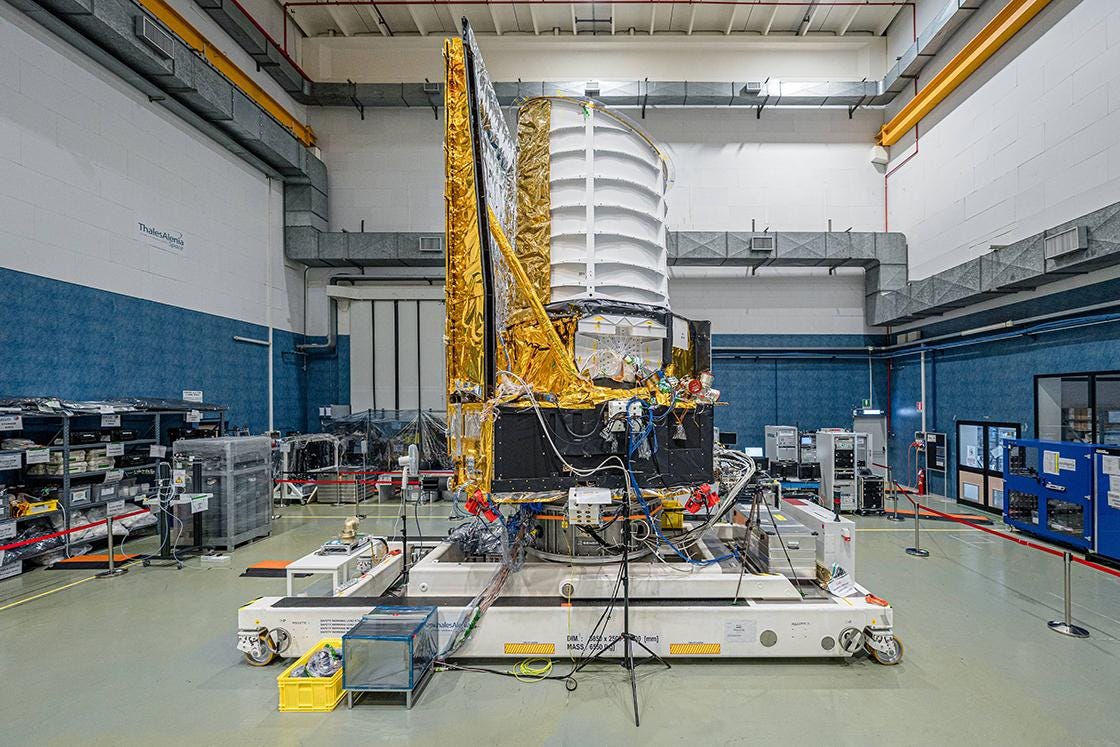
In April, it emerged that Airbus, Thales, and Leonardo – three of Europe’s top aerospace/defence firms – are in preliminary talks to combine their satellite manufacturing businesses into a joint venture. The CEOs of the trio even met with the EU antitrust chief to discuss the potential merger, a step that typically precedes a formal deal application. This prospective alliance, likened to a space-sector version of MBDA (the pan-European missile consortium), aims to create a European champion in satellite communications to compete with Elon Musk’s Starlink mega-constellation. Currently, Europe’s satellite industry is fragmented between Airbus Defence & Space and Thales Alenia Space (Leonardo owns part of the latter). A merger would pool their expertise in satellites and potentially funnel more resources into the EU’s secure communications projects. The very fact that these historically rival firms are pursuing a merger is extraordinary – it signals strong political backing for defence-industrial consolidation. EU officials have indicated a “looser stance” on antitrust for strategic sectors, given the geopolitical context. If realized, this deal would be one of the largest European defence tie-ups in years, creating a company better able to compete globally and invest in next-gen tech (like low-earth-orbit satellites for military broadband). Observers note it’s a response to scale: SpaceX’s Starlink and other U.S. players operate at a size no single European firm can currently match. While talks are in early stages and any outcome is well into 2024 or later, this initiative underscores a broader consolidation trend as Europe’s defence industry seeks efficiencies and technological critical mass.
Sources