

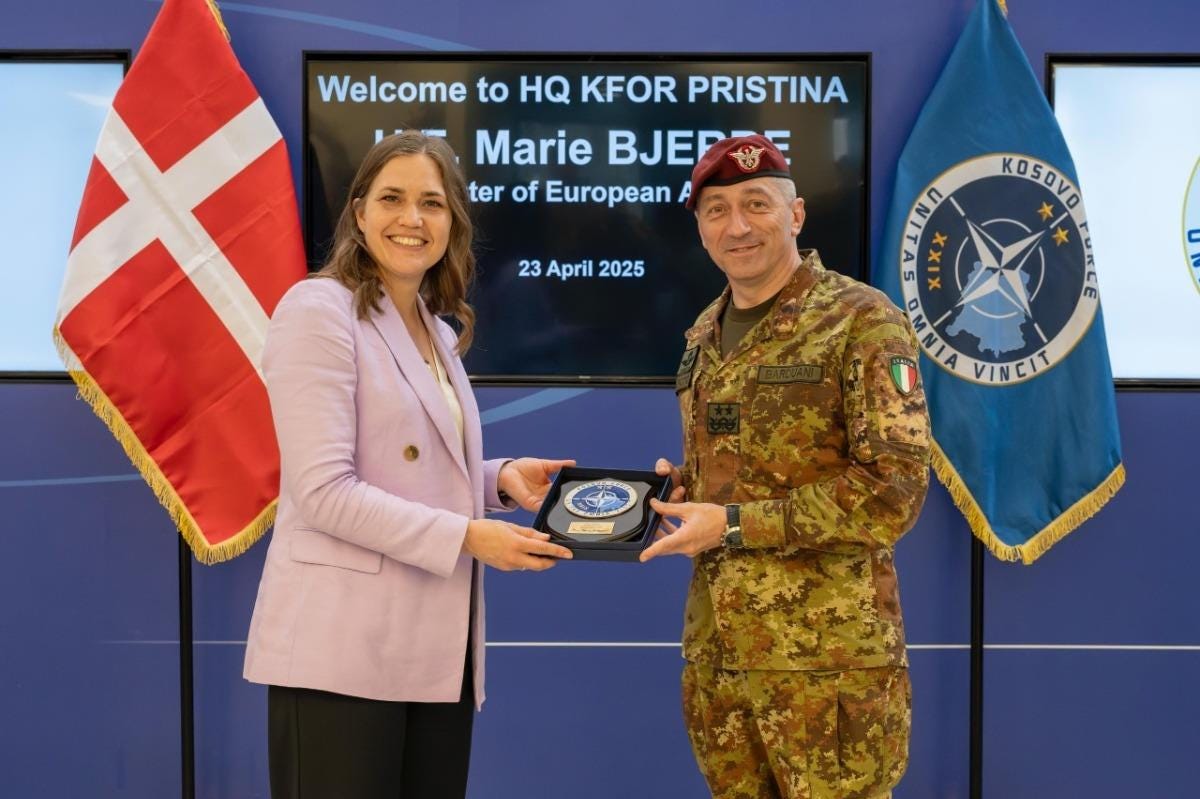
As Denmark assumes the rotating presidency of the Council of the European Union, its leadership signals a decisive shift in focus: merging security imperatives with industrial policy. In an interview with the Financial Times, Danish Minister for European Affairs Marie Bjerre outlined a dual-track strategy aimed at reinforcing the Union’s defence capabilities while enhancing its economic competitiveness. The presidency’s agenda is shaped by a pragmatic recognition that military resilience and industrial strength are interdependent in an increasingly hostile geopolitical environment. The underlying objective is clear: make the EU both safer and economically stronger by 2030.
This approach is anchored in a growing consensus within EU institutions that defence production and supply chain integration are now core components of sovereignty. The European Defence Industry Programme (EDIP), a legislative proposal aimed at incentivising joint procurement and production of defence equipment, is at the centre of Denmark’s agenda. The initiative has been stalled for over eighteen months due to intra-EU disagreements on third-country components in eligible systems. Copenhagen intends to resolve these frictions to unlock coordinated investments in critical capabilities. In parallel, efforts will be made to link the Ukrainian defence industry into the EU’s broader industrial base, a move that has both strategic and economic implications.
The Danish presidency also plans to accelerate the reduction of regulatory burdens on European firms, which are seen as undermining productivity and technological innovation. According to Bjerre, excessive regulation weakens the competitiveness of European companies, including in strategic sectors such as defence, aerospace, and dual-use technologies. The presidency will therefore push to simplify EU rules and foster conditions conducive to scale-up and cross-border consolidation. These reforms are implicitly aligned with the findings of the Draghi report on competitiveness, which identified defence as a flagship sector requiring structural modernization and coordinated investment.
What makes this presidency particularly consequential is the convergence between industrial policy and geostrategic needs. The logic of combining “bombs and business,” once politically sensitive, has become more widely accepted following Russia’s full-scale invasion of Ukraine. Defence spending is no longer framed solely as a budgetary burden but increasingly as a growth opportunity and a lever of technological autonomy. In this context, Denmark’s focus on stable supply chains and interoperable production frameworks across the Union suggests a long-term attempt to transition from reactive procurement to a proactive defence-industrial strategy.
Ultimately, Denmark’s EU presidency illustrates the institutional mainstreaming of defence policy within the European project. By linking security objectives with competitiveness targets, Copenhagen is positioning defence not only as a matter of deterrence, but also as an engine of integration and innovation. The success of this approach will depend on its ability to overcome institutional inertia and national reluctance. Yet if effective, it could represent a turning point in the EU’s strategic maturation, making it not merely a regulatory power but an actor capable of shaping its own security environment through coordinated industrial policy.