

Defence Finance Monitor is a specialised source of analysis for professionals who seek to anticipate how strategic priorities shape investment patterns in the defence sector. In a landscape shaped by high-stakes political choices and rapid technological shifts, understanding the link between military doctrine, operational requirements, and industrial policy is not a competitive edge—it is a prerequisite.
We analyse how strategic imperatives set by NATO, the European Union, allied Indo-Pacific democracies, and national Ministries of Defence translate into procurement programmes, innovation roadmaps, and long-term industrial priorities. Rather than listing individual companies, we track how clearly defined strategic challenges—such as deterrence gaps, technological dependencies, or capability shortfalls—are converted into funding schemes and institutional demand. Only companies that respond to these challenges become relevant to institutional buyers and, by extension, to investors. This framework has already enabled a growing community of analysts and financial professionals to make more consistent, risk-aware decisions and to avoid costly misalignments.
Building on this methodology, we are developing a structured database of companies analysed and classified according to the strategic-technological criteria set out in our framework. Subscribing to Defence Finance Monitor therefore provides not only access to in-depth reports, but also to a continuously expanding database of European and allied defence firms assessed against clear benchmarks. Each company is positioned according to its alignment with EU and NATO priority capability areas, its contribution to European strategic autonomy, its level of interoperability and deterrence value, and its role in reducing dependencies on non-allied suppliers. Classification also covers technology readiness levels, participation in EU and NATO programmes, intellectual property assets, and dual-use applications. This allows subscribers to compare, benchmark, and identify the most strategically relevant actors within a coherent, transparent, and decision-oriented taxonomy.
Subscribing to Defence Finance Monitor means gaining access to a strategic intelligence service that connects financial decisions with defence priorities. At the core of our work is a structured database of European and allied defence companies, classified according to strategic-technological criteria such as autonomy, interoperability, deterrence, and supply chain resilience. In today’s environment, profitable investment requires more than market data: it requires understanding how limited public resources are channelled toward specific capability gaps, sovereign technologies, and the reduction of non-allied dependencies. By combining in-depth reports with a continuously expanding company database, Defence Finance Monitor enables investors to anticipate demand, benchmark firms against institutional priorities, and avoid costly misalignments.
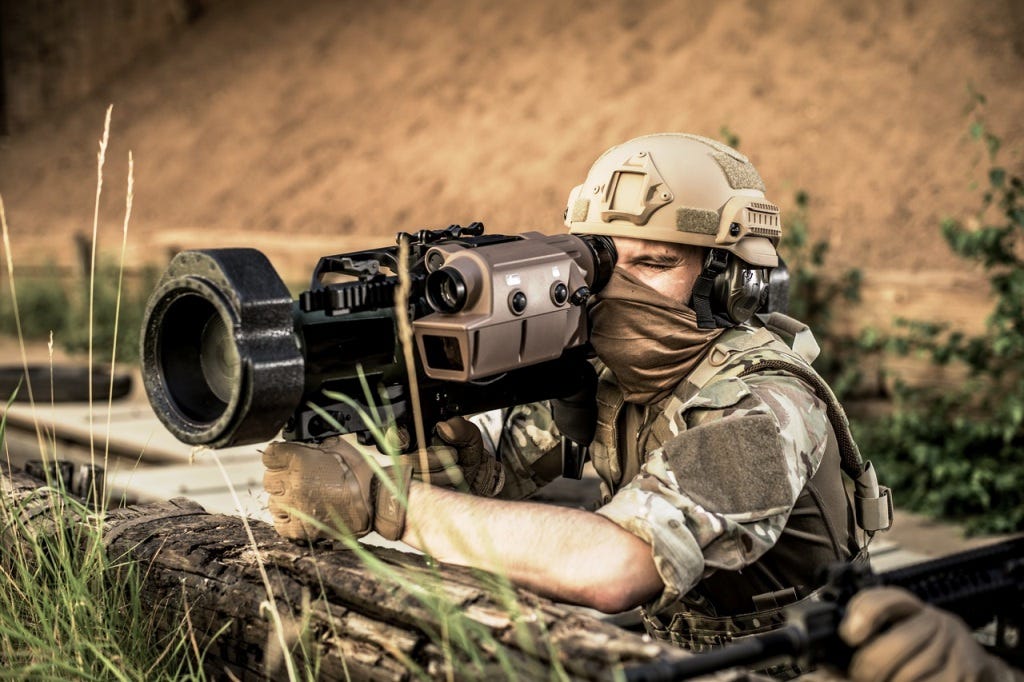
Germany Set to Approve a $3.5 Billion Defence Package
Berlin is poised to take a decisive step in rebuilding its military capabilities. According to a Reuters report published on 8–9 November 2025, the German government is expected to approve today, 12 November, during a closed-door parliamentary session, a defence package worth $3.47 billion (approximately €3 billion). The measure marks a new stage in Chancellor Friedrich Merz’s rearmament strategy, aimed at raising Germany’s defence expenditure to 3.5 % of GDP by 2029, aligning the country with NATO’s most ambitious spending objectives.

Financing Europe’s Defence Industrial Base: The Strategic Role of Banks in the DSR Ecosystem
The financial dimension of European defence is emerging as one of the decisive arenas in the continent’s effort to rebuild industrial readiness and technological sovereignty. For decades, the relationship between the banking sector and defence manufacturing was marked by moral hesitation, risk aversion, and a preference for distance. Yet the security environment that followed Russia’s invasion of Ukraine has made this posture unsustainable. The NATO Innovation Fund (NIF) has recently published the most detailed assessment to date of how financial institutions engage with defence, security, and resilience (DSR) companies. Its findings reveal a paradox: while public spending on defence is expanding and venture capital for dual-use innovation has reached record levels, commercial banks still apply restrictive lending policies. Nearly one in ten major European banks explicitly limits or excludes financing for conventional defence and dual-use activities. This disconnection between political ambition and financial practice poses a strategic risk to Europe’s ability to scale industrial capacity and maintain technological parity within the Alliance.

The European Defence Industry Programme: Crisis Mechanism and Extraordinary Powers
One of the main lessons learned from recent crises — from the COVID-19 pandemic to the war in Ukraine — is that Europe’s defence industry must be able to react quickly and collectively when supply chains are disrupted. The European Defence Industry Programme (EDIP), adopted by the Council of the European Union on 7 November 2025 (Council document 14814/25), responds to this challenge by establishing a legal framework that allows the Union to act decisively in emergencies. Within this framework, the Regulation introduces two extraordinary procedures — the “supply-crisis state” and the “security-related supply-crisis state” — designed to give the European Commission and Member States the tools to protect the continuity of defence production in moments of severe disruption. These mechanisms, defined in Articles 44 and 48 of the Regulation, allow the EU to move from ordinary coordination to exceptional action, activating temporary powers such as production prioritisation, regulatory derogations, and accelerated authorisations.
Company Profiles & Industrial Intelligence
Raptor Technologies: Strategic-Technological Analysis
Raptor Technologies is a small Romanian embedded systems company founded in 2012 and based in Cluj-Napoca. The firm focuses on advanced software for vehicle control, driver assistance, and smart connectivity across automotive, transportation and maritime platforms. Although primarily a civilian technology provider, Raptor’s work in embedded autonomy and navigation places it at the intersection of European industrial policy and defense innovation. Its expertise in autonomous vehicle software aligns with NATO and EU interests in unmanned systems and secure mobility. This report examines Raptor’s strategic and technological profile in the context of Europe’s drive for technological sovereignty. We assess how its capabilities might substitute foreign technology, support interoperable defense platforms, bolster deterrence, and integrate into transatlantic initiatives. The company’s scale and visibility are modest, but even small indigenous players can influence Europe’s supply chains and innovation base. The analysis that follows delves into Raptor’s corporate structure, technology portfolio, readiness levels, program participation, and strategic partnerships, highlighting both its current contributions and gaps relative to EU/NATO defense objectives.
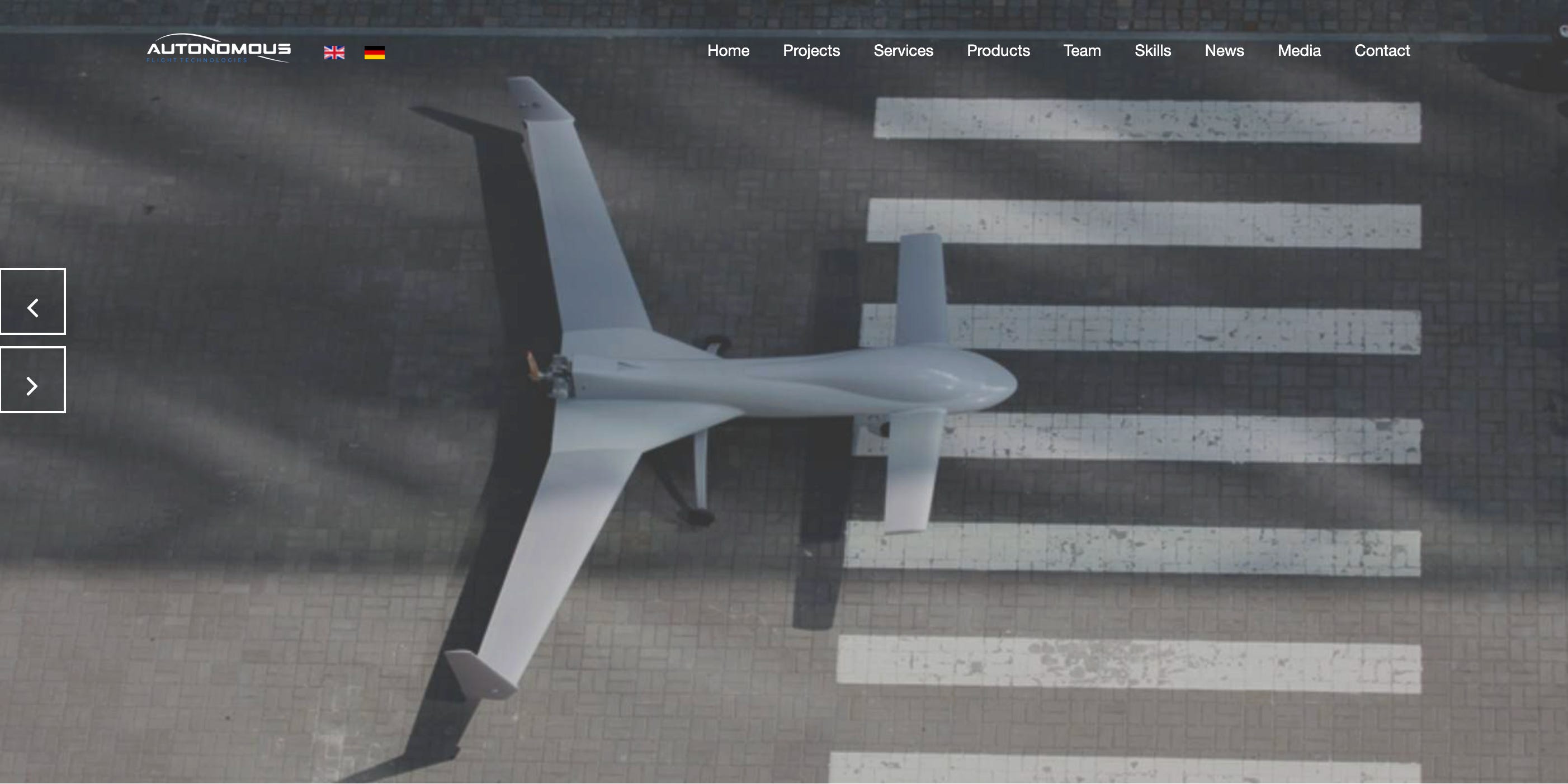
Autonomous Flight Technologies (AFT) – Company Overview and Strategic-Technological Analysis
Autonomous Flight Technologies (AFT) is a Romanian UAV pioneer, founded in 2004 and headquartered in Clinceni (Ilfov County), Romania[1][2]. The company builds complete unmanned aerial systems for civilian and military use, including electric and combustion-engine drones (the Hirrus, Signus, and Quarrus series)[3][4]. AFT emphasizes in-house development of all key technologies, notably creating its first flight autopilot in 2006 and its first military target-drone in 2005[1]. Its vertical integration approach – from composite airframe manufacturing to embedded software – was intended “to prevent [the company] from being held hostage to the quality … of other companies’ components”[5]. In 2017 the company’s avionics achieved NATO recognition for compliance with STANAG 4609 video-link standards[1], underscoring its maturity. These developments have positioned AFT as the top Romanian UAV manufacturer and one of Eastern Europe’s leading small-drone system providers[1].

BraveX Aero – Strategic-Technological Analysis
BraveX Aero is an emerging Romanian aerospace company that is designing high-endurance fixed-wing and VTOL (Vertical Take-Off and Landing) drones for both civilian and defense applications. Founded by aviation enthusiasts and technologists in Cluj-Napoca, BraveX has rapidly built a small production line in Romania and produced field-tested prototypes of long-range UAVs. Its platforms—engineered with advanced composites and autonomous flight control—demonstrate extended endurance (up to four hours of flight) and multi-hundred-kilometer range, far exceeding typical multirotor drones[1][2]. Through a recent partnership with a German firm, the company is also exploring drone swarm coordination, signaling a focus on AI-driven autonomy[3]. BraveX presents itself as a local alternative to foreign drone suppliers, aligning with Europe’s drive for indigenous defense tech. However, as a very young startup (with initial R&D from 2020 and company registration in 2024), questions remain about how its emerging technologies can scale, integrate with NATO systems, and ultimately contribute to European defense autonomy. This analysis probes BraveX Aero’s legal and corporate structure, technology portfolio, program links, and strategic relevance—laying out the evidence behind its potential and its current gaps with respect to EU-NATO objectives.
DigitalGate AMG: European Strategic-Technological Analysis
DigitalGate AMG S.A. is a Romanian embedded-systems specialist founded in 2018, headquartered in Timișoara[1]. The firm markets itself as an agile deep-tech scale-up providing end-to-end hardware and software development for aerospace and defense platforms[2][3]. Its core offerings include custom embedded hardware design, real-time operating system integration, device driver development, and advanced algorithms for sensor fusion[2][4]. These capabilities align with European priorities in C4ISR and multi-domain sensor networks. Notably, DigitalGate’s expertise in sensor-processing and embedded software contributes to European autonomy by enabling local development of critical systems, helping reduce reliance on non-EU suppliers for components like microcontrollers and signal-processing modules[5]. In short, DigitalGate presents as a niche European provider of defense electronics: it has relevant technology building blocks but modest scale and limited record in major alliance programs, suggesting a specialized rather than leading role in NATO interoperability or EU defense autonomy.