

Defence Finance Monitor is a specialised source of analysis for professionals who seek to anticipate how strategic priorities shape investment patterns in the defence sector. In a landscape shaped by high-stakes political choices and rapid technological shifts, understanding the link between military doctrine, operational requirements, and industrial policy is not a competitive edge—it is a prerequisite.
We analyse how strategic imperatives set by NATO, the European Union, allied Indo-Pacific democracies, and national Ministries of Defence translate into procurement programmes, innovation roadmaps, and long-term industrial priorities. Rather than listing individual companies, we track how clearly defined strategic challenges—such as deterrence gaps, technological dependencies, or capability shortfalls—are converted into funding schemes and institutional demand. Only companies that respond to these challenges become relevant to institutional buyers and, by extension, to investors. This framework has already enabled a growing community of analysts and financial professionals to make more consistent, risk-aware decisions and to avoid costly misalignments.
Building on this methodology, we are developing a structured database of companies analysed and classified according to the strategic-technological criteria set out in our framework. Subscribing to Defence Finance Monitor therefore provides not only access to in-depth reports, but also to a continuously expanding database of European and allied defence firms assessed against clear benchmarks. Each company is positioned according to its alignment with EU and NATO priority capability areas, its contribution to European strategic autonomy, its level of interoperability and deterrence value, and its role in reducing dependencies on non-allied suppliers. Classification also covers technology readiness levels, participation in EU and NATO programmes, intellectual property assets, and dual-use applications. This allows subscribers to compare, benchmark, and identify the most strategically relevant actors within a coherent, transparent, and decision-oriented taxonomy.
Subscribing to Defence Finance Monitor means gaining access to a strategic intelligence service that connects financial decisions with defence priorities. At the core of our work is a structured database of European and allied defence companies, classified according to strategic-technological criteria such as autonomy, interoperability, deterrence, and supply chain resilience. In today’s environment, profitable investment requires more than market data: it requires understanding how limited public resources are channelled toward specific capability gaps, sovereign technologies, and the reduction of non-allied dependencies. By combining in-depth reports with a continuously expanding company database, Defence Finance Monitor enables investors to anticipate demand, benchmark firms against institutional priorities, and avoid costly misalignments.
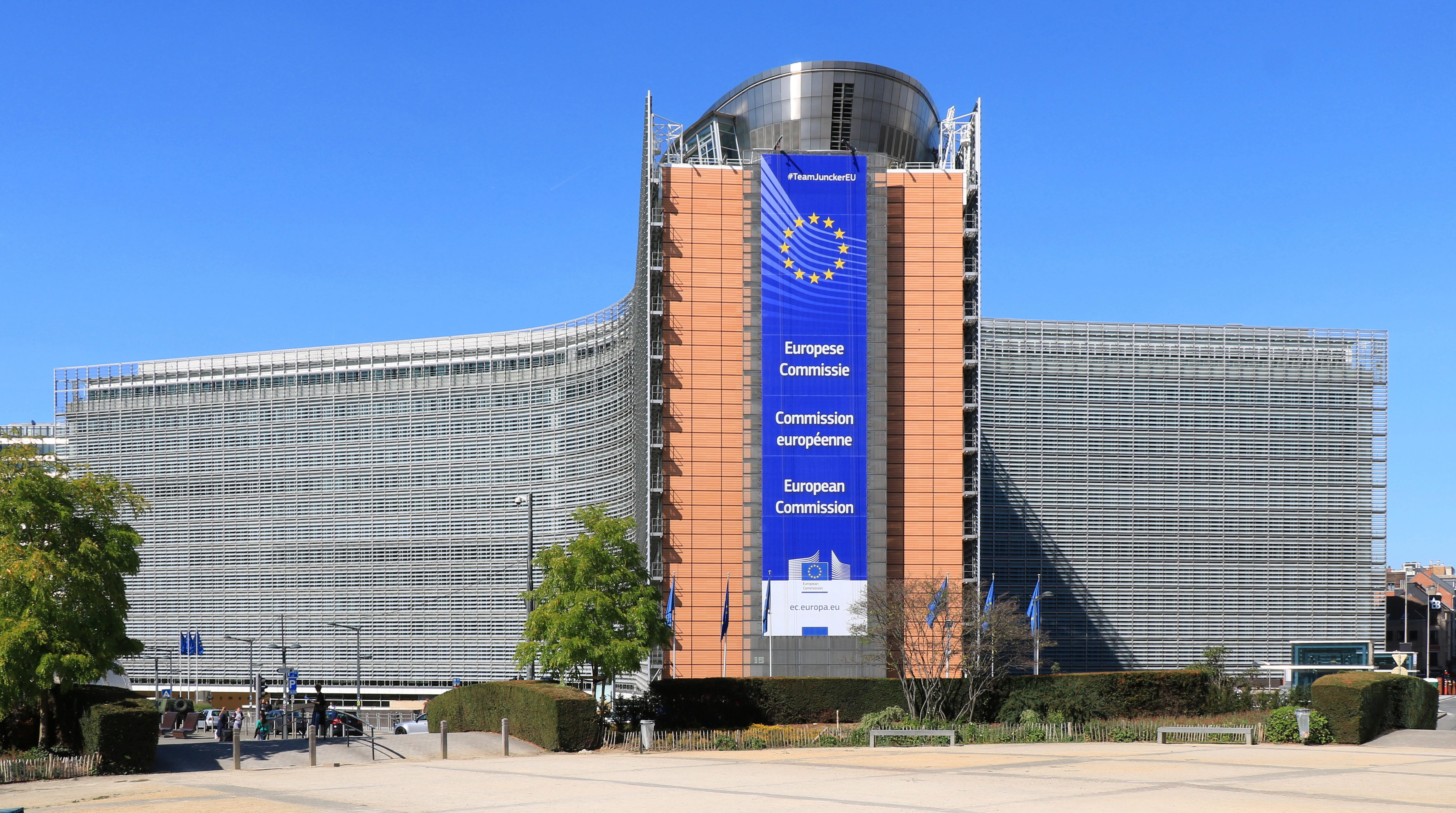
The European Defence Industry Programme: Institutional Governance and Multilevel Decision-Making
The Regulation establishing the European Defence Industry Programme (EDIP) creates a structured and legally coherent framework for managing the Union’s industrial defence policy through a multi-level governance system. Its foundation rests on the combined authority of the European Parliament, the Council, and the European Commission, each endowed with distinct and complementary powers derived from the Treaties. The European Parliament and the Council jointly adopt the Regulation under the ordinary legislative procedure, ensuring democratic legitimacy and intergovernmental consent. Once the legislative framework is in force, the Council acquires a central deliberative role in adopting implementing acts on politically sensitive issues such as the activation of crisis regimes, the identification of European Defence Projects of Common Interest (EDPCIs), and the establishment or dissolution of the Structures for European Armament Programmes (SEAPs). The Commission, acting as the executive and supervisory authority, is responsible for managing the programme, coordinating national and European efforts, and ensuring that all implementation measures comply with EU law, budgetary discipline, and strategic objectives. The Regulation thus embodies a balance between national sovereignty in defence and the Union’s supranational governance capacity.
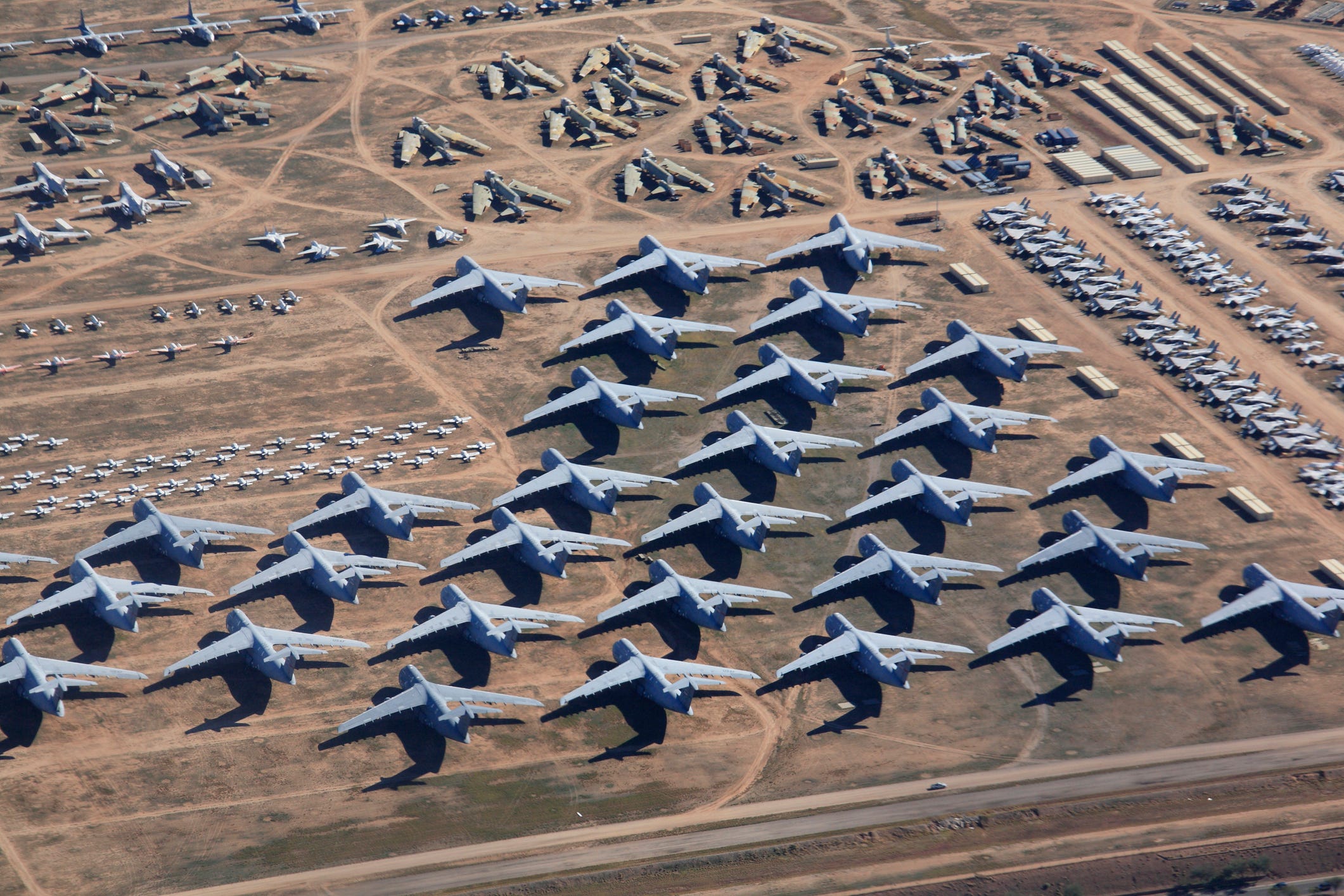
The Return of the State as a Strategic Technological Actor
Throughout modern history, the relationship between political power and technological development has been decisive in shaping the nature of the State. Every major innovation, from artillery to automation, has altered the balance between political authority, economic capacity, and military strength. Technology has never evolved independently, but rather within organizational and institutional frameworks in which the State acted as coordinator, financier, and regulator. When the complexity and cost of technological systems exceeded what markets could sustain, public intervention became essential. Military innovation, in particular, has always required long-term investment, stable research environments, and protection of strategic knowledge—conditions incompatible with short-term market logic. For this reason, in every period of industrial or strategic transition, the State has returned to the forefront as the only actor capable of aligning scientific progress, industrial organization, and national security within a coherent political vision.
Company Profiles & Industrial Intelligence
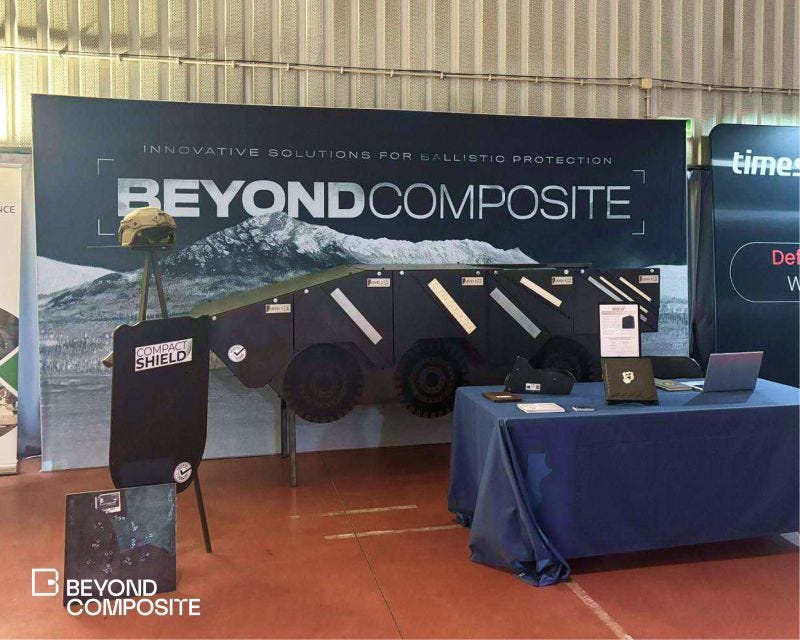
BeyondComposite
BeyondComposite is an emerging European defense technology company that marries advanced materials science with strategic purpose. Founded in Portugal in 2018 by a team of university researchers, this small firm has quietly developed a niche expertise in lightweight ballistic protection[1]. Its innovations – from nanotechnology-enhanced armor panels to composite protective gear – are attracting attention for addressing a critical need: protecting soldiers and assets while reducing dependence on foreign suppliers. Headquartered near Porto and now backed by Portuguese industrial giant Sonae, BeyondComposite operates squarely within the EU and NATO ecosystem. The company’s composite armor solutions have already been proven in real military platforms, yet their applications extend beyond the battlefield. By incorporating sustainable European materials and cutting-edge design, BeyondComposite is positioning itself as more than just a supplier of armor plates – it is a potential enabler of Europe’s strategic autonomy. As European nations seek to strengthen deterrence and resilience, BeyondComposite offers a case study in how a focused, innovation-driven SME can contribute to collective security. Its story – blending academic roots, industrial partnerships, and dual-use ingenuity – provides a glimpse into the future of Europe’s defense technological base, and why savvy observers are watching this company’s next moves closely.
SpaceKnow: European Strategic-Technological Analysis
SpaceKnow is a Prague-based provider of cutting-edge satellite intelligence, turning imagery from space into actionable analysis for defense, government, and commercial markets. Born from a bold vision in 2013, this deep-tech startup has pioneered the use of artificial intelligence to extract insights from vast quantities of Earth observation data. Its journey from a two-person venture into a transatlantic geospatial analytics firm embodies the spirit of European innovation and strategic autonomy. Today, SpaceKnow’s platform harnesses multi-source satellite feeds – from optical to radar – and applies proprietary algorithms to monitor global activities in near-real-time. The company’s solutions have been quietly at work in scenarios ranging from tracking industrial output in China’s factory belts to identifying “dark ships” in European waters linked to covert operations[1]. As Europe seeks to strengthen its technological sovereignty and reduce dependence on non-allied sources, SpaceKnow offers a compelling story of a home-grown capability that is enhancing situational awareness for both economic and security needs. The following analysis delves into SpaceKnow’s strategic-technological profile, examining how its AI-powered intelligence supports Europe’s defense objectives, NATO interoperability, and the broader goal of reducing critical dependencies on foreign providers.

CORAC Engineering – Strategic-Technological Analysis
In an era when cybersecurity extends beyond Earth into orbit, CORAC Engineering has emerged as a young European company tackling one of the space domain’s newest challenges: securing satellites and their communications. Founded in 2022 in Prague, Czech Republic, this deep-tech startup specializes in quantum-safe cryptography and cyber-defense solutions designed for spacecraft and critical networks[1][2]. Its mission is to enable resilient satellite operations, ensuring that data exchanged with orbiting assets remains confidential, authentic, and available even under sophisticated attacks[3]. By developing both hardware and software for encryption and key management, CORAC is positioning itself as a sovereign European provider in a field traditionally dominated by larger foreign defense contractors. The company’s work—with roots in academic research on quantum cryptography—caters to a strategic need: as Europe pursues independent capabilities in secure communications, CORAC offers home-grown technology to protect European satellites from cyber threats and eavesdropping. The allure of this startup lies in how it intersects the European Union’s quests for strategic autonomy in space and cybersecurity. Its story exemplifies the broader push for European innovation that reduces reliance on non-allied suppliers while reinforcing the collective security of Europe and NATO. Readers interested in Europe’s emerging defense tech ecosystem will find CORAC Engineering a compelling case of a niche startup aiming to fortify the next frontier of security.
Whalebone: Strategic-Technological Profile
Whalebone is a European cybersecurity company at the forefront of network-level defense. Founded in Brno, Czech Republic in 2016, it has rapidly gained prominence for its protective DNS technology that blocks malware and phishing threats before they reach end-users. The company’s mission – encapsulated in the motto “#ConnectedMeansProtected” – is to make secure internet access the default condition for millions of people. By partnering with telecommunications providers and public institutions, Whalebone delivers seamless, zero-installation security embedded in the internet connection itself. This innovative approach has not only attracted over 300 telecom operator deployments worldwide, but also the trust of European authorities. Notably, Whalebone leads the EU’s flagship DNS4EU project to build a secure, privacy-centric DNS service for Europe, underscoring its strategic role in Europe’s digital autonomy. In an era of intensified cyber threats and geopolitical tech competition, Whalebone exemplifies how a European deep-tech startup can offer a sovereign alternative to foreign cybersecurity solutions while integrating with allied networks. It stands as a compelling case of a private Czech company scaling up to reinforce Europe’s collective cyber resilience and strategic independence.

Eyedea Recognition: Strategic-Technological Profile Supporting European Security and Defense Autonomy
In a quiet corner of Prague, a university spin-off has been redefining how Europe harnesses artificial intelligence for security. Eyedea Recognition emerged from academic labs with a singular vision: to give European authorities their own cutting-edge tools for visual intelligence. This Czech startup specializes in advanced facial and object recognition software – the kind of technology typically dominated by big foreign players – but developed and kept entirely in Europe[1]. Its algorithms can sift through crowded images and videos to identify faces, vehicles, and critical details with remarkable accuracy. Law enforcement agencies have taken notice. Europol and national police forces have adopted Eyedea’s solutions to track terrorists and criminals across borders[2][3]. In an era when Europe is striving for strategic tech autonomy, Eyedea’s rise offers a compelling example of home-grown innovation reducing reliance on imports. The company stands at the crossroads of European strategic interests: empowering security forces with AI, enhancing interoperability within NATO allies, and ensuring Europe isn’t beholden to outside suppliers for vital security capabilities. This report delves into Eyedea Recognition’s strategic-technological profile – a story of academic excellence turned into a sovereign capability quietly strengthening Europe’s hand in security and defense.
Oreyeon Lda – Autonomous Runway Inspection for European Strategic Autonomy
Europe’s airfields face an invisible threat that can ground aircraft and jeopardize missions: debris and damage on runways. In 2000, a stray metal strip on a Paris runway caused the tragic Concorde crash, underscoring how critical runway inspections are[1]. Traditionally, ground crews slowly sweep runways for foreign object debris (FOD) and pavement cracks – a labor-intensive process prone to human error. Enter Oreyeon, a deep-tech startup headquartered in Coimbra, Portugal[2]. Oreyeon is pioneering an AI-driven Runway Surface Monitoring System (RSMS) that promises to revolutionize airfield safety. Its technology can automatically detect FOD and runway damage in real time, day or night, using intelligent sensors mounted on airfield vehicles. Having proven its system at major airports in Dubai and Doha and even on U.S. Air Force bases[3], Oreyeon now turns to the European market. By offering a home-grown solution to a global aviation safety challenge, this startup has caught the attention of both civil aviation operators and defense stakeholders. Can a small European company like Oreyeon enhance Europe’s strategic autonomy in critical airfield operations? The following analysis explores Oreyeon’s technology and strategic positioning – and what it means for Europe’s security and independence in the aerospace domain.