

Defence Finance Monitor is a specialised source of analysis for professionals who seek to anticipate how strategic priorities shape investment patterns in the defence sector. In a landscape shaped by high-stakes political choices and rapid technological shifts, understanding the link between military doctrine, operational requirements, and industrial policy is not a competitive edge—it is a prerequisite.
We analyse how strategic imperatives set by NATO, the European Union, allied Indo-Pacific democracies, and national Ministries of Defence translate into procurement programmes, innovation roadmaps, and long-term industrial priorities. Rather than listing individual companies, we track how clearly defined strategic challenges—such as deterrence gaps, technological dependencies, or capability shortfalls—are converted into funding schemes and institutional demand. Only companies that respond to these challenges become relevant to institutional buyers and, by extension, to investors. This framework has already enabled a growing community of analysts and financial professionals to make more consistent, risk-aware decisions and to avoid costly misalignments.
Building on this methodology, we are developing a structured database of companies analysed and classified according to the strategic-technological criteria set out in our framework. Subscribing to Defence Finance Monitor therefore provides not only access to in-depth reports, but also to a continuously expanding database of European and allied defence firms assessed against clear benchmarks. Each company is positioned according to its alignment with EU and NATO priority capability areas, its contribution to European strategic autonomy, its level of interoperability and deterrence value, and its role in reducing dependencies on non-allied suppliers. Classification also covers technology readiness levels, participation in EU and NATO programmes, intellectual property assets, and dual-use applications. This allows subscribers to compare, benchmark, and identify the most strategically relevant actors within a coherent, transparent, and decision-oriented taxonomy.
Subscribing to Defence Finance Monitor means gaining access to a strategic intelligence service that connects financial decisions with defence priorities. At the core of our work is a structured database of European and allied defence companies, classified according to strategic-technological criteria such as autonomy, interoperability, deterrence, and supply chain resilience. In today’s environment, profitable investment requires more than market data: it requires understanding how limited public resources are channelled toward specific capability gaps, sovereign technologies, and the reduction of non-allied dependencies. By combining in-depth reports with a continuously expanding company database, Defence Finance Monitor enables investors to anticipate demand, benchmark firms against institutional priorities, and avoid costly misalignments.

The European Defence Industry Programme: A New Industrial Architecture for European Defence
The adoption, on 7 November 2025, of the Regulation establishing the European Defence Industry Programme (EDIP) marks a structural turning point in the European Union’s industrial defence policy. For the first time, Brussels has created a permanent and coherent framework for financing, governance, and regulation of the defence industrial sector, designed to ensure the timely availability of military equipment and to strengthen the shared technological and industrial base (EDTIB, European Defence Technological and Industrial Base). The programme represents the logical evolution of earlier emergency instruments—ASAP (Act in Support of Ammunition Production) and EDIRPA (European Defence Industry Reinforcement through Common Procurement Act)—which had a short-term and reactive character. EDIP, by contrast, introduces a stable, long-term perspective for 2025–2027 and establishes a multi-layered architecture—financial, industrial, and political. With an initial budget of €1.2 billion for the European industry and an additional €300 million for the Ukraine Support Instrument (USI), the programme consolidates a new form of European industrial sovereignty based on coordinated investment, joint procurement mechanisms, and crisis-response instruments for supply chains, fully aligned with the doctrine of European Strategic Autonomy.
Eastern Shield: NATO’s Technological Pivot Against the Drone Threat
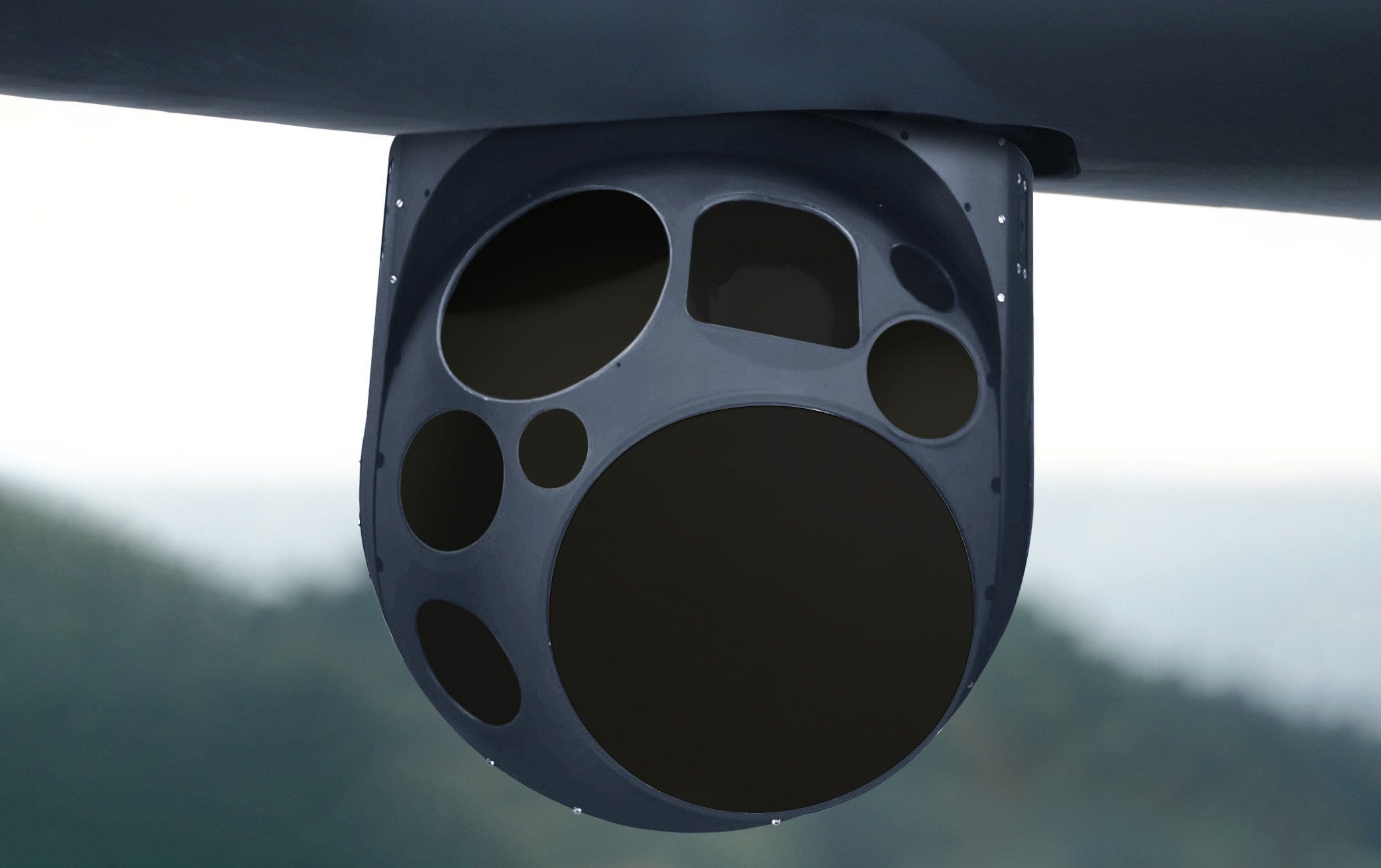
The renewed wave of drone incursions over Eastern Europe in 2025 has exposed a crucial vulnerability at the heart of NATO’s defense posture. In September, dozens of unidentified drones—some of them Russian, others of uncertain origin—violated the airspace of Poland and Romania, triggering alarm across the alliance and temporarily closing airports as far away as Copenhagen and Munich. These incursions underscored the strategic asymmetry of modern air warfare: cheap, disposable UAVs are capable of forcing costly defensive responses, draining resources, and testing political resolve. Against this backdrop, NATO allies have begun to adapt. In November 2025, Poland and Romania started deploying a new counter-drone system known as Merops, designed to detect and neutralize hostile UAVs in complex, electronically contested environments. Compact, modular, and powered by artificial intelligence, Merops symbolizes NATO’s shift from traditional air-policing methods toward agile, networked defenses capable of meeting the challenges of hybrid warfare.

Satelles, Inc. (Iridium PNT) – Strategic-Technological Analysis
Satelles, Inc., now operating as Iridium’s Satellite Time and Location (STL) business unit, offers an innovative space-based positioning, navigation and timing (PNT) service designed to augment or substitute for GNSS. Its high-power LEO satellite signals are engineered to penetrate indoors and resist jamming, securing critical infrastructure from GPS outages[1][2]. A U.S. deep-tech startup founded by MIT/Stanford graduates, Satelles built proprietary STL technology and was recently acquired by Nasdaq-listed Iridium Communications in 2024, reflecting confidence in its future growth[3][4]. As European policymakers race to bolster strategic autonomy and deter disruption of vital networks, Satelles’s STL service has attracted EU interest: it was the sole U.S. firm awarded a 2021 DEFIS contract to demonstrate “alternative PNT” in Europe[5]. Its promise—to provide resilient timing indoors, in urban canyons, and under GPS attack—taps directly into European needs for backup PNT. This analysis examines Satelles’s corporate profile, technology portfolio, and ecosystem engagement through the lens of EU strategic autonomy, NATO interoperability, and supply-chain resilience. It assesses whether and how STL capabilities can substitute dependencies on Chinese or other non-allied systems, support NATO multi-domain operations, and reinforce European deterrence, while also noting gaps where the company’s U.S.-based model may not align with EU sovereignty objectives.
Adamant Composites Ltd. – Strategic-Technological Profile
Adamant Composites Ltd. is a Greek advanced‐materials SME founded in 2012 by University of Patras researchers. The company focuses on nano-enabled composite materials and deployable space structures for aerospace applications. Its mission – summarized by its science-park profile – is “to establish a cutting-edge engineering & manufacturing hub providing solutions on innovative materials, composites & advanced manufacturing, and deployable space structures”[1][2]. Adamant has developed proprietary technologies (e.g. FXbond™ graphene-enabled adhesives and FXply™ nano‑enabled prepreg composites) and roll-to-roll manufacturing processes for high-performance CFRP components. Key customers include the European Space Agency (ESA) and prime contractors (Airbus DS UK/FR, OHB DE, RUAG DE)[3][4]. The firm operates from Patras, Greece (with a UK branch in Cambridge) and is privately owned by its founding team. Its governance is entrepreneur-led, with technical and commercial directors who are Greek‐trained engineers, and it maintains ISO 9001:2015 quality certification[5]. While exact security-clearance levels are not public, involvement in ESA missions and defense projects implies compliance with Hellenic/NATO standards.

InSyBio: Strategic-Technological Analysis
InSyBio is a privately held biotechnology startup specializing in AI-driven bioinformatics for biomarker discovery in medicine and nutrition. Founded in 2013 by scientists with European academic backgrounds, it offers an online suite of software tools that integrate multi-omics data to accelerate personalized healthcare research[1][2]. Its core capability lies in a patented machine-learning platform that identifies predictive biomarkers (genes, RNAs, proteins) from complex biological datasets, promising higher accuracy with fewer samples[3]. Although InSyBio’s focus is on civilian health and nutrition markets, its advanced data analytics and biological network modeling tools have potential dual-use relevance for biosecurity and force health protection. Given emerging NATO and EU emphasis on biotechnology and AI for defense applications[4][1], InSyBio’s technologies merit analysis in terms of European strategic autonomy. This report assesses the company’s structure and technology portfolio against Europe’s defense innovation priorities, including its alignment with EU strategic autonomy goals, contribution to NATO interoperability, deterrence support, transatlantic coherence, and supply chain resilience. The company’s participation in EU research programs, intellectual property, leadership expertise, and innovation metrics are examined to evaluate its role in strengthening the European Defence Technological and Industrial Base (EDTIB).
Theon Sensors (Theon International) – Strategic-Technological Analysis
THEON INTERNATIONAL PLC (Theon) is a European leader in electro-optic soldier systems – night-vision and thermal-imaging devices. Founded in 1997 in Greece, it has grown into a mid-cap, publicly listed company (Euronext Amsterdam: THEON) headquartered in Cyprus, with a widespread footprint in Europe and beyond[1][2]. Theon’s core competence is “man-portable” vision systems for armed forces and security agencies – including helmet-mounted monoculars, binoculars, weapon sights and clip-on devices[1][3]. The company emphasizes in-house R&D and vertical integration to secure mission-critical components. Over time it has expanded from conventional night-vision into thermal imaging and digital augmentation (AR) systems. As European defence shifts toward networked, multi-spectral soldier systems, Theon has strategically broadened its portfolio (e.g. AR-MED family) and its industrial base, notably establishing a Belgian production facility in 2025[4][5]. This analysis will examine Theon’s organizational profile, technology offerings and strategic role in strengthening European autonomy and NATO interoperability. It evaluates how Theon’s growth and investments – such as partnerships with Hensoldt and acquisitions of German suppliers – enhance Europe’s supply chain resilience and deterrence capabilities by reducing dependence on non-allied sources[2][6]. Throughout, we draw on EU, NATO and corporate sources to assess Theon’s alignment with EU’s strategic autonomy goals, support for multi-domain defense, and contribution to transatlantic cooperation.
Scytalys S.A.: Strategic-Technological Analysis for European Defence
Scytalys S.A. is a Greek-based defence software and systems integrator that has quietly built a portfolio of tactical C4ISR (Command, Control, Communications, Intelligence, Surveillance, Reconnaissance) solutions for multi-domain operations. Established in 1993 in Athens, Scytalys has developed a suite of mission-critical products (Mission Information & Management System, tactical data link processors, etc.) deployed by armed forces worldwide. Its track record – including a recent $49M contract to modernize Indonesia’s joint C2 network – demonstrates the company’s ability to deliver large-scale interoperability projects across land, air, and naval domains[1][2]. As European policymakers seek to bolster autonomy in defense technology, Scytalys’s largely in-house, NATO-compatible systems offer an intriguing case: a mid-cap EU player whose platforms could reduce reliance on non-EU suppliers and strengthen the European pillar in NATO’s network-centric operations. This report delves into Scytalys’s structure, technologies, and strategic roles under EU/NATO priorities, providing objective analysis to inform defence planners and industry stakeholders.