

Defence Finance Monitor is a specialised source of analysis for professionals who seek to anticipate how strategic priorities shape investment patterns in the defence sector. In a landscape shaped by high-stakes political choices and rapid technological shifts, understanding the link between military doctrine, operational requirements, and industrial policy is not a competitive edge—it is a prerequisite.
We analyse how strategic imperatives set by NATO, the European Union, allied Indo-Pacific democracies, and national Ministries of Defence translate into procurement programmes, innovation roadmaps, and long-term industrial priorities. Rather than listing individual companies, we track how clearly defined strategic challenges—such as deterrence gaps, technological dependencies, or capability shortfalls—are converted into funding schemes and institutional demand. Only companies that respond to these challenges become relevant to institutional buyers and, by extension, to investors. This framework has already enabled a growing community of analysts and financial professionals to make more consistent, risk-aware decisions and to avoid costly misalignments.
Building on this methodology, we are developing a structured database of companies analysed and classified according to the strategic-technological criteria set out in our framework. Subscribing to Defence Finance Monitor therefore provides not only access to in-depth reports, but also to a continuously expanding database of European and allied defence firms assessed against clear benchmarks. Each company is positioned according to its alignment with EU and NATO priority capability areas, its contribution to European strategic autonomy, its level of interoperability and deterrence value, and its role in reducing dependencies on non-allied suppliers. Classification also covers technology readiness levels, participation in EU and NATO programmes, intellectual property assets, and dual-use applications. This allows subscribers to compare, benchmark, and identify the most strategically relevant actors within a coherent, transparent, and decision-oriented taxonomy.
Subscribing to Defence Finance Monitor means gaining access to a strategic intelligence service that connects financial decisions with defence priorities. At the core of our work is a structured database of European and allied defence companies, classified according to strategic-technological criteria such as autonomy, interoperability, deterrence, and supply chain resilience. In today’s environment, profitable investment requires more than market data: it requires understanding how limited public resources are channelled toward specific capability gaps, sovereign technologies, and the reduction of non-allied dependencies. By combining in-depth reports with a continuously expanding company database, Defence Finance Monitor enables investors to anticipate demand, benchmark firms against institutional priorities, and avoid costly misalignments.
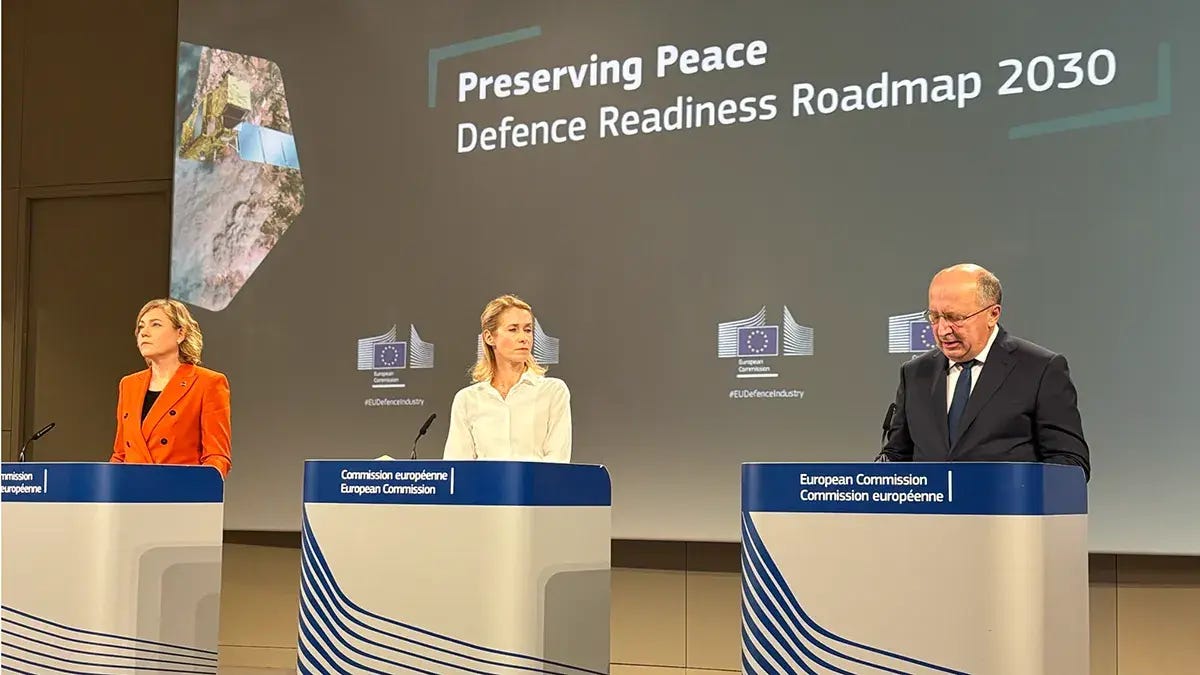
Europe’s Defence Readiness Roadmap 2030: From Strategic Vision to Industrial Execution
The European Commission’s presentation of the Defence Readiness Roadmap 2030 on 16 October 2025 marks a pivotal institutional effort to define Europe’s defence posture within the decade. The initiative responds to the combined pressures of Russia’s sustained aggression, hybrid warfare on the eastern flank, and the gradual recalibration of US commitments to NATO. The roadmap establishes four flagship programmes designed to deliver a tangible architecture of European deterrence: the European Drone Defence Initiative, the Eastern Flank Watch, the European Air Shield, and the European Space Shield. Each project is intended to reach initial operational capacity before 2030, with interoperability, digital integration, and resilience as central parameters. Politically, the roadmap represents a structural attempt to move from fragmented national initiatives toward a coordinated European security capability, reflecting a deeper convergence between the Union’s industrial policy and its collective defence ambitions.

RoboTwin: Strategic-Technological Profile for European Defense and Dual-Use Autonomy
RoboTwin is a Czech deep-tech startup at the forefront of Europe’s push for smarter industrial automation. Based in Prague and born from academic research, this young company has developed a no-code “motion imitation” platform that lets ordinary factory workers teach robots new tasks through simple demonstrations[1][2]. In an era when European industry is striving to reshore production and reduce reliance on foreign labor and technologies, RoboTwin’s human-centric robotics solution arrives as a timely innovation[3]. The company’s tool can record an expert worker performing a job – like spray-painting or grinding – and automatically generate a robot program to replicate that task across an entire batch[4]. This approach not only preserves the know-how of skilled European workers, but also rapidly accelerates automation for small and mid-sized manufacturers that have long found traditional robotics too costly or complex. RoboTwin’s early traction and support from EU innovation programs signal its potential to strengthen Europe’s technological autonomy. By empowering domestic factories with flexible robotics, RoboTwin is helping Europe build a more self-sufficient and resilient industrial base – a capability that is increasingly critical for defense supply chains and strategic sovereignty. The following analysis delves into how RoboTwin’s technology and business align with European strategic autonomy objectives, NATO interoperability goals, and the reduction of dependencies on non-allied suppliers.
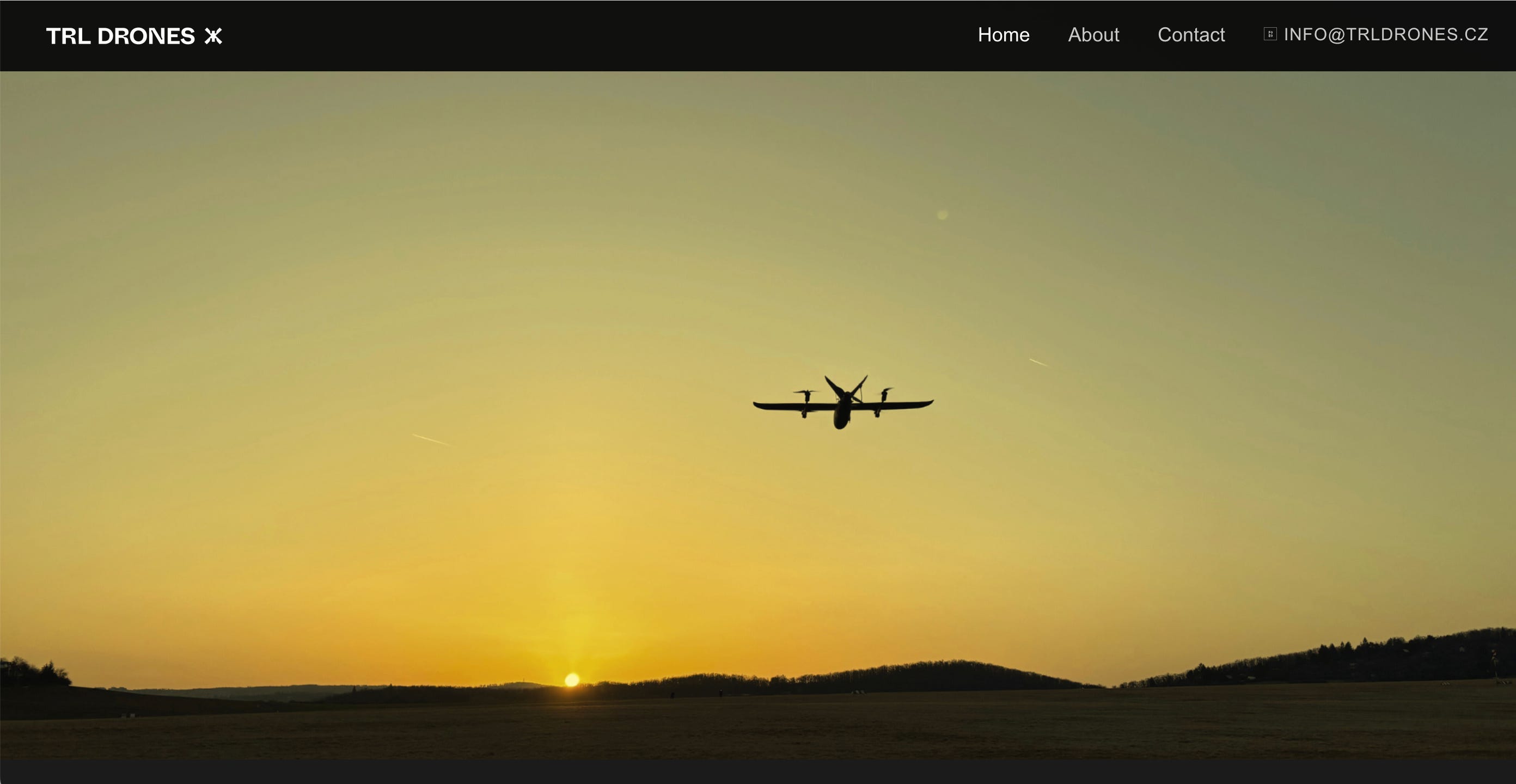
TRL Drones (Czech Republic) – Strategic-Technological Analysis
A small technology venture from Brno is quietly reshaping Europe’s defense tech landscape. TRL Drones, part of the Czech-based TRL Space group, has emerged with a bold proposition: fully autonomous drones capable of vertical take-off, high-speed interception, and even independent swarming – all without reliance on GPS or non-European components. In an era when Europe is striving to reduce dependence on foreign defense suppliers, this startup offers a home-grown solution for unmanned aerial systems. Recently tested in remote African environments and unveiled at Europe’s IDET defense expo, TRL’s drone platforms promise to bolster border security and air defense with unprecedented autonomy[1]. The company’s novel approach integrates microsatellite imagery, AI-driven analytics, and swarms of interceptor UAVs into one cohesive system. For European strategists concerned about contested skies and supply-chain vulnerabilities, TRL Drones provides a case study in how local innovation can enhance strategic autonomy. This introduction sets the stage for a deep dive into TRL Drones’ strategic and technological profile – an analysis of how a Czech startup’s cutting-edge drones align with Europe’s autonomy objectives and NATO’s defense priorities.
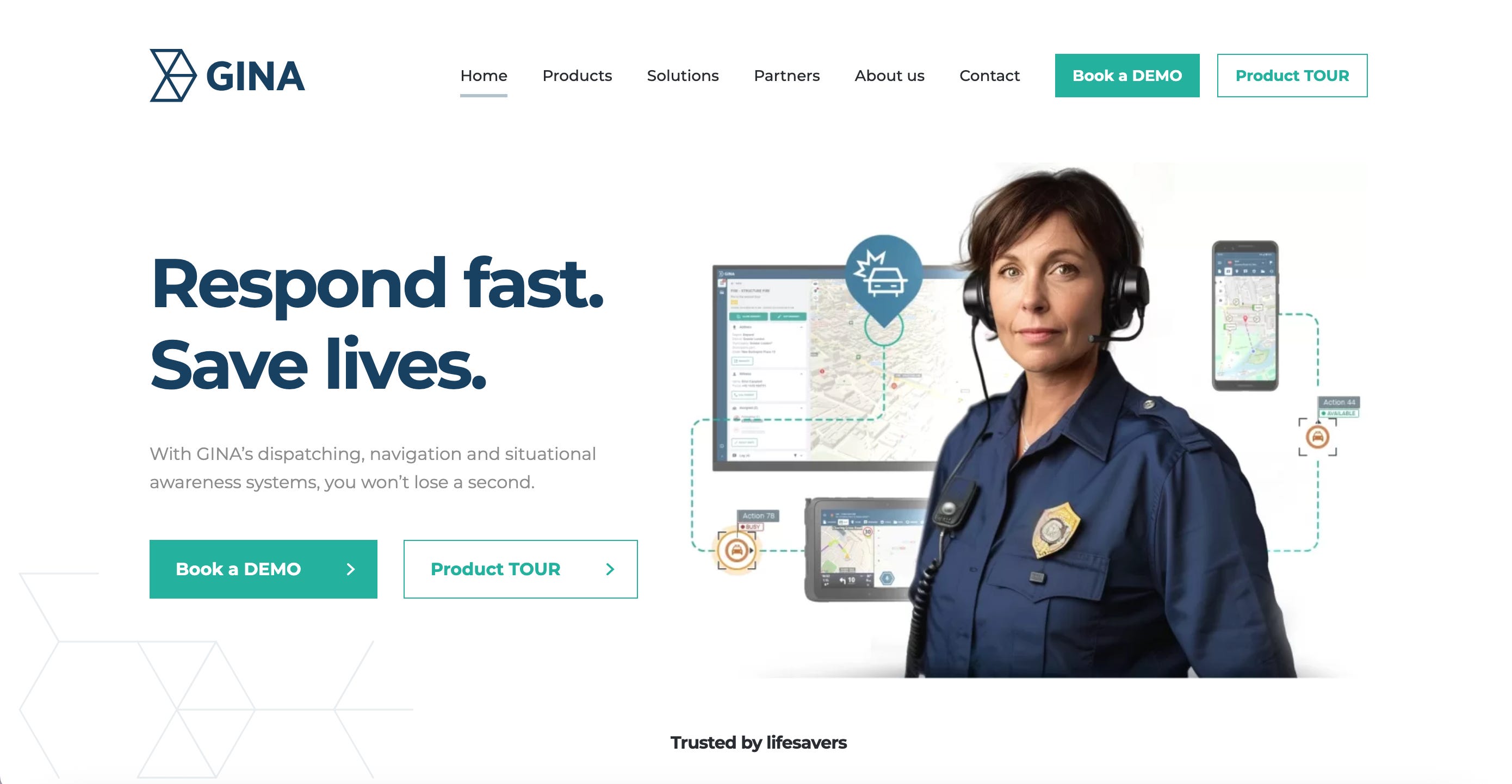
Gina Software: A European Emergency Response Innovator
From a university project born amid the 2010 Haiti earthquake, Czech-based Gina Software has grown into a key provider of crisis management technology in over 50 countries[1][2]. This Brno-founded venture develops command-and-control platforms that help first responders coordinate faster and more effectively during disasters and security incidents. With its roots in academic research and a mission to “save lives through technology,” Gina delivers a digital mapping and dispatch system embraced by firefighters, medics, police, and even military units for real-time situational awareness[3][4]. The company’s flagship software, known as the GINA System, replaces cumbersome paper maps and radio calls with an integrated picture of the emergency field. Responders on the ground can see each other’s locations, share live information, and even tap into drone feeds or CCTV cameras—all through intuitive apps on tablets and smartphones. This homegrown European innovation is quietly revolutionizing how crises are managed, exemplifying the EU’s drive for strategic autonomy in safety tech. As NATO and EU nations seek to modernize crisis response and reduce reliance on foreign systems, Gina Software’s story of a student startup turned global lifesaving platform offers a compelling glimpse into Europe’s defense-tech future.

CORAC Engineering – Strategic-Technological Analysis
In an era when cybersecurity extends beyond Earth into orbit, CORAC Engineering has emerged as a young European company tackling one of the space domain’s newest challenges: securing satellites and their communications. Founded in 2022 in Prague, Czech Republic, this deep-tech startup specializes in quantum-safe cryptography and cyber-defense solutions designed for spacecraft and critical networks[1][2]. Its mission is to enable resilient satellite operations, ensuring that data exchanged with orbiting assets remains confidential, authentic, and available even under sophisticated attacks[3]. By developing both hardware and software for encryption and key management, CORAC is positioning itself as a sovereign European provider in a field traditionally dominated by larger foreign defense contractors. The company’s work—with roots in academic research on quantum cryptography—caters to a strategic need: as Europe pursues independent capabilities in secure communications, CORAC offers home-grown technology to protect European satellites from cyber threats and eavesdropping. The allure of this startup lies in how it intersects the European Union’s quests for strategic autonomy in space and cybersecurity. Its story exemplifies the broader push for European innovation that reduces reliance on non-allied suppliers while reinforcing the collective security of Europe and NATO. Readers interested in Europe’s emerging defense tech ecosystem will find CORAC Engineering a compelling case of a niche startup aiming to fortify the next frontier of security.
Whalebone: Strategic-Technological Profile
Whalebone is a European cybersecurity company at the forefront of network-level defense. Founded in Brno, Czech Republic in 2016, it has rapidly gained prominence for its protective DNS technology that blocks malware and phishing threats before they reach end-users. The company’s mission – encapsulated in the motto “#ConnectedMeansProtected” – is to make secure internet access the default condition for millions of people. By partnering with telecommunications providers and public institutions, Whalebone delivers seamless, zero-installation security embedded in the internet connection itself. This innovative approach has not only attracted over 300 telecom operator deployments worldwide, but also the trust of European authorities. Notably, Whalebone leads the EU’s flagship DNS4EU project to build a secure, privacy-centric DNS service for Europe, underscoring its strategic role in Europe’s digital autonomy. In an era of intensified cyber threats and geopolitical tech competition, Whalebone exemplifies how a European deep-tech startup can offer a sovereign alternative to foreign cybersecurity solutions while integrating with allied networks. It stands as a compelling case of a private Czech company scaling up to reinforce Europe’s collective cyber resilience and strategic independence.