

Defence Finance Monitor provides in-depth analysis of the defence industry and strategic policy areas most relevant to investors. It supports financial professionals in interpreting the evolving criteria of Europe’s strategic autonomy, identifying sectors and companies aligned with NATO, EU policy frameworks, and the emerging ESG paradigm centred on Energy, Security, and Geostrategy. DFM highlights long-term investment opportunities linked to Europe’s rearmament and industrial modernisation, with particular attention to entities positioned to benefit from EU programmes such as EDF, PESCO, and SAFE. It decodes regulatory frameworks including SFDR and the EU Taxonomy, grounding all analysis in official sources with an emphasis on compliance, clarity, and actionable insight. DFM focuses exclusively on companies operating within liberal democracies and on sectors that enhance the strength and resilience of open societies—wherever they are—vis-à-vis authoritarian competition, with a primary focus on Europe.
Quantum Technologies in Defense and Warfare

Recent advances in quantum science are driving a profound shift with far-reaching implications for security and defense. Quantum technology refers to a suite of emerging capabilities – in computing, communications, and sensing – that harness the non-intuitive laws of quantum physics for practical use. Unlike traditional electronics, quantum systems leverage phenomena like superposition (where a quantum bit exists in multiple states at once) and entanglement (where two particles become linked such that measuring one instantaneously affects the other). These properties enable possibilities such as exponentially faster computing and fundamentally secure communications. While most quantum technologies remain in early development as of 2025, governments worldwide are investing heavily to ensure military readiness as breakthroughs emerge. The United States launched a multi-agency National Quantum Initiative in 2018 to accelerate quantum research, and the Biden Administration directed a whole-of-government effort to transition to quantum-resistant encryption by 2035. Similarly, the European Union’s Quantum Technologies Flagship and plans for a European Quantum Communication Infrastructure (EuroQCI) reflect a strategic push to be “at the cutting edge of quantum capabilities by 2030”. NATO has declared quantum technology a realm of strategic competition, noting its potential to revolutionize sensing, positioning, encryption and more. This report provides a technical overview of quantum tech in defense between 2025 and 2035 – covering key capabilities, operational impacts, doctrinal implications, and a strategic outlook – in clear terms for a non-specialist audience. All key concepts (like quantum advantage, meaning a task performed faster or better by quantum means than any classical method) will be explained, and real-world programs such as QKD networks and quantum navigation trials are highlighted to ground this discussion in reality.
Autonomous Military Systems: Development, Deployment, and Strategic Implications
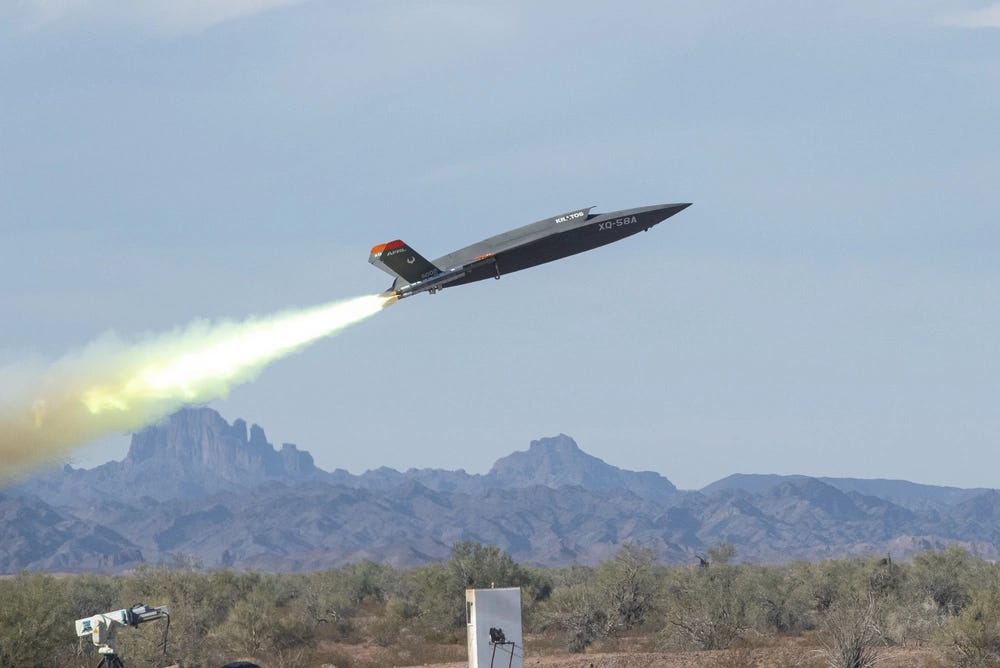
Autonomous military systems are unmanned platforms endowed with increasing levels of self-direction and decision-making by artificial intelligence. They span aerial drones, ground robots, naval vessels, and undersea vehicles designed to operate with minimal human intervention. Unlike traditional remotely piloted systems, these platforms can perceive, decide, and act to varying degrees on their own. For example, the U.S. Department of Defense (DoD) defines an autonomous weapon system as “a weapon system that, once activated, can select and engage targets without further intervention by an operator”. This burgeoning autonomy is enabled by advances in computing, sensors, and networking – part of a broader wave of “big data, AI, automated and autonomous systems” permeating every facet of warfare. Militaries worldwide view such technologies as key to gaining battlefield advantages in the coming decade. Indeed, NATO’s 2022 Strategic Concept highlights emerging tech like AI and autonomy as critical to future security. This report will survey the capabilities of autonomous systems in the air, on land, at sea, and undersea, and analyze their operational impact, doctrinal implications (including human-machine teaming and lethal autonomous weapons), and the strategic outlook through 2035. All information is drawn from verified, reputable sources such as official defense agencies and research institutions, focusing on demonstrated or emerging programs rather than speculation.
Mission-Driven Economic Actors for a New European Era
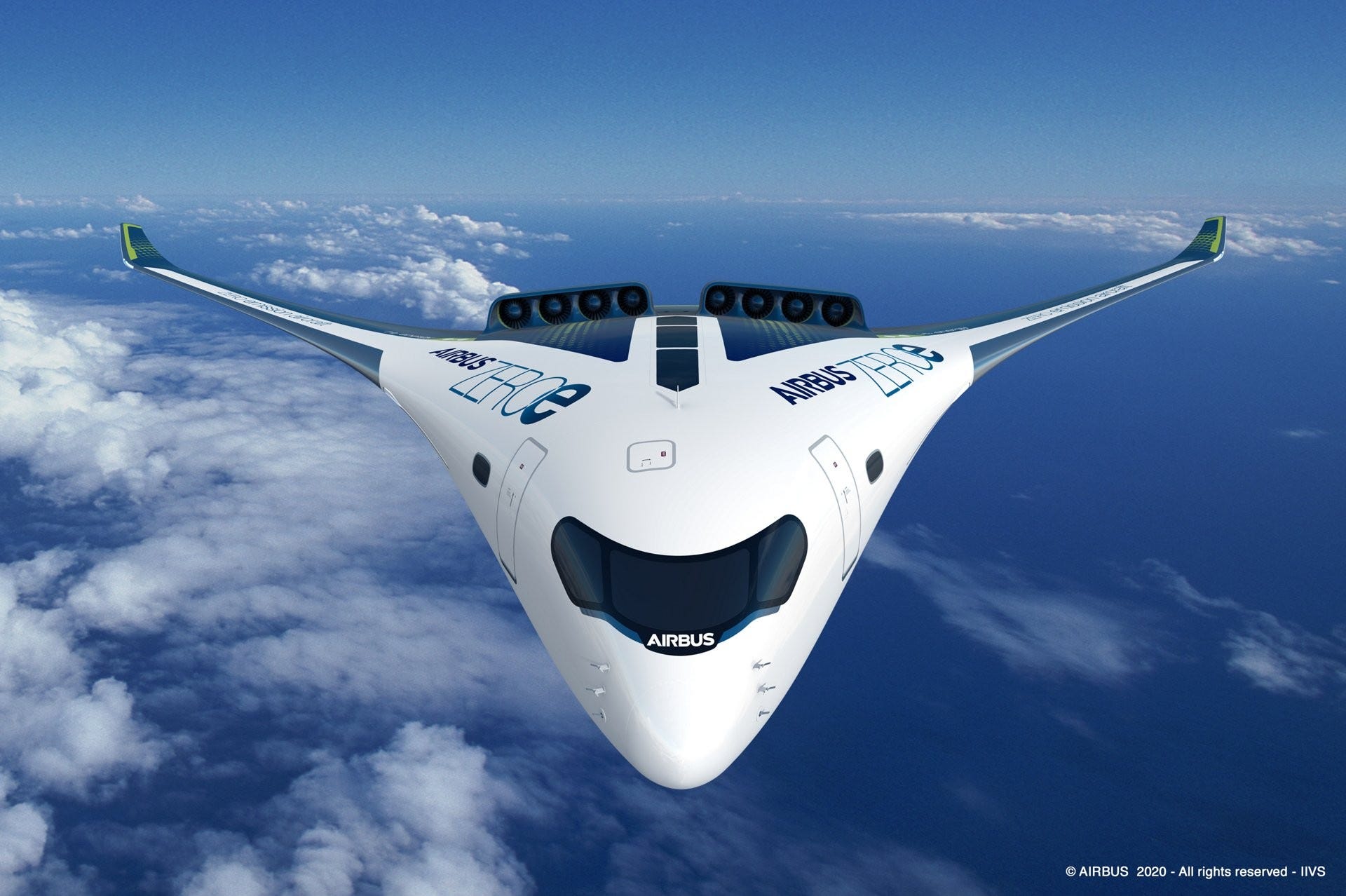
Underpinning Europe’s strategic autonomy quest is the idea of mission-driven economic actors – entities expressly designed to achieve transformational objectives in the public interest. European policymakers and thinkers are increasingly inspired by the concept of the “entrepreneurial state” and mission-oriented innovation (championed by economists like Mariana Mazzucato), which argues that bold public missions can drive growth and technological breakthroughs. In the context of strategic autonomy, this means creating or repurposing institutions that can marshal resources, talent, and innovation towards Europe’s most critical strategic needs. Historically, Europe has successful precedents: Airbus was essentially a mission-driven consortium that pooled several nations’ efforts to secure an independent aerospace industry. Today’s challenges – be it mastering quantum technology, achieving energy independence, or building next-gen defense systems – may require new “Airbus-like” initiatives in other sectors. Proposals have been floated for an “Airbus of Batteries” (now taking shape as the European Battery Alliance) and an “Airbus of Chips” to advance semiconductor fabrication in Europe. These are more than companies; they are strategic collaborations supported by policy and often public funding, with a clear mission: deliver sovereign capability in a domain where Europe lags or is dependent on external powers. Such mission-driven actors blur the line between public and private – they operate in markets but are steered by strategic objectives set jointly by governments and industry. They illustrate how Europe can translate high-level autonomy goals into concrete industrial outcomes.
"Understanding Naval Warfare" by Ian Speller

Ian Speller's Understanding Naval Warfare provides a structured and accessible introduction to the theory and practice of naval warfare, combining conceptual clarity with empirical case studies. The book is divided into two parts: the first establishes foundational principles and conceptual tools, while the second examines the operational and strategic roles of navies in the contemporary era. The central thesis is that maritime power, as derived from the physical and strategic characteristics of the sea, remains essential for both state security and international order. Speller argues that the enduring attributes of naval forces—mobility, reach, versatility—continue to shape their utility, even as technology and geopolitical dynamics evolve. He integrates historical interpretation with current doctrines, emphasising the relevance of maritime strategy in contexts of conventional war, limited conflict, and peacetime diplomacy. A consistent aim is to demonstrate how sea power functions across a spectrum of military, diplomatic and constabulary roles. The book also discusses multi-domain operations, joint warfare, and the implications of hybrid threats, acknowledging that the maritime domain increasingly intersects with air, cyber and space domains. Speller does not propose a singular model but provides analytical frameworks to understand how maritime forces are employed, challenged, and transformed over time.
"Defence Innovation and the 4th Industrial Revolution" (Ed. ) Michael Raska

The book Defence Innovation and the 4th Industrial Revolution, edited by Michael Raska, Katarzyna Zysk, and Ian Bowers, explores the strategic and operational transformations driven by emerging technologies associated with the Fourth Industrial Revolution (4IR). It analyses the integration and diffusion of advanced technologies such as artificial intelligence, autonomous systems, robotics, and quantum computing in military contexts. The book frames these technologies within the evolution of Revolutions in Military Affairs (RMAs), asserting the emergence of a sixth wave defined by AI and autonomous capabilities. It compares the approaches of large powers and smaller states, offering a spectrum of case studies including the US, China, Russia, Israel, and Scandinavian countries. A central theme is that while the 4IR offers transformative potential, its impact varies across states depending on innovation models, strategic priorities, and resource availability. The editors argue that future military effectiveness will be shaped not only by access to technology but also by a state’s ability to reorganise doctrine, force structure, and civil-military relations in response to technological change.