

Defence Finance Monitor is a specialised source of analysis for professionals who seek to anticipate how strategic priorities shape investment patterns in the defence sector. In a landscape shaped by high-stakes political choices and rapid technological shifts, understanding the link between military doctrine, operational requirements, and industrial policy is not a competitive edge—it is a prerequisite.
We analyse how strategic imperatives set by NATO, the European Union, allied Indo-Pacific democracies, and national Ministries of Defence translate into procurement programmes, innovation roadmaps, and long-term industrial priorities. Rather than listing individual companies, we track how clearly defined strategic challenges—such as deterrence gaps, technological dependencies, or capability shortfalls—are converted into funding schemes and institutional demand. Only companies that respond to these challenges become relevant to institutional buyers and, by extension, to investors. This framework has already enabled a growing community of analysts and financial professionals to make more consistent, risk-aware decisions and to avoid costly misalignments.
Building on this methodology, we are developing a structured database of companies analysed and classified according to the strategic-technological criteria set out in our framework. Subscribing to Defence Finance Monitor therefore provides not only access to in-depth reports, but also to a continuously expanding database of European and allied defence firms assessed against clear benchmarks. Each company is positioned according to its alignment with EU and NATO priority capability areas, its contribution to European strategic autonomy, its level of interoperability and deterrence value, and its role in reducing dependencies on non-allied suppliers. Classification also covers technology readiness levels, participation in EU and NATO programmes, intellectual property assets, and dual-use applications. This allows subscribers to compare, benchmark, and identify the most strategically relevant actors within a coherent, transparent, and decision-oriented taxonomy.
Subscribing to Defence Finance Monitor means gaining access to a strategic intelligence service that connects financial decisions with defence priorities. At the core of our work is a structured database of European and allied defence companies, classified according to strategic-technological criteria such as autonomy, interoperability, deterrence, and supply chain resilience. In today’s environment, profitable investment requires more than market data: it requires understanding how limited public resources are channelled toward specific capability gaps, sovereign technologies, and the reduction of non-allied dependencies. By combining in-depth reports with a continuously expanding company database, Defence Finance Monitor enables investors to anticipate demand, benchmark firms against institutional priorities, and avoid costly misalignments.

Project Q (Germany) – Strategic-Technological Analysis
In an army command post, streams of data from drones, radars, cameras, and soldiers’ devices flood in by the second. Making sense of this torrent in real time can mean the difference between confusion and tactical superiority. Europe’s militaries have long relied on siloed, proprietary systems – often from foreign suppliers – to stitch together battlefield information. Project Q is a young German defense-tech company that aims to change this equation. Founded in 2024, Project Q is developing an open-source platform that orchestrates heterogeneous military and civilian systems with artificial intelligence, enabling real-time interoperability among sensors and effectors. The company’s bold vision is to fuse tactical data on a vast scale and give commanders a unified, live picture of the battlefield. By leveraging commercial tech and open architectures, Project Q positions itself as a catalyst for European sovereign solutions. The venture has already attracted seed funding and pilot projects with the German military, sparking curiosity about whether this startup could become a linchpin in Europe’s quest for strategic autonomy in defense.

Strategic-Technological Analysis of Cogitat (UK)
Controlling a machine with one’s mind sounds like science fiction, but a London-based startup is bringing this vision to life in Europe’s tech ecosystem. Cogitat, an Imperial College London spinout founded in 2020, develops non-invasive neural interfaces – essentially AI-driven wristbands or headsets that can translate brain and muscle signals into digital commands. In practical terms, Cogitat’s technology allows users to operate software or vehicles “hands-free” by intent alone. Early demonstrations have shown a person piloting a virtual jet ski and even clenching a robotic hand using only thought signals. This remarkable innovation is not just a medical curiosity; it aligns with broader European ambitions. As the EU and NATO push for technological sovereignty and next-generation defense capabilities, Cogitat emerges as a compelling example of homegrown deep-tech. The company’s brain–machine interface could one day enhance how soldiers, pilots, or first responders interact with equipment, all while reducing reliance on foreign (especially U.S. or Chinese) neurotechnology. By marrying advanced AI with neuroscience, Cogitat is quietly positioning itself at the crossroads of Europe’s strategic autonomy drive and the future of human–machine cooperation. It’s the kind of breakthrough that hints at profound implications – and it’s attracting attention from defense planners and innovators eager to maintain a competitive edge.
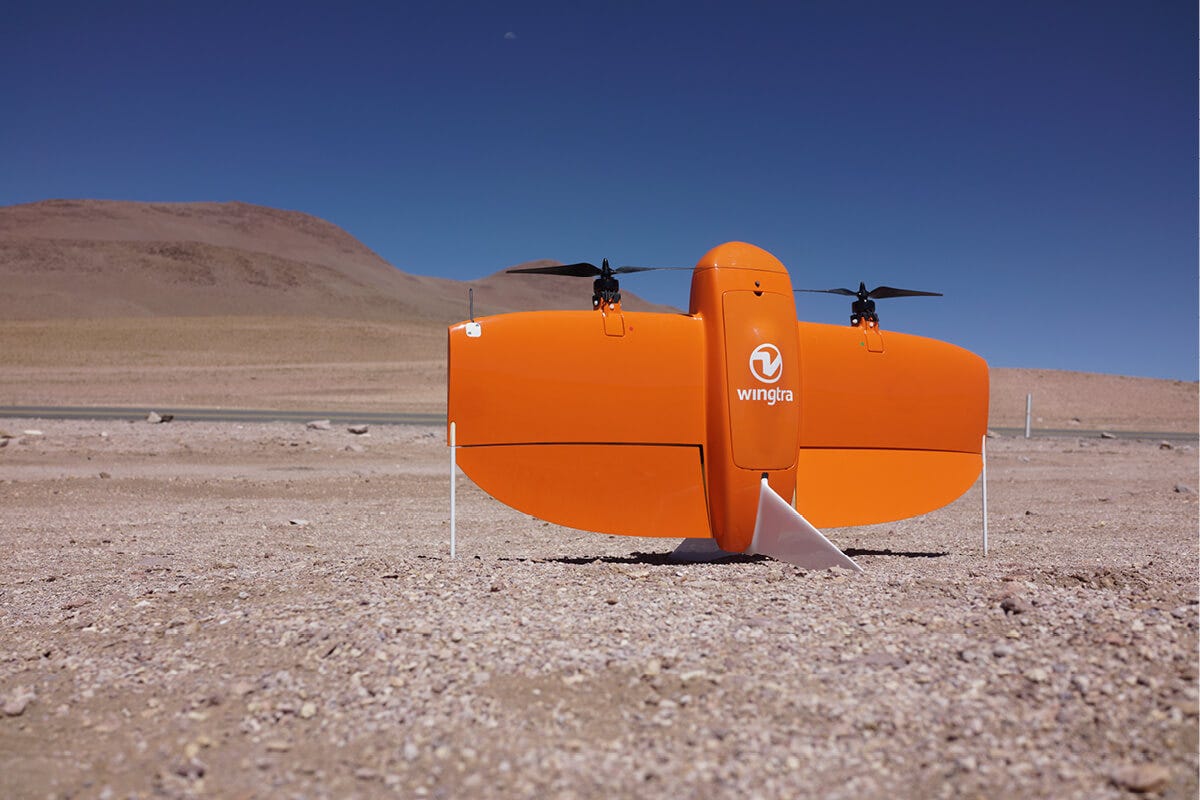
Wingtra: Swiss VTOL Mapping Drones Driving European Strategic Autonomy
Switzerland’s Wingtra has quietly become a trailblazer in drone technology by mastering a niche with outsized strategic implications. The company builds unmanned aerial vehicles (UAVs) that take off and land vertically like a helicopter, yet cruise efficiently like a fixed-wing plane. This unique VTOL design allows Wingtra’s craft to map vast areas with precision sensors, providing high-resolution aerial imagery that was once costly or impossible to obtain. Wingtra’s drones have already been embraced by global organizations – from civil engineers and environmental researchers to U.S. agencies like NASA – for their ability to quickly deliver accurate 2D and 3D maps. Now European defense planners are taking notice. In an era when secure, autonomous systems are key to strategic autonomy, Wingtra offers a home-grown European alternative to foreign-made drones. Its rise from an academic project in Zurich to the world’s leading VTOL mapping drone producer hints at how European innovation can underpin both commercial success and sovereign defense capabilities. The following analysis explores Wingtra’s corporate profile, technology portfolio, and strategic significance for Europe’s autonomy and security objectives.
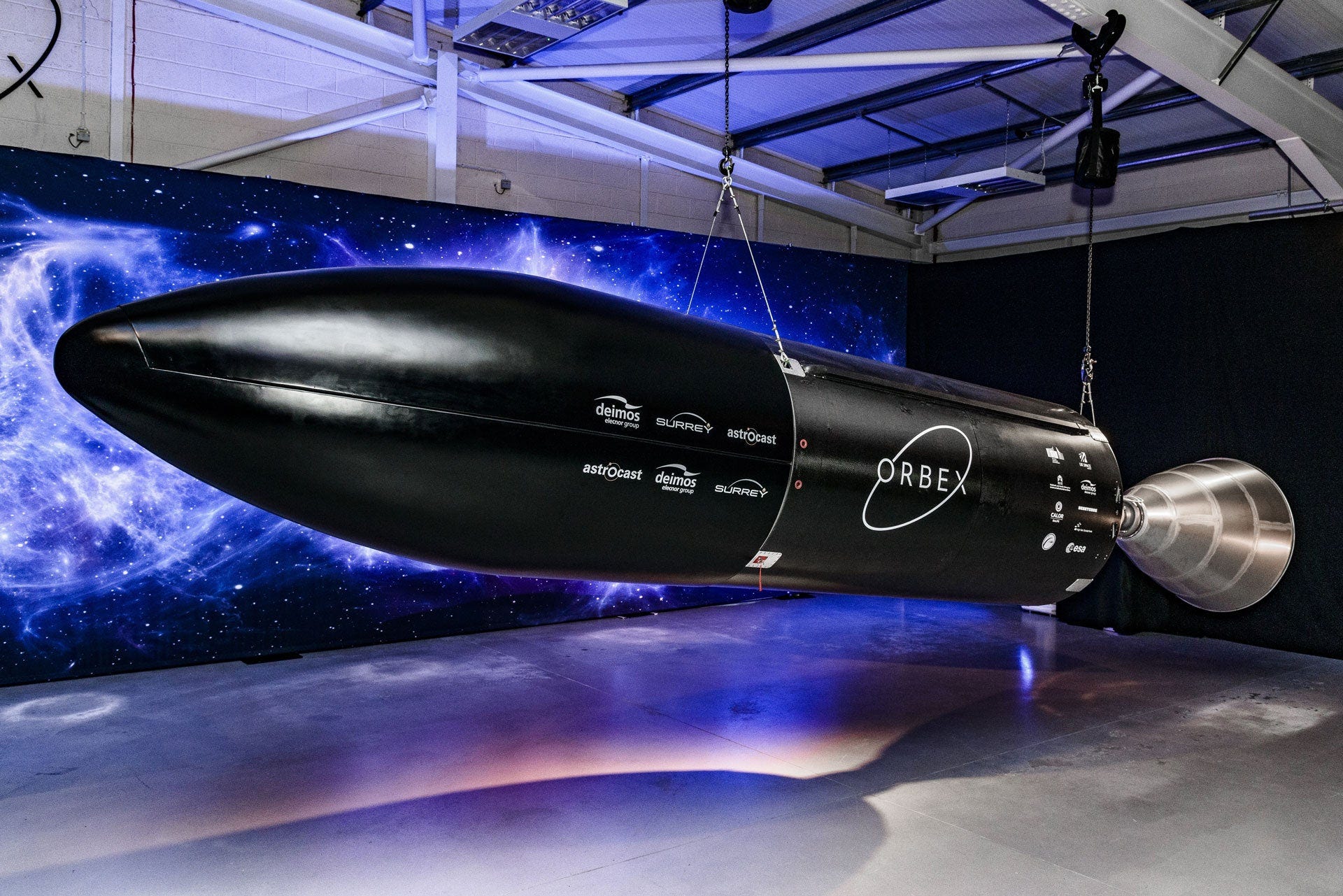
Orbex: Forging Europe’s New Path to Space Autonomy
Orbex is a UK-based aerospace venture aiming to redefine Europe’s access to space. Founded in 2015, the company is developing lightweight orbital rockets powered by a carbon-neutral biofuel. From its base in the Scottish Highlands, Orbex is preparing to launch satellites into orbit using Prime, a 19-meter microlauncher fueled by renewable biopropane. This “green” rocket promises to cut carbon emissions by over 90% compared to traditional launchers, aligning space technology with Europe’s climate goals. Orbex has captured wide attention not only for its eco-innovations but also for its strategic significance: it will operate from the new Sutherland Spaceport in northern Scotland, offering a sovereign European launch site. In an era when geopolitical tensions have jeopardized access to non-European launch services, Orbex emerges as a critical enabler of European space autonomy. The prospect of a home-grown launcher—designed and built in Europe—has generated palpable excitement. Industry observers note that Orbex could soon deliver the first orbital launch from UK soil, carrying European satellites on a homegrown rocket. The company’s bold approach, from its 3D-printed rocket engines to a novel reusable stage design, positions it at the forefront of Europe’s New Space revolution. Orbex’s story is more than a typical startup narrative; it illustrates Europe’s resolve to secure independent space capabilities. Readers intrigued by how a small British firm came to play a key role in Europe’s strategic tech landscape will find Orbex’s journey and ambitions a compelling read.

Shark Robotics: A Pillar of European Defense Robotics Autonomy
Shark Robotics is a French robotics innovator drawing increasing attention for its rugged unmanned ground vehicles (UGVs) that operate where humans cannot. From blazing cathedral infernos to warzones riddled with explosives, Shark’s machines have repeatedly proven their mettle, preserving life and infrastructure under extreme conditions. Founded in 2016 in the historic port city of La Rochelle, the company has rapidly evolved from a scrappy startup into a key player in Europe’s defense and security tech ecosystem. Its flagship “Colossus” robot famously helped save Notre-Dame Cathedral by tirelessly blasting water amid 800°C flames. Such high-profile deployments hint at a broader story: Shark Robotics is quietly bolstering European strategic autonomy in critical technologies. As NATO allies and EU institutions seek resilient, home-grown solutions for multi-domain operations, Shark Robotics offers a case study in European ingenuity – a company marrying battlefield grit with cutting-edge engineering to reduce reliance on foreign suppliers. The following analysis will delve into how this dynamic French firm aligns with Europe’s strategic priorities, from interoperable defense capabilities to supply chain sovereignty, and why its rise matters for the continent’s security future.
Orbex: Forging Europe’s New Path to Space Autonomy
Orbex is a UK-based aerospace venture aiming to redefine Europe’s access to space. Founded in 2015, the company is developing lightweight orbital rockets powered by a carbon-neutral biofuel. From its base in the Scottish Highlands, Orbex is preparing to launch satellites into orbit using Prime, a 19-meter microlauncher fueled by renewable biopropane. This “green” rocket promises to cut carbon emissions by over 90% compared to traditional launchers, aligning space technology with Europe’s climate goals. Orbex has captured wide attention not only for its eco-innovations but also for its strategic significance: it will operate from the new Sutherland Spaceport in northern Scotland, offering a sovereign European launch site. In an era when geopolitical tensions have jeopardized access to non-European launch services, Orbex emerges as a critical enabler of European space autonomy. The prospect of a home-grown launcher—designed and built in Europe—has generated palpable excitement. Industry observers note that Orbex could soon deliver the first orbital launch from UK soil, carrying European satellites on a homegrown rocket. The company’s bold approach, from its 3D-printed rocket engines to a novel reusable stage design, positions it at the forefront of Europe’s New Space revolution. Orbex’s story is more than a typical startup narrative; it illustrates Europe’s resolve to secure independent space capabilities. Readers intrigued by how a small British firm came to play a key role in Europe’s strategic tech landscape will find Orbex’s journey and ambitions a compelling read.