

Defence Finance Monitor is a specialised source of analysis for professionals who seek to anticipate how strategic priorities shape investment patterns in the defence sector. In a landscape shaped by high-stakes political choices and rapid technological shifts, understanding the link between military doctrine, operational requirements, and industrial policy is not a competitive edge—it is a prerequisite.
We analyse how strategic imperatives set by NATO, the European Union, allied Indo-Pacific democracies, and national Ministries of Defence translate into procurement programmes, innovation roadmaps, and long-term industrial priorities. Rather than listing individual companies, we track how clearly defined strategic challenges—such as deterrence gaps, technological dependencies, or capability shortfalls—are converted into funding schemes and institutional demand. Only companies that respond to these challenges become relevant to institutional buyers and, by extension, to investors. This framework has already enabled a growing community of analysts and financial professionals to make more consistent, risk-aware decisions and to avoid costly misalignments.
Building on this methodology, we are developing a structured database of companies analysed and classified according to the strategic-technological criteria set out in our framework. Subscribing to Defence Finance Monitor therefore provides not only access to in-depth reports, but also to a continuously expanding database of European and allied defence firms assessed against clear benchmarks. Each company is positioned according to its alignment with EU and NATO priority capability areas, its contribution to European strategic autonomy, its level of interoperability and deterrence value, and its role in reducing dependencies on non-allied suppliers. Classification also covers technology readiness levels, participation in EU and NATO programmes, intellectual property assets, and dual-use applications. This allows subscribers to compare, benchmark, and identify the most strategically relevant actors within a coherent, transparent, and decision-oriented taxonomy.
Subscribing to Defence Finance Monitor means gaining access to a strategic intelligence service that connects financial decisions with defence priorities. At the core of our work is a structured database of European and allied defence companies, classified according to strategic-technological criteria such as autonomy, interoperability, deterrence, and supply chain resilience. In today’s environment, profitable investment requires more than market data: it requires understanding how limited public resources are channelled toward specific capability gaps, sovereign technologies, and the reduction of non-allied dependencies. By combining in-depth reports with a continuously expanding company database, Defence Finance Monitor enables investors to anticipate demand, benchmark firms against institutional priorities, and avoid costly misalignments.

Digitalization of Infantry Units: Investment and Industrial Implications
The digitalization of infantry units has become one of the most decisive structural shifts in modern defence markets. No longer is the infantry soldier an isolated actor relying solely on traditional small arms and physical resilience. Instead, each soldier is now embedded in a digital ecosystem of sensors, secure communications, and command systems, turning the infantry into a distributed platform of data collection and operational integration. For industry and finance, this transformation generates constant demand for soldier systems, connectivity, and cybersecurity solutions at the tactical edge. Unlike capital platforms acquired in multi-decade cycles, digital systems evolve rapidly and require continuous upgrading, creating recurring procurement pipelines. Defence investors should recognize that this process is not a temporary trend but a structural driver of spending, reshaping procurement priorities and sustaining innovation across both traditional defence contractors and dual-use technology firms.
Zepher Flight Laboratories, Inc. – Strategic-Technological Analysis
Zepher Flight Laboratories, Inc. is a pioneering unmanned aerial vehicle (UAV) developer that has quietly emerged from Washington State’s aerospace cluster with a focus on hydrogen-powered drones. Founded in 2019, this U.S.-based company has captured attention by delivering a novel VTOL drone platform known as the Z1 – a 14-foot wingspan, 55-pound aircraft fueled by hydrogen fuel cells. In an era when small drones are often synonymous with short endurance and dependency on lithium batteries (many sourced from China), Zepher’s technology offers a compelling alternative. Its Z1 drone can fly for over 10 hours on a single refill[1], and carry multi-mission payloads quietly and efficiently. Developed in conjunction with the U.S. Department of Defense, the Z1 is designed for military and industrial applications where long range and low signatures are critical. Now operating as a subsidiary of Heven Drones – a hydrogen-drone leader – Zepher Flight Labs is positioned at the intersection of defense innovation and energy resilience. This introduction sets the stage for a detailed analysis of how Zepher’s capabilities could strengthen European strategic autonomy and allied defense objectives, enticing readers to explore how a small UAV company might reshape big-picture security considerations.
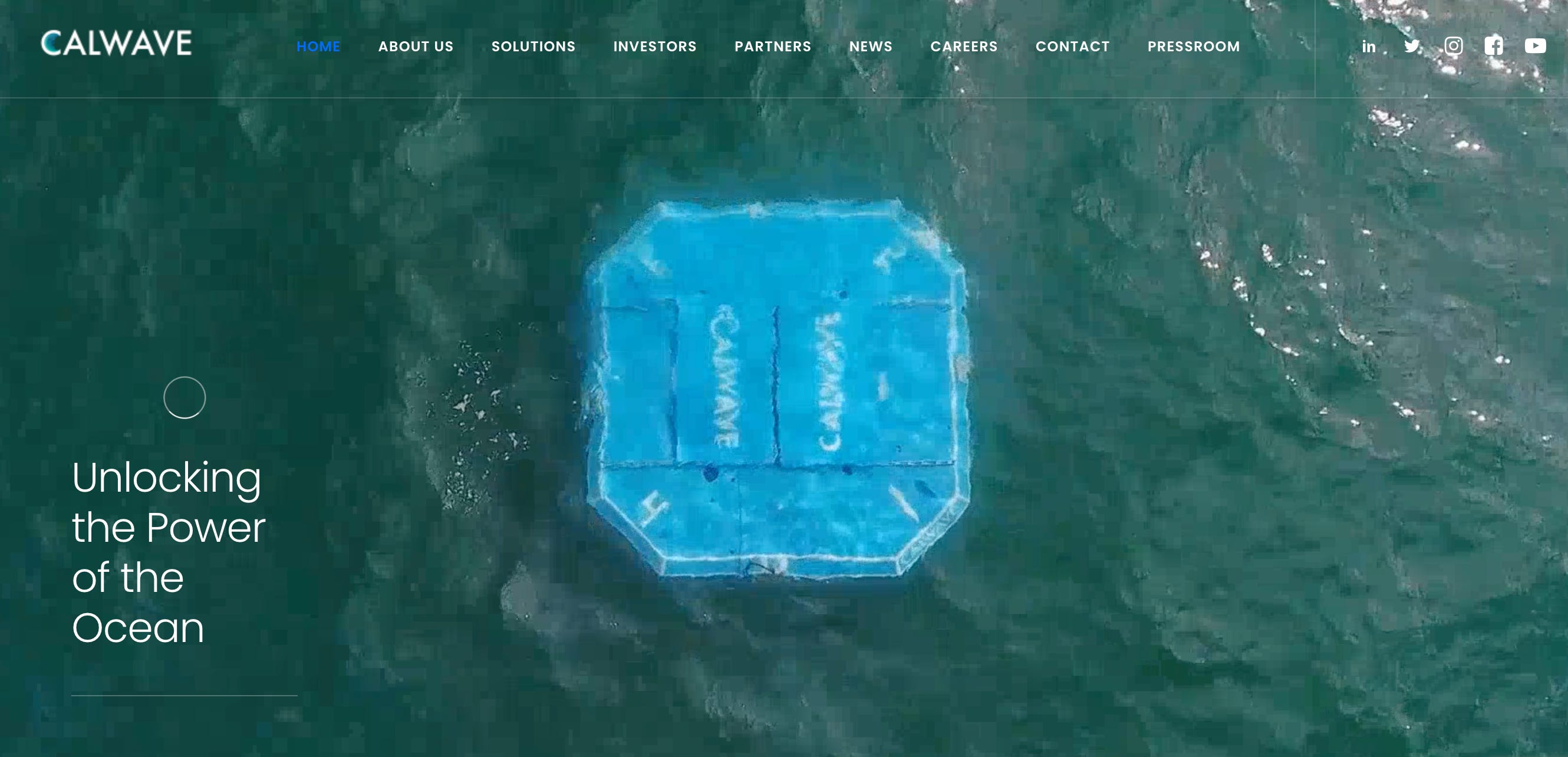
CalWave (Dolphin Labs): Strategic-Technological Analysis
American startup Dolphin Labs, a spin-off of California’s wave energy firm CalWave, is quietly reshaping how remote maritime sensors are powered and connected. Specializing in converting ocean wave motion into electricity, Dolphin Labs has developed the xNode – a buoy-like platform that generates persistent power from waves and can host a suite of maritime sensors. The company’s primary focus is on enhanced maritime domain awareness and offshore surveillance, providing autonomous, renewable-powered sensor networks for defense and environmental monitoring. By ensuring critical ocean sensors stay online continuously – even through storms – this innovative venture aligns with rising demands for resilient marine infrastructure. Dolphin Labs exemplifies the blend of renewable energy and defense technology that is increasingly relevant to NATO and European security objectives. Its story offers insight into how a new class of ocean technology can bolster strategic autonomy and supply chain resilience in the Euro-Atlantic sphere.

Drone Rescue Systems: A European Safety Technology for Strategic Autonomy in UAV Operations
Drones are transforming industries from aerial surveillance to parcel delivery, but every flight carries safety risks. Drone Rescue Systems GmbH has emerged from the heart of Europe with a novel solution: intelligent parachute recovery systems that prevent drones from free-falling catastrophically. Headquartered in Austria, this TU Graz spin-off has developed autonomous, lightweight parachute devices that deploy in milliseconds to save both the drone and anything below from harm[1][2]. The company’s technology, the first of its kind in Europe to meet rigorous safety standards, allows drones to fly beyond visual line of sight and over populated areas with unprecedented assurance[3][4]. By providing a safety net for unmanned aerial vehicles (UAVs), Drone Rescue Systems is not only protecting valuable equipment and lives – it is also enabling broader adoption of drones in commercial and security domains. In an era when European strategic autonomy in critical technologies is paramount, this young company is carving out a niche at the intersection of aerospace ingenuity and continental security needs. The following report delves into Drone Rescue Systems’ strategic-technological profile and evaluates how this European innovator contributes to enhanced deterrence capabilities, NATO interoperability, and reduced dependence on non-allied suppliers.

AIXTRON SE – MOCVD Technology and European Strategic Autonomy
From advanced radar systems scanning the skies to 5G networks knitting together the continent’s communications, Europe’s high-tech defense and telecom infrastructure depends on unseen but critical components: compound semiconductor devices. At the heart of this niche sits AIXTRON SE, a German-born company whose metal-organic chemical vapor deposition (MOCVD) equipment enables the fabrication of these strategic semiconductor materials. Founded in the 1980s as a university spin-off, AIXTRON has grown into one of the world’s foremost providers of deposition systems, quietly supplying the tools used to build gallium nitride (GaN) power amplifiers, indium phosphide lasers, and other III-V technologies that drive both cutting-edge civilian innovations and next-generation military hardware[1]. In an era when Europe is striving for technological sovereignty, AIXTRON’s story is a compelling example of how a specialized mid-cap firm can influence continental security and autonomy. This introduction sets the stage for a deep dive into how AIXTRON’s corporate evolution, technology portfolio, and strategic engagements align with Europe’s quest for resilience in defense and dual-use supply chains.