

Defence Finance Monitor is a specialised source of analysis for professionals who seek to anticipate how strategic priorities shape investment patterns in the defence sector. In a landscape shaped by high-stakes political choices and rapid technological shifts, understanding the link between military doctrine, operational requirements, and industrial policy is not a competitive edge—it is a prerequisite.
We analyse how strategic imperatives set by NATO, the European Union, allied Indo-Pacific democracies, and national Ministries of Defence translate into procurement programmes, innovation roadmaps, and long-term industrial priorities. Rather than listing individual companies, we track how clearly defined strategic challenges—such as deterrence gaps, technological dependencies, or capability shortfalls—are converted into funding schemes and institutional demand. Only companies that respond to these challenges become relevant to institutional buyers and, by extension, to investors. This framework has already enabled a growing community of analysts and financial professionals to make more consistent, risk-aware decisions and to avoid costly misalignments.
Building on this methodology, we are developing a structured database of companies analysed and classified according to the strategic-technological criteria set out in our framework. Subscribing to Defence Finance Monitor therefore provides not only access to in-depth reports, but also to a continuously expanding database of European and allied defence firms assessed against clear benchmarks. Each company is positioned according to its alignment with EU and NATO priority capability areas, its contribution to European strategic autonomy, its level of interoperability and deterrence value, and its role in reducing dependencies on non-allied suppliers. Classification also covers technology readiness levels, participation in EU and NATO programmes, intellectual property assets, and dual-use applications. This allows subscribers to compare, benchmark, and identify the most strategically relevant actors within a coherent, transparent, and decision-oriented taxonomy.
Subscribing to Defence Finance Monitor means gaining access to a strategic intelligence service that connects financial decisions with defence priorities. At the core of our work is a structured database of European and allied defence companies, classified according to strategic-technological criteria such as autonomy, interoperability, deterrence, and supply chain resilience. In today’s environment, profitable investment requires more than market data: it requires understanding how limited public resources are channelled toward specific capability gaps, sovereign technologies, and the reduction of non-allied dependencies. By combining in-depth reports with a continuously expanding company database, Defence Finance Monitor enables investors to anticipate demand, benchmark firms against institutional priorities, and avoid costly misalignments.

Direct-to-Device (D2D) Satellite Connectivity: Defence-to-Consumer Analysis
Direct-to-Device (D2D) satellite connectivity refers to satellite-based messaging and data services delivered directly to standard mobile devices (e.g. smartphones) without any specialized terminal. In practice, a constellation of satellites – typically in Low Earth Orbit (LEO) – communicates with off-the-shelf handsets using cellular-compatible frequencies. For example, Apple’s iPhone 14/15 can now send emergency text messages via Globalstar’s LEO satellites when no cell towers are in range[1]. Similarly, T-Mobile has partnered with SpaceX so that some Starlink satellites will relay SMS to phones[2]. Unlike traditional SATCOM (which uses large dish antennas and high-frequency links), D2D leverages the phone’s existing radio and modest antennas to fill “dead zones”[3]. Recent 3GPP 5G standards (non-terrestrial networks, NTN) make this possible by treating satellites as flying cell towers[4][3]. In short, D2D extends terrestrial cellular networks into space – enabling basic voice, messaging, and IoT data globally. This report examines D2D’s origins in defence, its technical components, market opportunities, and challenges as it moves toward consumer and enterprise use.

2025 Update of the EU Dual-Use Control List: Strategic Implications for European Technology and Security
On 8 September 2025, the European Commission adopted a Delegated Regulation updating the EU dual-use export control list under Annex I of Regulation (EU) 2021/821. This update follows decisions made in 2024 by the multilateral export control regimes—the Wassenaar Arrangement, the Missile Technology Control Regime, the Australia Group, and the Nuclear Suppliers Group. The new list incorporates both multilateral commitments and additional items agreed by EU Member States for uniform control. The changes reflect a broader EU strategy, set out in the 2024 White Paper on Export Controls, to strengthen oversight of sensitive technologies at the Union level. With quantum computing, advanced semiconductor equipment, additive manufacturing and peptide synthesis now included, the EU is consolidating its role as a proactive regulator in the governance of emerging dual-use technologies. These changes are not simply technical adjustments but part of a broader framework connecting trade, security, and strategic autonomy.

SAFE Instrument: EU Opens Negotiations with the UK and Canada
On 18 September 2025, the Council of the European Union authorised the European Commission to open negotiations with the United Kingdom and Canada regarding their participation in the Security Action for Europe (SAFE), a €150 billion defence loan instrument. SAFE, established as the first pillar of the Commission’s ReArm Europe Plan/Readiness 2030, aims to provide long-maturity loans to Member States to finance common defence procurements. This marks a significant development in the EU’s defence investment architecture, as it explicitly extends the potential for third-country participation in joint procurements funded under EU mechanisms. The decision reflects the Union’s recognition of the urgent need to accelerate defence capability acquisition in light of the deteriorating geopolitical environment. By allowing the UK and Canada into structured procurement frameworks, the EU is testing how to align its strategic autonomy agenda with pragmatic cooperation among NATO allies outside the Union.
Company Profiles & Industrial Intelligence
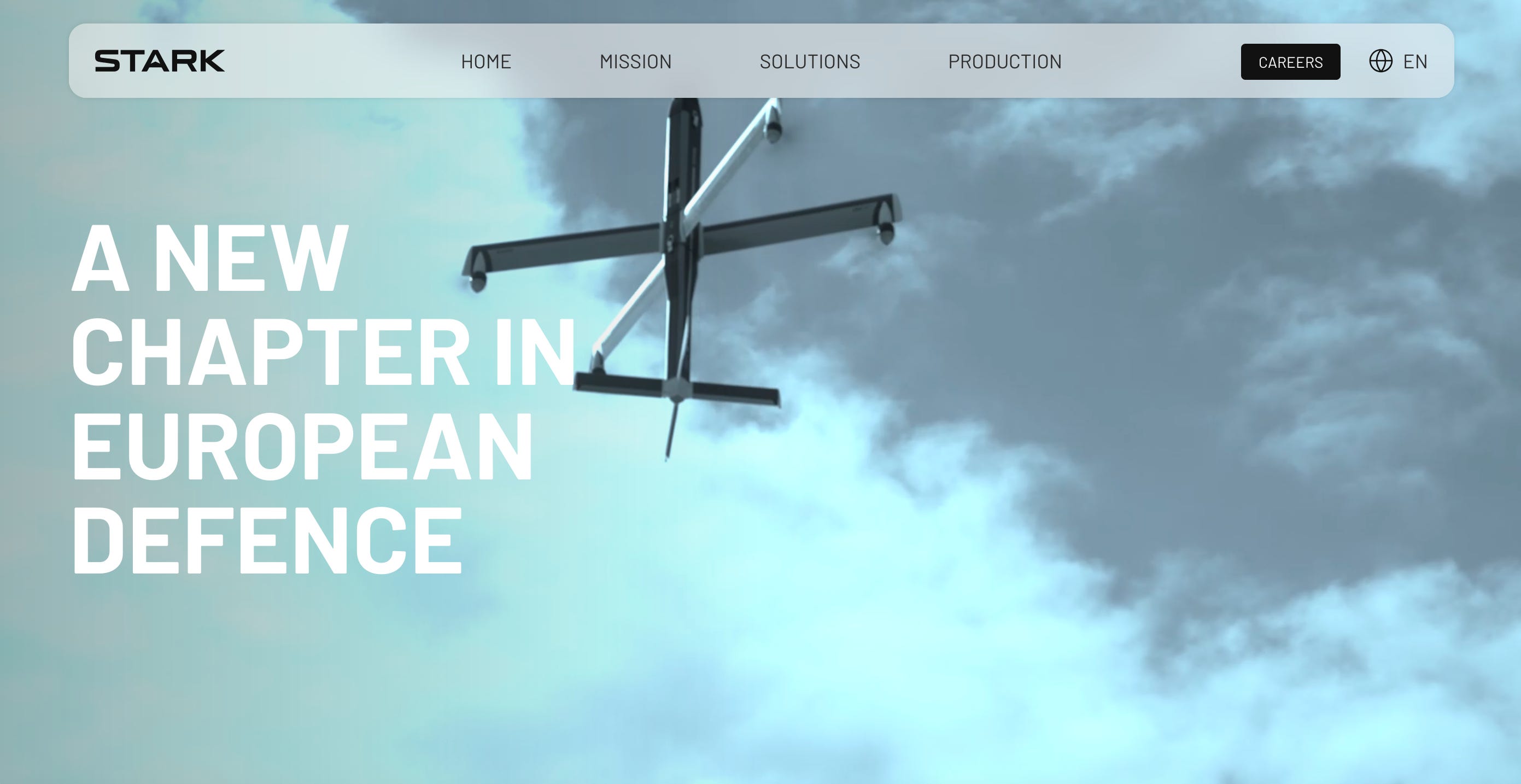
Stark Defence: Germany’s Emerging Drone Startup Driving European Strategic Autonomy
European defence is undergoing a quiet revolution. Stark Defence – a young German company specializing in advanced military drones – has rapidly emerged as a symbol of this transformation. Founded in 2024 amid the urgency of war on the continent, Stark is not a household name yet. But within defence circles, it has become one of the most closely watched ventures. With a headquarters in Germany and operations extending to the UK, Stark develops weaponised unmanned systems designed to fill critical capability gaps for European militaries. The company’s rise is a case study in Europe’s drive for technological autonomy: it builds AI-powered strike drones tested on real battlefields, aiming to reduce reliance on foreign suppliers. Led by a team of former military officers and tech entrepreneurs, Stark sits at the nexus of NATO’s innovation efforts and Europe’s quest for strategic sovereignty. Its story offers a glimpse into how Europe can harness startup agility to bolster deterrence – and why allied investors from Silicon Valley to Brussels are taking note.
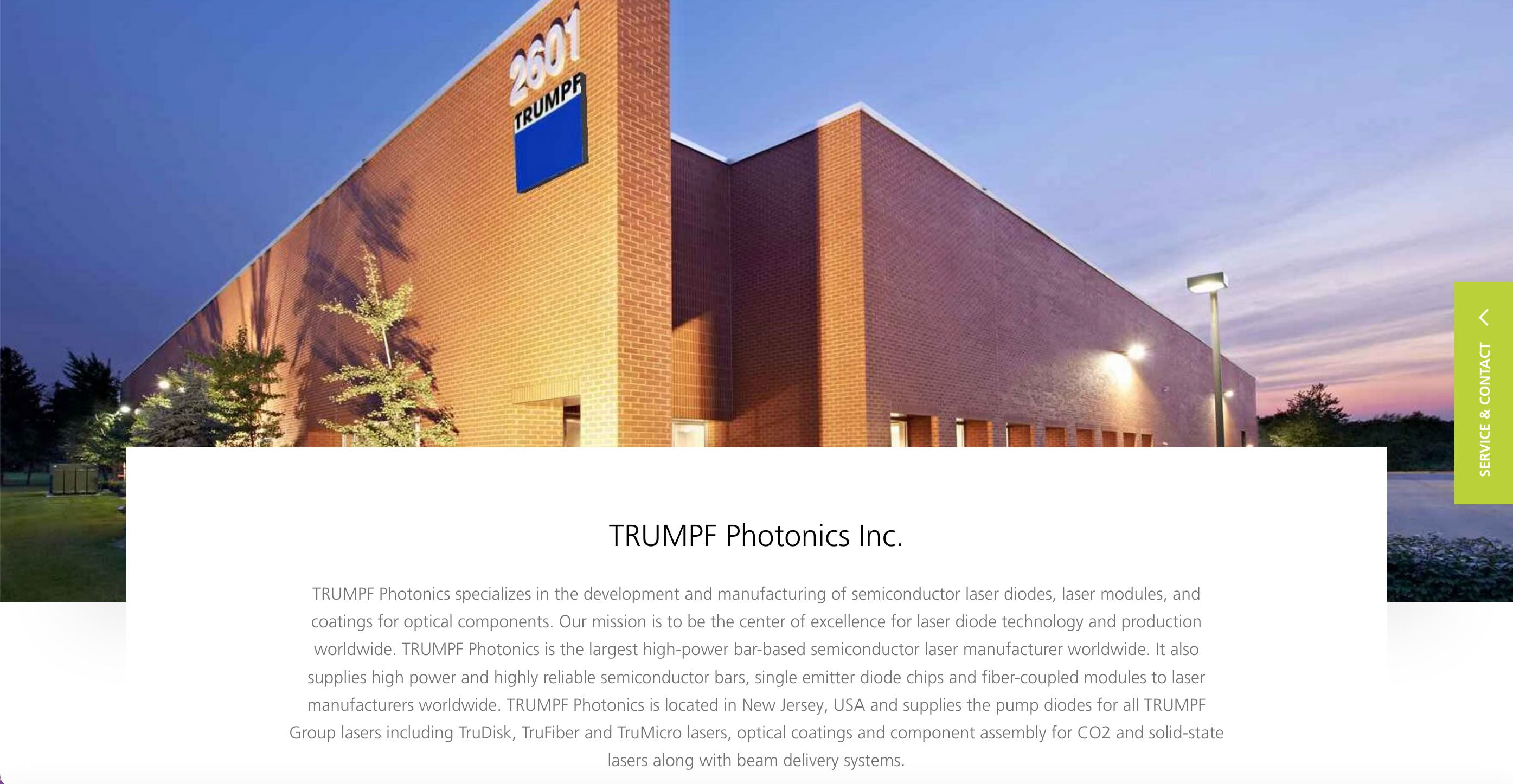
Trumpf: Germany’s Photonics and Manufacturing Powerhouse Enters Europe’s Defense Tech Sphere
TRUMPF is a century-old German industrial manufacturer that has quietly become a linchpin in Europe’s high-tech ecosystem. Best known for its precision machine tools and powerful industrial lasers, this family-owned firm from Baden-Württemberg is now taking on new strategic significance[1][2]. In factories worldwide, TRUMPF lasers slice and weld metal with unrivaled accuracy; in research labs, its technology helps fabricate the most advanced microchips on the planet[3]. Yet despite its global industrial reach, TRUMPF has long shied away from the defense sector. That is beginning to change. As Europe pours investment into rearmament and high-tech defense, TRUMPF’s leadership has signaled a historic shift: its photonics innovations will for the first time be made available for “defensive” military applications[4]. From anti-drone laser systems to quantum sensors for secure satellites, TRUMPF is positioning itself at the forefront of European strategic autonomy. In an era of rising geopolitical uncertainty, the company’s evolution from Mittelstand manufacturer to dual-use technology powerhouse could profoundly influence Europe’s ability to reduce dependence on foreign suppliers and enhance its collective security.
TrustNXT Strategic-Technological Analysis
Introduction: In an era of ubiquitous AI-generated imagery, TrustNXT – a Hamburg-based deep-tech spin-off of Basler AG – has emerged to secure the trustworthiness of visual data. Founded in 2024, the company’s software platform cryptographically “fingerprints” images and video at the source, enabling reliable verification of authenticity[1][2]. In September 2025, TrustNXT secured €1.6 million in pre-seed funding from D11Z.Ventures and High-Tech Gründerfonds to scale this capability[3][2]. This investment underlines the strategic importance of defending against AI-manipulation threats in both commercial and security domains. By embedding tamper-proof evidence into every frame of visual content, TrustNXT’s solution targets rising risks in insurance fraud, industrial monitoring and information warfare. Without hyped claims, it is clear that as deepfakes and synthetic media proliferate, enterprises and governments will seek the kind of “digital trust” that TrustNXT promises. The following analysis evaluates how TrustNXT’s technology aligns with European strategic autonomy and NATO defense objectives, and how it may reduce dependencies on non-allied technology.

Quandela (France) – Photonic Quantum Computing for European Strategic Autonomy
In the global quantum computing race, a French startup is quietly positioning Europe at the forefront of photonic quantum technology. Quandela, founded in 2017, has emerged from a Paris laboratory into a pioneering company building quantum computers that harness light particles as qubits. Photonic quantum computing offers a promising path: operations can run at room temperature with inherently long coherence, a stark contrast to the ultra-cold, bulky systems of some competitors. This technical edge is drawing attention not just from scientists and industry, but from European policymakers seeking technological sovereignty. Quandela’s strides – from delivering Europe’s first cloud-accessible quantum processor to opening a quantum manufacturing facility in France – hint at its strategic value. As the EU strives to reduce reliance on foreign technology and NATO allies explore next-generation defense tools, Quandela’s story offers a compelling glimpse into how European deep-tech innovation can bolster collective security and autonomy.
Oxford Quantum Circuits – Strategic-Technological Analysis
Oxford Quantum Circuits (OQC) is one of Europe’s foremost quantum computing ventures, pioneering cutting-edge superconducting qubit technology from its base in the United Kingdom. Born as an academic spin-out from the University of Oxford, the company has rapidly evolved from a laboratory innovation into a provider of “quantum computing as a service” (QCaaS) for global clients. Its patented three-dimensional Coaxmon architecture encapsulates a novel approach to building scalable quantum processors, setting OQC apart in the competitive quantum race[1]. In an era when quantum technology is recognized as a strategically disruptive field – one that NATO and European institutions alike deem critical for future security and economic leadership[2][3] – OQC stands out as a homegrown European contender. The company has already achieved several firsts that hint at its strategic significance: it launched the first European quantum computer on Amazon’s cloud platform, making advanced computing accessible beyond the lab[4], and was the first in the world to deploy a quantum system into a commercial data center environment[5]. These milestones underscore OQC’s transition from academic prototype to operational technology, and signal its potential to bolster European technological sovereignty. By leveraging partnerships with industry leaders and tapping into government-backed initiatives, OQC is positioning itself at the nexus of quantum innovation and strategic imperatives. The following analysis will delve into how OQC’s quantum computing advancements contribute to European strategic autonomy, NATO interoperability, and the reduction of dependencies on non-allied suppliers – offering a clear-eyed, professional assessment of its role in Europe’s defense-tech landscape.