

Defence Finance Monitor is a specialised source of analysis for professionals who seek to anticipate how strategic priorities shape investment patterns in the defence sector. In a landscape shaped by high-stakes political choices and rapid technological shifts, understanding the link between military doctrine, operational requirements, and industrial policy is not a competitive edge—it is a prerequisite.
We analyse how strategic imperatives set by NATO, the European Union, allied Indo-Pacific democracies, and national Ministries of Defence translate into procurement programmes, innovation roadmaps, and long-term industrial priorities. Rather than listing individual companies, we track how clearly defined strategic challenges—such as deterrence gaps, technological dependencies, or capability shortfalls—are converted into funding schemes and institutional demand. Only companies that respond to these challenges become relevant to institutional buyers and, by extension, to investors. This framework has already enabled a growing community of analysts and financial professionals to make more consistent, risk-aware decisions and to avoid costly misalignments.
Building on this methodology, we are developing a structured database of companies analysed and classified according to the strategic-technological criteria set out in our framework. Subscribing to Defence Finance Monitor therefore provides not only access to in-depth reports, but also to a continuously expanding database of European and allied defence firms assessed against clear benchmarks. Each company is positioned according to its alignment with EU and NATO priority capability areas, its contribution to European strategic autonomy, its level of interoperability and deterrence value, and its role in reducing dependencies on non-allied suppliers. Classification also covers technology readiness levels, participation in EU and NATO programmes, intellectual property assets, and dual-use applications. This allows subscribers to compare, benchmark, and identify the most strategically relevant actors within a coherent, transparent, and decision-oriented taxonomy.
Subscribing to Defence Finance Monitor means gaining access to a strategic intelligence service that connects financial decisions with defence priorities. At the core of our work is a structured database of European and allied defence companies, classified according to strategic-technological criteria such as autonomy, interoperability, deterrence, and supply chain resilience. In today’s environment, profitable investment requires more than market data: it requires understanding how limited public resources are channelled toward specific capability gaps, sovereign technologies, and the reduction of non-allied dependencies. By combining in-depth reports with a continuously expanding company database, Defence Finance Monitor enables investors to anticipate demand, benchmark firms against institutional priorities, and avoid costly misalignments.
Strategic Context & International Security
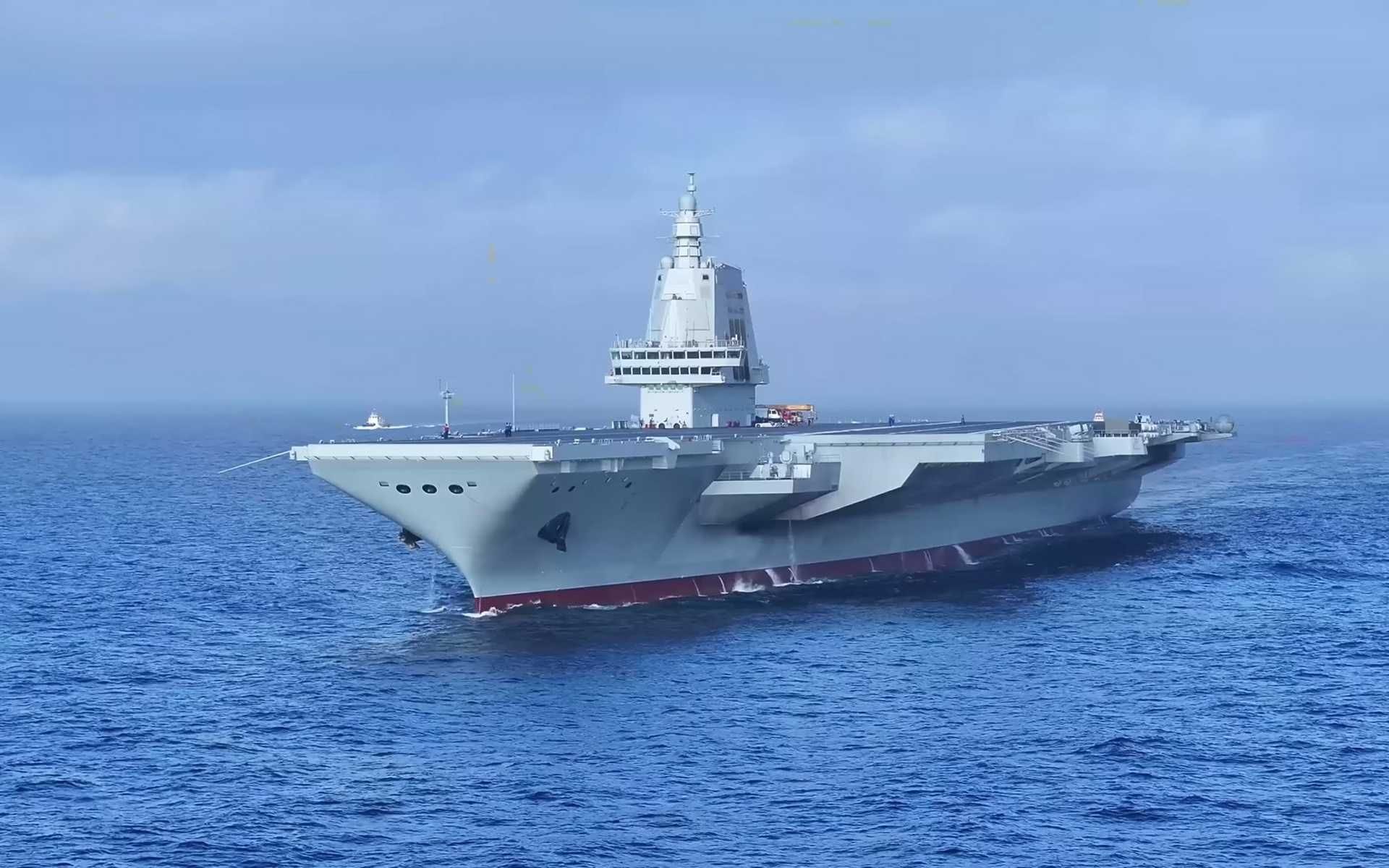
U.S.–China Naval Competition as a Systemic Factor
The naval rivalry between the United States and China has become one of the defining dynamics of contemporary international politics, shaping not only the balance of power in the Indo-Pacific but also the structure of the global order. Within just a few decades, China has transformed from a coastal defense force designed to secure its immediate littoral into a navy approaching the profile of a blue water navy, capable of sustained operations across distant seas. This transformation is not simply technical but deeply political, reflecting Beijing’s ambition to guarantee the safety of its maritime trade routes, protect vital strategic interests, and present itself as a credible alternative to American maritime primacy. For Washington, this naval rise is perceived as a direct challenge to the principle of freedom of navigation and to the notion of the seas as a global commons maintained under U.S. leadership since the end of the Second World War. The resulting contest is not confined to military competition but extends to rival visions of power and order.
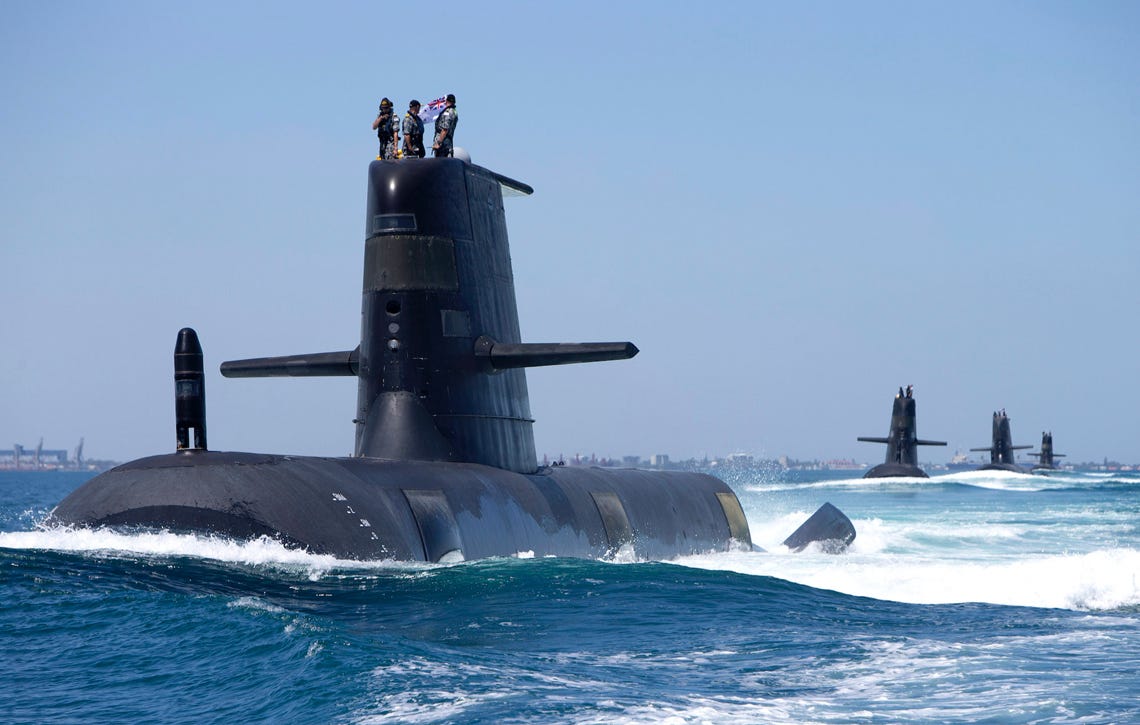
Naval Alliances and Multilateral Cooperation in the Indo-Pacific
The naval dimension of the Indo-Pacific has become inseparable from the dense network of alliances and partnerships that seek to manage China’s maritime rise and safeguard freedom of navigation. Unlike the bipolar naval contest of the Cold War, the Indo-Pacific today is marked by a multiplicity of actors whose cooperation is shaped by different histories, interests, and levels of commitment. The United States remains the central hub, but its effectiveness increasingly depends on its ability to weave together coalitions that extend across Asia and into the wider Pacific. Japan, Australia, India, and the United Kingdom play critical roles in this architecture, and smaller regional states also contribute through hosting bases, participating in exercises, and aligning with initiatives designed to maintain a rules-based maritime order. What emerges is a complex web of overlapping agreements, neither a rigid alliance system nor a loose collection of ad hoc partnerships, but something that reflects the fluidity and uncertainty of the Indo-Pacific itself.
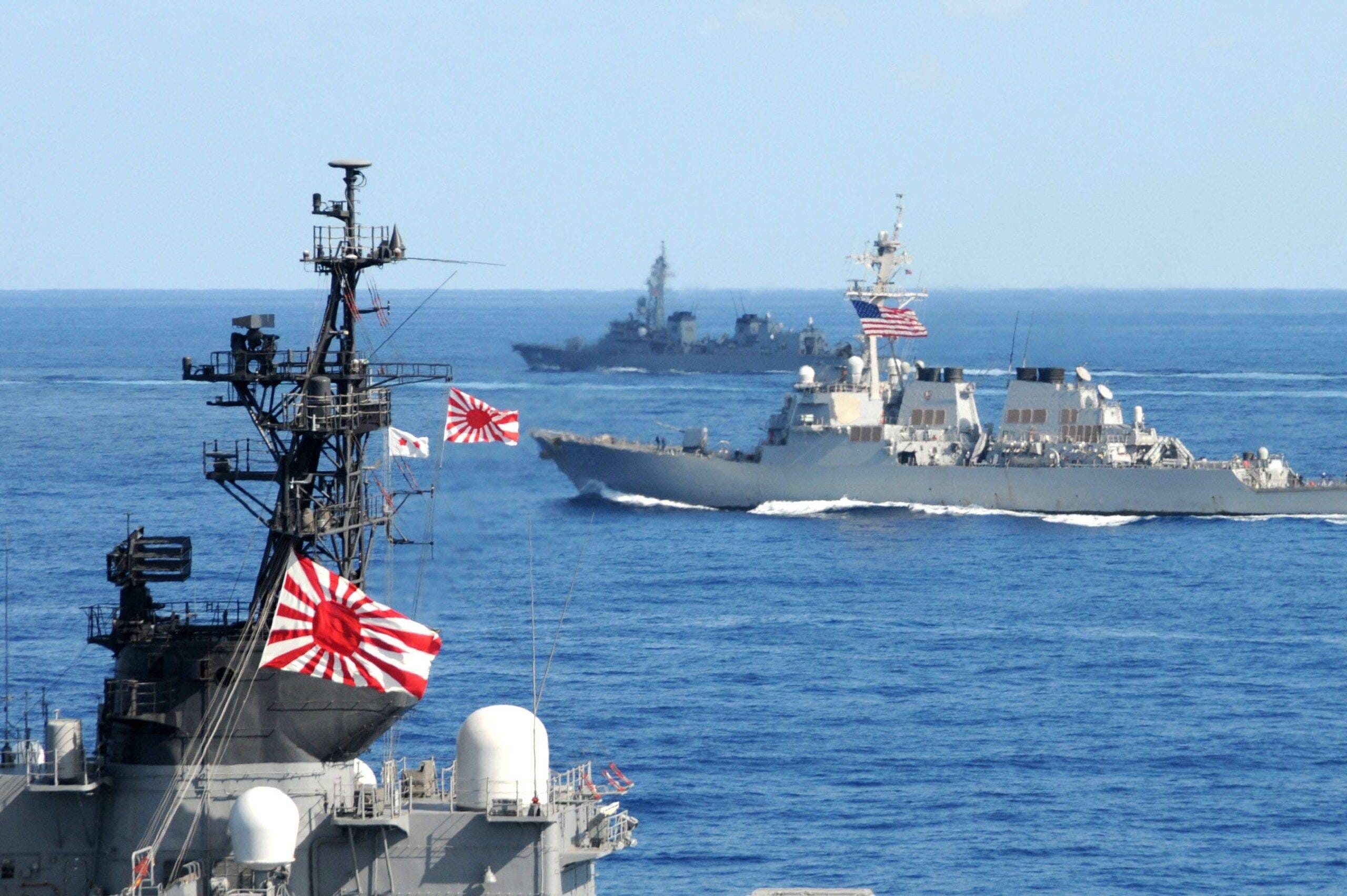
The Five Drivers of Naval Power in the Indo-Pacific
Naval power in the Indo-Pacific cannot be reduced to the mere arithmetic of fleets or the counting of bases scattered across key maritime chokepoints, but must instead be examined through the lens of structural drivers that sustain long-term influence and credibility. Five dimensions are especially decisive: the control of sea lines of communication, the role of sea-based nuclear deterrence, the interpretation and political use of international maritime law, the exploitation of marine resources, and the pace of technological innovation in naval forces. None of these elements can be considered in isolation, since each interacts with and amplifies the others, creating a systemic framework that explains why the rivalry between the United States and China extends far beyond a traditional arms race. In the Indo-Pacific, these drivers acquire existential importance because the vastness of oceanic spaces, the centrality of maritime trade, and the number of littoral states mean that maritime dominance is directly tied to the survival and prosperity of regional and global economies.
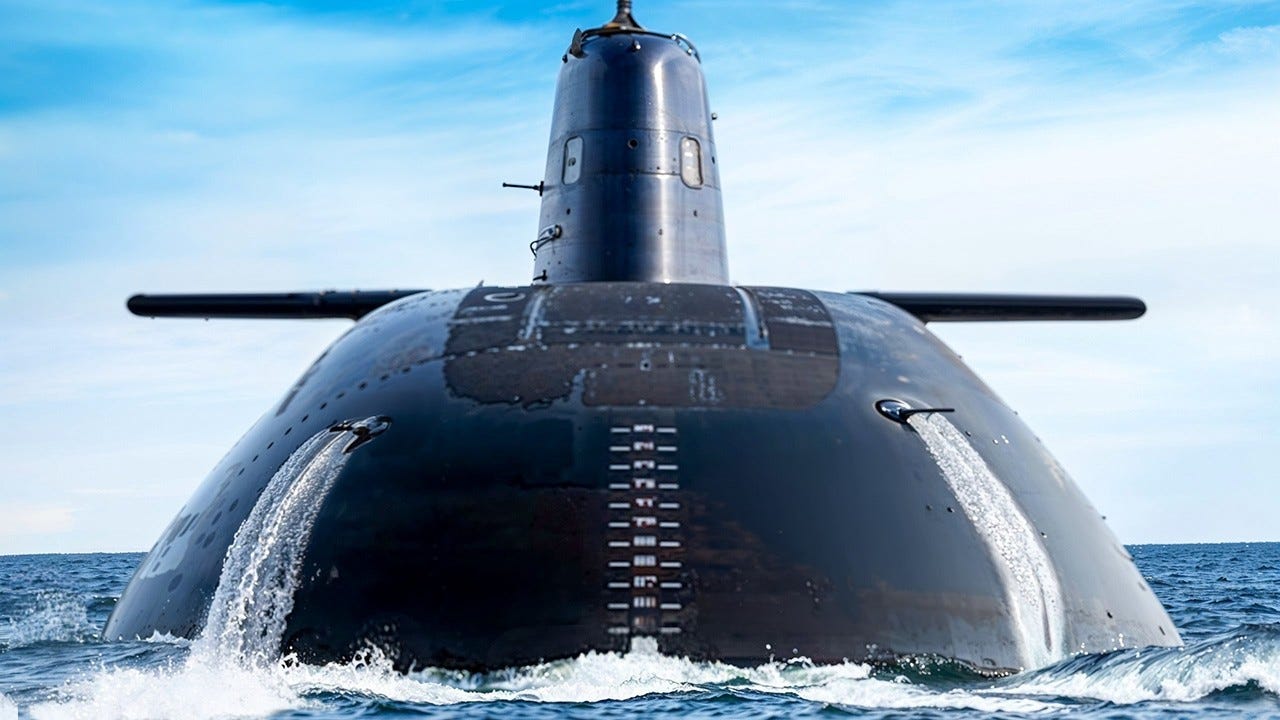
Technology, Escalation, and Nuclear Risk at Sea
The technological dimension of naval power introduces into the Indo-Pacific a series of variables that both increase the complexity of deterrence and simultaneously heighten the fragility of strategic equilibrium. Modern fleets are no longer measured primarily by the number of units they deploy, but by the integration of nuclear, digital, and space-based capabilities into a single operational system. Nuclear-powered submarines armed with ballistic missiles provide a credible deterrent because they are difficult to detect and can survive a preemptive strike. Yet the presence of several states operating such platforms in the same maritime region produces an environment in which uncertainty and opacity prevail over transparency and predictability. Added to this is the emergence of digital platforms linking sensors, weapon systems, and command networks, transforming the ocean into a multidimensional battlespace where the speed of data transmission amplifies the consequences of errors or misinterpretations. Rather than reducing insecurity, technology increases the risks of escalation.
Company Profiles & Industrial Intelligence

SaraniaSat Inc.: High-Resolution Satellite Imaging and AI for European Security and Autonomy
In an era defined by competition in space and data, SaraniaSat Inc. stands out as an agile American startup pushing the boundaries of satellite Earth observation. Founded by a veteran of NASA’s Jet Propulsion Laboratory, the company has engineered a novel fusion of hyperspectral imaging and artificial intelligence to deliver actionable intelligence from orbit[1][2]. From monitoring crop health in precision agriculture to tracking elusive targets for defense, SaraniaSat’s technology exemplifies the dual-use potential prized by modern security planners. Though based in the United States, the company’s cutting-edge capabilities resonate with Europe’s strategic ambitions – enhancing autonomy in space-based surveillance, reducing reliance on non-allied sources, and fortifying NATO’s technological edge. This introduction explores SaraniaSat’s journey and unique offerings, setting the stage for a deeper analysis of how its innovations intersect with European strategic priorities and the quest for technological sovereignty.

SB Tech UK Ltd – Strategic Technological Analysis
In an era of intensifying electronic warfare and strategic competition, SB Tech UK Ltd has emerged as a niche player tackling one of Europe’s most pressing defense technology challenges. Based in London and backed by Silicon Valley pedigree, this deep-tech company develops cutting-edge navigation and security solutions designed to operate even when traditional systems are denied or disrupted. With its roots in advanced quantum and AI research, SB Tech UK has quickly aligned its innovations with European defense priorities: strengthening operational resilience, reducing reliance on vulnerable global systems, and enhancing multi-domain interoperability. The company’s flagship technology – a quantum-enhanced magnetic navigation system – exemplifies the potential to safeguard aircraft and other assets against pervasive GPS jamming and spoofing, a threat that has already disrupted thousands of flights across Europe[1][2]. By offering a sovereign alternative for positioning and timing, SB Tech UK is positioning itself at the crossroads of European strategic autonomy and transatlantic technological cooperation, quietly demonstrating how dual-use innovation can fortify the foundations of collective defense.

Winse Power Oy: Finland’s Light-Based Energy Solutions for European Strategic Autonomy
Winse Power Oy is a Finnish deep-tech venture engineering a new frontier in energy delivery: using light to transmit power. Founded in 2023 in Tampere, Finland, this emerging company develops “power-by-light” solutions that convert laser light into electricity, enabling safe, wireless power links for demanding environments[1][2]. By manufacturing its own optoelectronic semiconductor chips domestically[3][4], Winse Power is carving out a niche at the intersection of clean energy and defense technology. Its innovations – from fiber-optic power cables that work in ultra-high voltage grids to photovoltaic devices that harvest ambient light for battery-free sensors – address critical needs in Europe’s quest for technological sovereignty and resilient infrastructure. The company’s participation in elite programs like the European Space Agency’s Business Incubation Centre and NATO’s DIANA accelerator underscores the strategic value of its technology on both sides of the Atlantic[5][6]. Winse Power’s quiet revolution in energy transmission exemplifies how a small European startup can tackle big strategic challenges: reducing dependence on foreign suppliers, “hardening” military power systems against disruption, and contributing to a greener, self-reliant future. It’s a story of photonics and innovation, with implications stretching from the Arctic grid to orbital satellites – and it is only just beginning.