

Defence Finance Monitor is a specialised source of analysis for professionals who seek to anticipate how strategic priorities shape investment patterns in the defence sector. In a landscape shaped by high-stakes political choices and rapid technological shifts, understanding the link between military doctrine, operational requirements, and industrial policy is not a competitive edge—it is a prerequisite.
We analyse how strategic imperatives set by NATO, the European Union, allied Indo-Pacific democracies, and national Ministries of Defence translate into procurement programmes, innovation roadmaps, and long-term industrial priorities. Rather than listing individual companies, we track how clearly defined strategic challenges—such as deterrence gaps, technological dependencies, or capability shortfalls—are converted into funding schemes and institutional demand. Only companies that respond to these challenges become relevant to institutional buyers and, by extension, to investors. This framework has already enabled a growing community of analysts and financial professionals to make more consistent, risk-aware decisions and to avoid costly misalignments.
Building on this methodology, we are developing a structured database of companies analysed and classified according to the strategic-technological criteria set out in our framework. Subscribing to Defence Finance Monitor therefore provides not only access to in-depth reports, but also to a continuously expanding database of European and allied defence firms assessed against clear benchmarks. Each company is positioned according to its alignment with EU and NATO priority capability areas, its contribution to European strategic autonomy, its level of interoperability and deterrence value, and its role in reducing dependencies on non-allied suppliers. Classification also covers technology readiness levels, participation in EU and NATO programmes, intellectual property assets, and dual-use applications. This allows subscribers to compare, benchmark, and identify the most strategically relevant actors within a coherent, transparent, and decision-oriented taxonomy.
Subscribing to Defence Finance Monitor means gaining access to a strategic intelligence service that connects financial decisions with defence priorities. At the core of our work is a structured database of European and allied defence companies, classified according to strategic-technological criteria such as autonomy, interoperability, deterrence, and supply chain resilience. In today’s environment, profitable investment requires more than market data: it requires understanding how limited public resources are channelled toward specific capability gaps, sovereign technologies, and the reduction of non-allied dependencies. By combining in-depth reports with a continuously expanding company database, Defence Finance Monitor enables investors to anticipate demand, benchmark firms against institutional priorities, and avoid costly misalignments.

Local Conflicts and Bipolar Stability: When the Tail Wags the Dog
One of the most significant interpretive issues of the Cold War concerns the nature of peripheral conflicts that marked the post-1945 international order. The label of “proxy wars” has become conventional to describe conflicts such as Korea, Vietnam, the Middle East, and Afghanistan. According to this view, the superpowers deliberately used local theatres as indirect instruments to test one another’s strength while avoiding direct confrontation. Yet this perspective risks oversimplifying historical dynamics that were in fact more complex. In many cases, it was local logics—national rivalries, decolonization struggles, territorial disputes, ideological divisions—that triggered the outbreak of war, dragging the superpowers into conflicts they had not planned. Only afterwards did the confrontation between Washington and Moscow provide a strategic framework and amplify their significance. Rather than stages managed from above by the superpowers, these wars were conflicts whose origins lay in local agency. The more accurate image is that of the tail wagging the dog: regional conflicts dictating the rhythm of global rivalry, forcing great powers to engage lest they risk a loss of credibility.
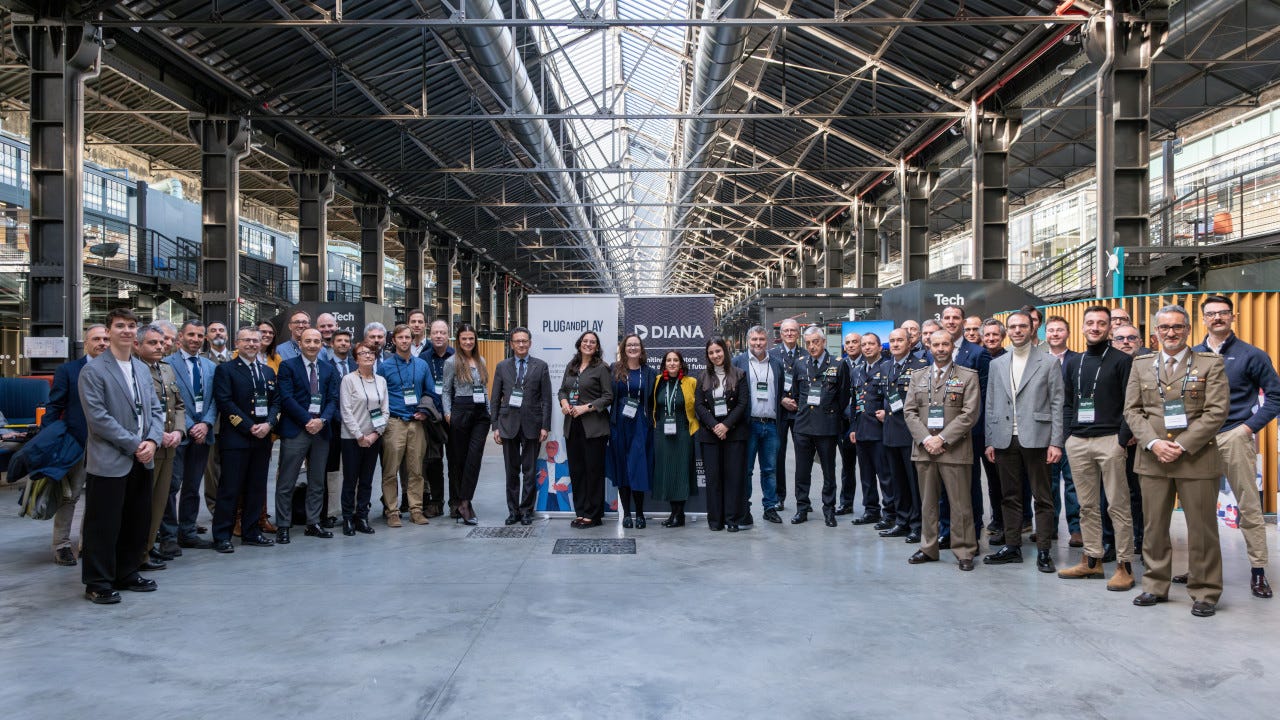
InEMsens (Croatia) – Advanced Electromagnetic Sensor Technology for Dual-Use Detection
A small Croatian spin-off is quietly redefining how buried threats are detected. InEMsens j.d.o.o., based in Zagreb, emerged from academic research with a mission to save lives and strengthen security through technology. This deep-tech venture has developed miniaturized electromagnetic sensors enhanced by artificial intelligence, capable of finding hidden explosives and mapping underground objects with unprecedented precision. Born at the University of Zagreb’s Faculty of Electrical Engineering and Computing, InEMsens draws on over a decade of laboratory breakthroughs to tackle one of the most persistent dangers in conflict and post-conflict zones: landmines and unexploded ordnance. The company’s innovative detection system can rapidly discriminate lethal threats from harmless debris beneath the soil, a capability that promises to revolutionize humanitarian demining and military route clearance. As Europe strives for greater strategic autonomy in defense technologies, InEMsens stands out as an unlikely but potent contributor – a research-driven startup translating scholarly insight into field-ready solutions. In an era when NATO allies are racing to harness emerging and disruptive technologies, this Croatian newcomer has caught the attention of international innovation programs. The following analysis explores how InEMsens is leveraging homegrown European science to reduce dependency on foreign suppliers, enhance allied interoperability, and reinforce Europe’s technological edge in security and defense.

Kelluu (Finland) – Autonomous Long-Endurance Airships for Persistent Monitoring
In the far reaches of eastern Finland, a small company is quietly reinventing one of aviation’s oldest ideas for the needs of the future. Kelluu Oy, based in Joensuu, has developed a hydrogen-powered autonomous airship that marries century-old lighter-than-air flight with cutting-edge sensors and artificial intelligence. At first glance, Kelluu’s 12-meter blimps evoke the early days of aviation, but their mission is thoroughly modern: providing continuous, low-cost aerial surveillance and data for a range of civilian and defense applications. These silent sentinels can float above forests, critical infrastructure, or coastal waters for hours on end, beaming back high-resolution imagery and digital twins of the terrain below. As Europe seeks greater technological autonomy and new ways to protect its territories, Kelluu’s innovation has begun turning heads. NATO exercises and European industry trials have already featured these unmanned airships, hinting at their potential to fill crucial gaps in surveillance coverage. With climate-friendly hydrogen fuel and a fully European pedigree, Kelluu is positioning its novel airships as a strategic asset that could help Europe reduce reliance on foreign drones and bolster multi-domain situational awareness. It’s an audacious comeback story for the humble airship – one that is just starting to take off.

Mantacus Inc. – Strategic-Technological Analysis
Mantacus Inc. is a defense technology innovator aiming to make public spaces and military facilities safer through advanced threat detection. Founded by a transatlantic team of engineers, the company develops autonomous surveillance sensors that can spot concealed weapons or explosive devices from a safe distance. Its core product is a standoff detection system combining millimeter-wave radar and artificial intelligence, designed to scan crowds or approaching personnel without alerting potential adversaries. This technology reflects a crucial need of our era: safeguarding “soft targets” like schools, airports, and stadiums against covert threats. Mantacus’s approach promises to extend security into open areas that traditional screening methods cannot cover, aligning with growing demand in NATO and European defense circles for innovative force protection solutions. With roots in both North America and Europe, the company is positioned at the nexus of transatlantic defense innovation – a vantage point that could help Europe reduce reliance on non-allied security equipment while enhancing collective deterrence. Readers interested in how a niche deep-tech startup can influence European strategic autonomy will find Mantacus a compelling case study.

Metahelios Ltd – Strategic Technological Analysis
Metahelios Ltd is a young British deep-tech company quietly redefining how we capture and analyze images. Founded in Glasgow in 2022 by two physicists, the firm has developed a revolutionary camera sensor that can detect details invisible to conventional imaging systems[1]. By integrating ultra-thin metasurface filters directly onto imaging chips, Metahelios enables cameras to capture multiple wavelengths and polarizations of light in a single snapshot[2][3]. This breakthrough means one compact device can do the job of several traditional cameras and complex optics. The technology’s potential reaches from Earth observation satellites to defense surveillance drones – anywhere that richer visual information can offer an edge. Metahelios’s innovations align with Europe’s drive for technological sovereignty, promising to replace imported optical components with home-grown solutions. As NATO and EU leaders emphasize emerging technologies for security and autonomy, this little-known Scottish startup is positioning itself at the forefront of Europe’s next-generation imaging capabilities. The following analysis delves into Metahelios’s strategic and technological profile, exploring how its metasurface-enabled infrared sensors could bolster European defense autonomy and reduce reliance on non-allied suppliers.

RVmagnetics: Advanced Magnetic Microsensors for Europe’s Strategic Autonomy
RVmagnetics is a Slovak deep-tech company that has quietly become a pioneer in advanced micro magnetic sensors. Based in Košice, in the heart of Europe, this R&D-focused firm develops the world’s smallest passive sensors—tiny glass-coated magnetic microwires thinner than a human hair[1][2]. These nearly invisible sensors can measure temperature, pressure, stress, vibration and more without any physical contact or power supply, even in extreme conditions from near-absolute zero to hundreds of degrees Celsius[3]. Such a breakthrough holds far-reaching implications for European industries and defense systems. RVmagnetics’ microwire technology can be embedded directly into critical materials like composites, metal, or concrete, enabling real-time health monitoring of structures and equipment without altering their properties[3][4]. In an era when Europe is striving for strategic autonomy and resilience, RVmagnetics offers a home-grown innovation that can reduce reliance on foreign sensor suppliers and strengthen the technological self-reliance of the EU and NATO. The company’s journey from academic research to a trusted industrial partner illustrates how a small European startup can address big strategic challenges objectively and innovatively – from improving aircraft safety to enhancing military platform readiness – all while keeping critical sensor capabilities within allied borders.