

Defence Finance Monitor is a specialised source of analysis for professionals who seek to anticipate how strategic priorities shape investment patterns in the defence sector. In a landscape shaped by high-stakes political choices and rapid technological shifts, understanding the link between military doctrine, operational requirements, and industrial policy is not a competitive edge—it is a prerequisite.
We analyse how strategic imperatives set by NATO, the European Union, allied Indo-Pacific democracies, and national Ministries of Defence translate into procurement programmes, innovation roadmaps, and long-term industrial priorities. Rather than listing individual companies, we track how clearly defined strategic challenges—such as deterrence gaps, technological dependencies, or capability shortfalls—are converted into funding schemes and institutional demand. Only companies that respond to these challenges become relevant to institutional buyers and, by extension, to investors. This framework has already enabled a growing community of analysts and financial professionals to make more consistent, risk-aware decisions and to avoid costly misalignments.
Building on this methodology, we are developing a structured database of companies analysed and classified according to the strategic-technological criteria set out in our framework. Subscribing to Defence Finance Monitor therefore provides not only access to in-depth reports, but also to a continuously expanding database of European and allied defence firms assessed against clear benchmarks. Each company is positioned according to its alignment with EU and NATO priority capability areas, its contribution to European strategic autonomy, its level of interoperability and deterrence value, and its role in reducing dependencies on non-allied suppliers. Classification also covers technology readiness levels, participation in EU and NATO programmes, intellectual property assets, and dual-use applications. This allows subscribers to compare, benchmark, and identify the most strategically relevant actors within a coherent, transparent, and decision-oriented taxonomy.
Subscribing to Defence Finance Monitor means gaining access to a strategic intelligence service that connects financial decisions with defence priorities. At the core of our work is a structured database of European and allied defence companies, classified according to strategic-technological criteria such as autonomy, interoperability, deterrence, and supply chain resilience. In today’s environment, profitable investment requires more than market data: it requires understanding how limited public resources are channelled toward specific capability gaps, sovereign technologies, and the reduction of non-allied dependencies. By combining in-depth reports with a continuously expanding company database, Defence Finance Monitor enables investors to anticipate demand, benchmark firms against institutional priorities, and avoid costly misalignments.
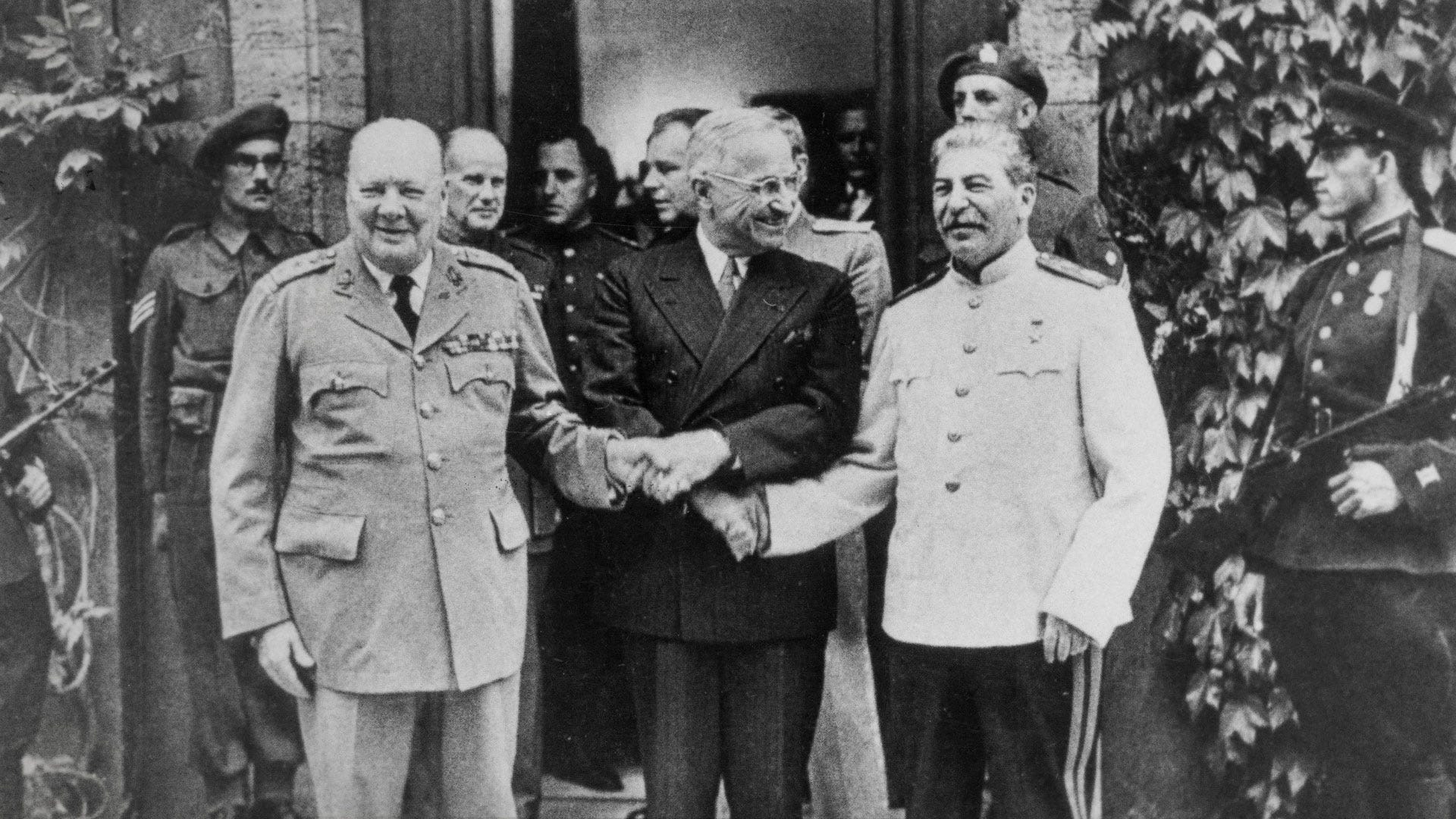
Nuclear Deterrence and the Arms Race: Strategic Doctrines and Global Stability
The concept of deterrence has long been a central element of international relations, predating the emergence of nuclear weapons. Traditionally, deterrence was rooted in the threat of disproportionate retaliation, with the expectation that an adversary would refrain from aggression if the costs were perceived as unbearable. In earlier centuries, this principle rested on the size of armies, the dominance of naval fleets, or the industrial capacity to sustain drawn-out wars. The arrival of nuclear weapons, however, transformed deterrence into something fundamentally different. Nuclear deterrence introduced the prospect of total annihilation, making direct confrontation between superpowers not merely costly but suicidal. The credibility of the threat, the survivability of arsenals, and the psychological perception of vulnerability became the cornerstones of military doctrine. The Cold War unfolded within this framework, where the prevention of war required constant preparation for a war that could never be fought. This paradox defined the strategic competition between the United States and the Soviet Union, embedding deterrence into political culture, economic planning, and technological innovation.
Company Profiles & Industrial Intelligence
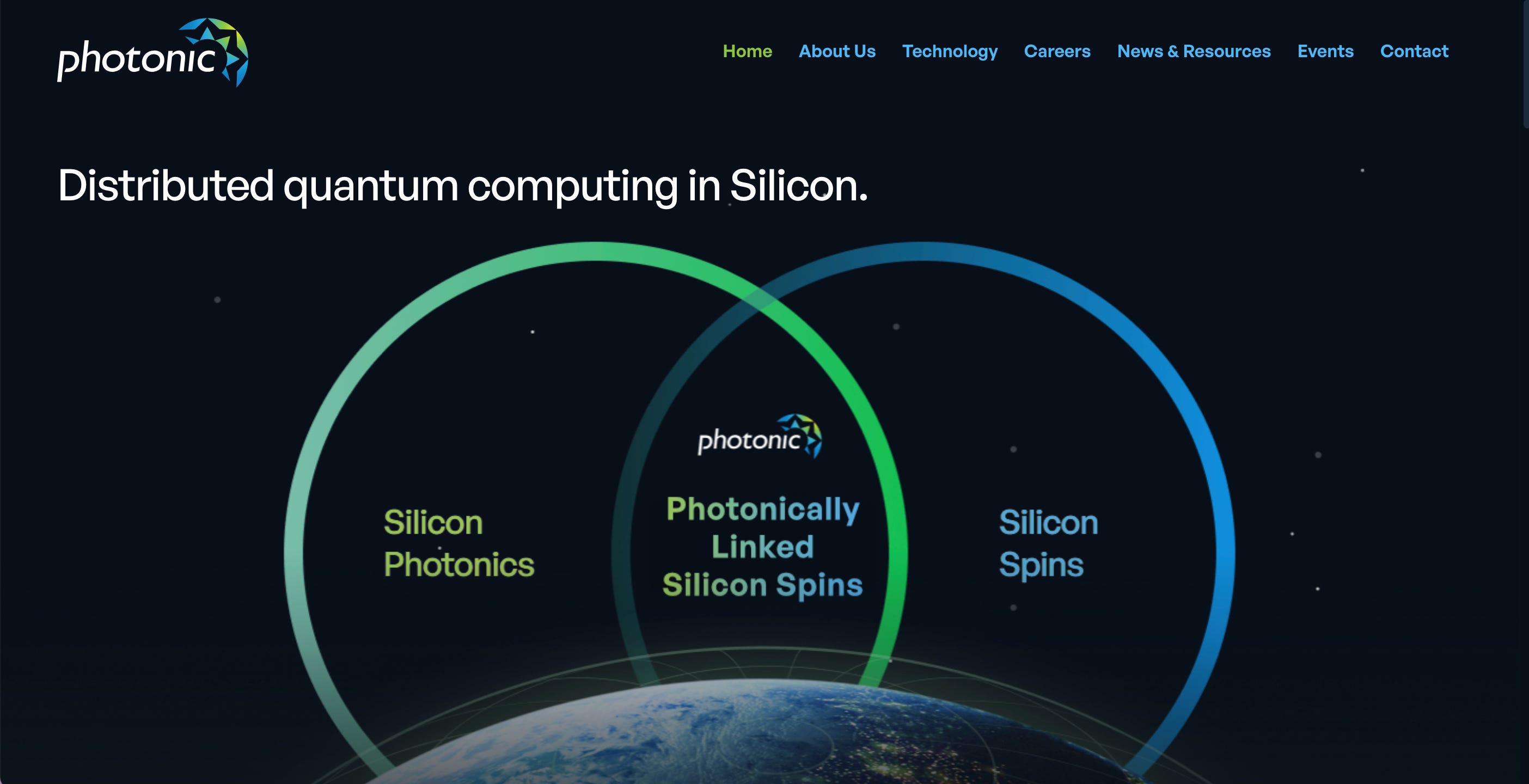
Photonic Inc.: Quantum Photonic Computing and Communication
Europe’s interest in quantum photonics has surged as the continent seeks secure, future-proof communications and computing infrastructure. Photonic Inc. (HQ Vancouver) is a North American quantum startup pioneering “photonically linked silicon spin qubits” for scalable quantum computers and networks[1][2]. Its “Entanglement First™” architecture is designed to integrate computing and telecom interconnects for fault-tolerant quantum processing, with high connectivity and hardware error correction[3][4]. Photonic has attracted major investment ($140M+ to date) and partnered with Microsoft, TELUS and defense agencies[5][6]. Though Canadian-led, its work addresses shared Allied priorities: ultra-secure quantum communications, advanced computing capabilities and cryptography-safe networking. Photonic’s innovations—demonstrated in lab and carrier fiber tests—embody the kind of emerging quantum technologies that European and NATO planners view as critical for future deterrence, interoperability and autonomy[7][8].

Quandela (France) – Photonic Quantum Computing for European Strategic Autonomy
In the global quantum computing race, a French startup is quietly positioning Europe at the forefront of photonic quantum technology. Quandela, founded in 2017, has emerged from a Paris laboratory into a pioneering company building quantum computers that harness light particles as qubits. Photonic quantum computing offers a promising path: operations can run at room temperature with inherently long coherence, a stark contrast to the ultra-cold, bulky systems of some competitors. This technical edge is drawing attention not just from scientists and industry, but from European policymakers seeking technological sovereignty. Quandela’s strides – from delivering Europe’s first cloud-accessible quantum processor to opening a quantum manufacturing facility in France – hint at its strategic value. As the EU strives to reduce reliance on foreign technology and NATO allies explore next-generation defense tools, Quandela’s story offers a compelling glimpse into how European deep-tech innovation can bolster collective security and autonomy.
Oxford Quantum Circuits – Strategic-Technological Analysis
Oxford Quantum Circuits (OQC) is one of Europe’s foremost quantum computing ventures, pioneering cutting-edge superconducting qubit technology from its base in the United Kingdom. Born as an academic spin-out from the University of Oxford, the company has rapidly evolved from a laboratory innovation into a provider of “quantum computing as a service” (QCaaS) for global clients. Its patented three-dimensional Coaxmon architecture encapsulates a novel approach to building scalable quantum processors, setting OQC apart in the competitive quantum race[1]. In an era when quantum technology is recognized as a strategically disruptive field – one that NATO and European institutions alike deem critical for future security and economic leadership[2][3] – OQC stands out as a homegrown European contender. The company has already achieved several firsts that hint at its strategic significance: it launched the first European quantum computer on Amazon’s cloud platform, making advanced computing accessible beyond the lab[4], and was the first in the world to deploy a quantum system into a commercial data center environment[5]. These milestones underscore OQC’s transition from academic prototype to operational technology, and signal its potential to bolster European technological sovereignty. By leveraging partnerships with industry leaders and tapping into government-backed initiatives, OQC is positioning itself at the nexus of quantum innovation and strategic imperatives. The following analysis will delve into how OQC’s quantum computing advancements contribute to European strategic autonomy, NATO interoperability, and the reduction of dependencies on non-allied suppliers – offering a clear-eyed, professional assessment of its role in Europe’s defense-tech landscape.
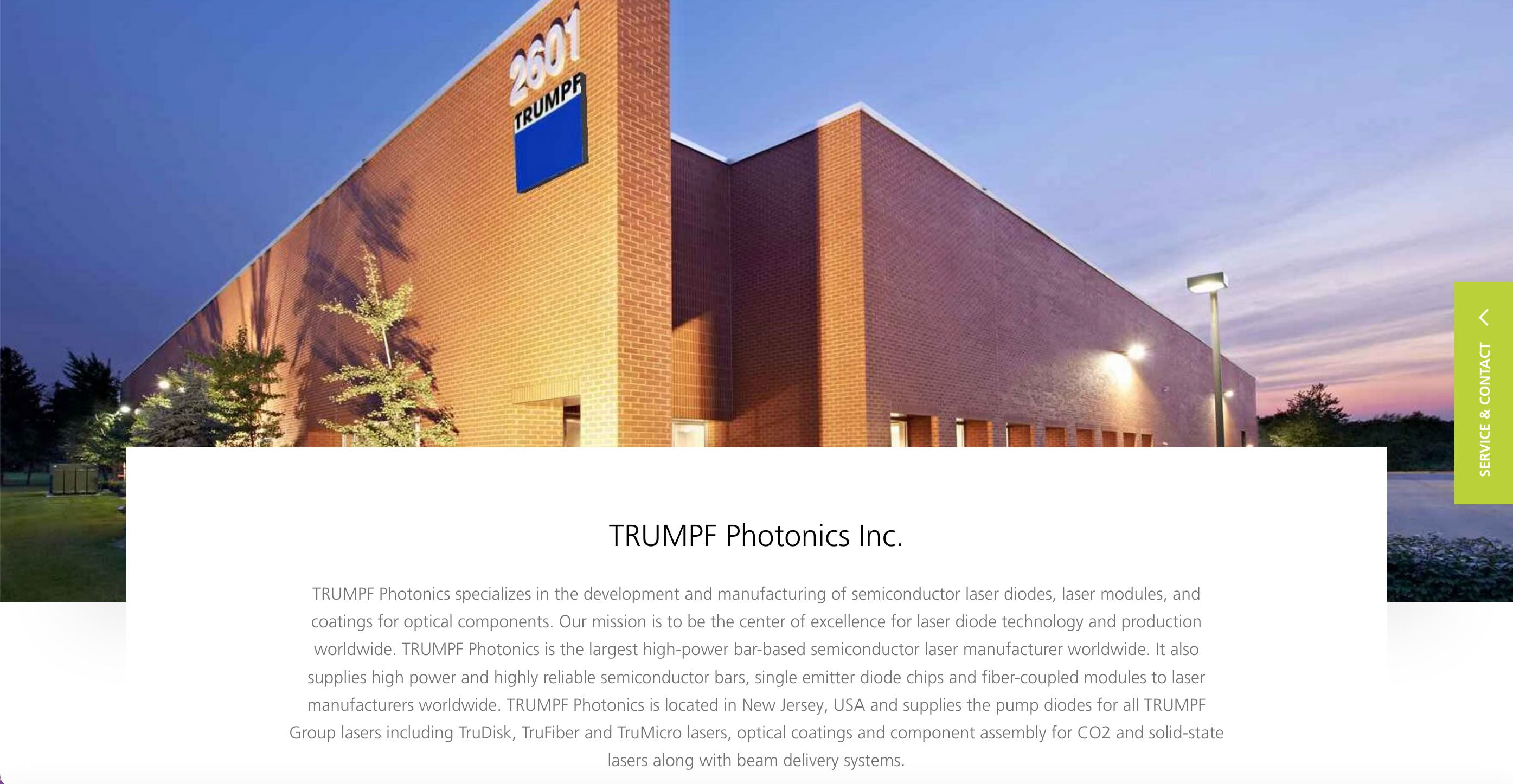
Trumpf: Germany’s Photonics and Manufacturing Powerhouse Enters Europe’s Defense Tech Sphere
TRUMPF is a century-old German industrial manufacturer that has quietly become a linchpin in Europe’s high-tech ecosystem. Best known for its precision machine tools and powerful industrial lasers, this family-owned firm from Baden-Württemberg is now taking on new strategic significance[1][2]. In factories worldwide, TRUMPF lasers slice and weld metal with unrivaled accuracy; in research labs, its technology helps fabricate the most advanced microchips on the planet[3]. Yet despite its global industrial reach, TRUMPF has long shied away from the defense sector. That is beginning to change. As Europe pours investment into rearmament and high-tech defense, TRUMPF’s leadership has signaled a historic shift: its photonics innovations will for the first time be made available for “defensive” military applications[4]. From anti-drone laser systems to quantum sensors for secure satellites, TRUMPF is positioning itself at the forefront of European strategic autonomy. In an era of rising geopolitical uncertainty, the company’s evolution from Mittelstand manufacturer to dual-use technology powerhouse could profoundly influence Europe’s ability to reduce dependence on foreign suppliers and enhance its collective security.