

Defence Finance Monitor provides in-depth analysis of the defence industry and strategic policy areas most relevant to investors. It supports financial professionals in interpreting the evolving criteria of Europe’s strategic autonomy, identifying sectors and companies aligned with NATO, EU policy frameworks, and the emerging ESG paradigm centred on Energy, Security, and Geostrategy. DFM highlights long-term investment opportunities linked to Europe’s rearmament and industrial modernisation, with particular attention to entities positioned to benefit from EU programmes such as EDF, PESCO, and SAFE. It decodes regulatory frameworks including SFDR and the EU Taxonomy, grounding all analysis in official sources with an emphasis on compliance, clarity, and actionable insight. DFM focuses exclusively on companies operating within liberal democracies and on sectors that enhance the strength and resilience of open societies—wherever they are—vis-à-vis authoritarian competition, with a primary focus on Europe.
Euronext Thematic Indices for European Strategic Autonomy

Euronext has introduced three new European equity indices designed to track companies contributing to the EU’s strategic autonomy. These are the Euronext European Energy Security Index, the Euronext European Aerospace & Defence Index, and the Euronext European Strategic Autonomy Index. Each index is based on a free-float market‐capitalisation methodology and is rebalanced quarterly. Euronext describes the indices as reference benchmarks for investment products, intended to “help channel capital to support the companies most critical to Europe’s strategic autonomy”.
SFDR and PAI 14: The Edge of Compatibility

The EU Sustainable Finance Disclosure Regulation (SFDR) distinguishes between “Article 8” funds (those promoting environmental or social characteristics) and “Article 9” funds (those having explicit sustainable-investment objectives). Neither category explicitly bans investments in defence industry companies, but both must account for principal adverse impact (PAI) indicators and “do no significant harm” (DNSH) criteria. Crucially, PAI Indicator 14 (Annex I of the Level 2 RTS) targets “exposure to controversial weapons (anti‑personnel mines, cluster munitions, chemical and biological weapons)”. In practice, any company involved in developing or selling banned or severely restricted weapons must be excluded from SFDR-labelled funds, and funds must report the fraction of their investments in such companies. By contrast, conventional military equipment (tanks, fighter jets, etc.) is not covered by PAI 14, and Article 8 funds may hold these companies if they meet the fund’s ESG criteria and exclusion lists. Article 9 (“dark-green”) funds, however, set a higher bar: defence companies generally do not contribute to their stated sustainable objectives and are thus normally excluded or at least not counted as “sustainable investments”.
Indra Sistemas S.A.
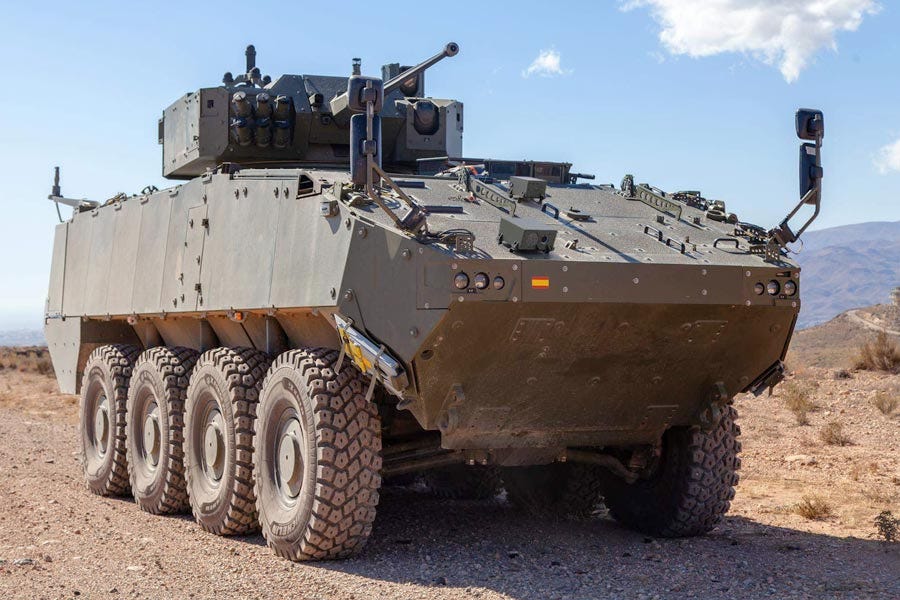
Indra Sistemas represents a key actor in Europe's evolving defence-industrial landscape, positioned at the intersection of advanced systems integration, sovereign security, and technological autonomy. With solid fundamentals, resilient profitability, and sustained revenue growth, the company has significantly outperformed the Spanish market, reflecting both sectoral tailwinds and strategic execution. Its valuation remains moderate relative to larger European defence peers, while its role in major EU-funded programmes and NATO partnerships confirms its embeddedness in continental security frameworks. As defence budgets rise and demand for C4ISR, cyber, and AI-enabled platforms accelerates, Indra appears structurally well-placed to benefit. This analysis reviews the company’s financials, strategic direction, technological portfolio, ESG profile, and relative positioning, to assess its prospects in the context of European rearmament and capital markets.
Defence and Aerospace ETFs Surge in 2024–2025

Global defence spending has jumped in recent years, driven by wars and renewed NATO commitments. SIPRI reports world military budgets hit a record $2,718 billion in 2024 (up 9.4% from 2023). Europe (including Russia) saw a 17% rise to $693 billion, with Germany’s budget up 28% to $88.5 billion. EU member states together spent about €326 billion in 2024 (~1.9% of GDP) (a 30% jump since 2021), and 18 of 32 NATO countries now exceed the 2% GDP guideline (vs. 11 in 2023). These fiscal shifts have fueled investor interest in defence stocks as strategic assets.
NATO Doctrinal Evolution and Its Impact on Defence and Finance
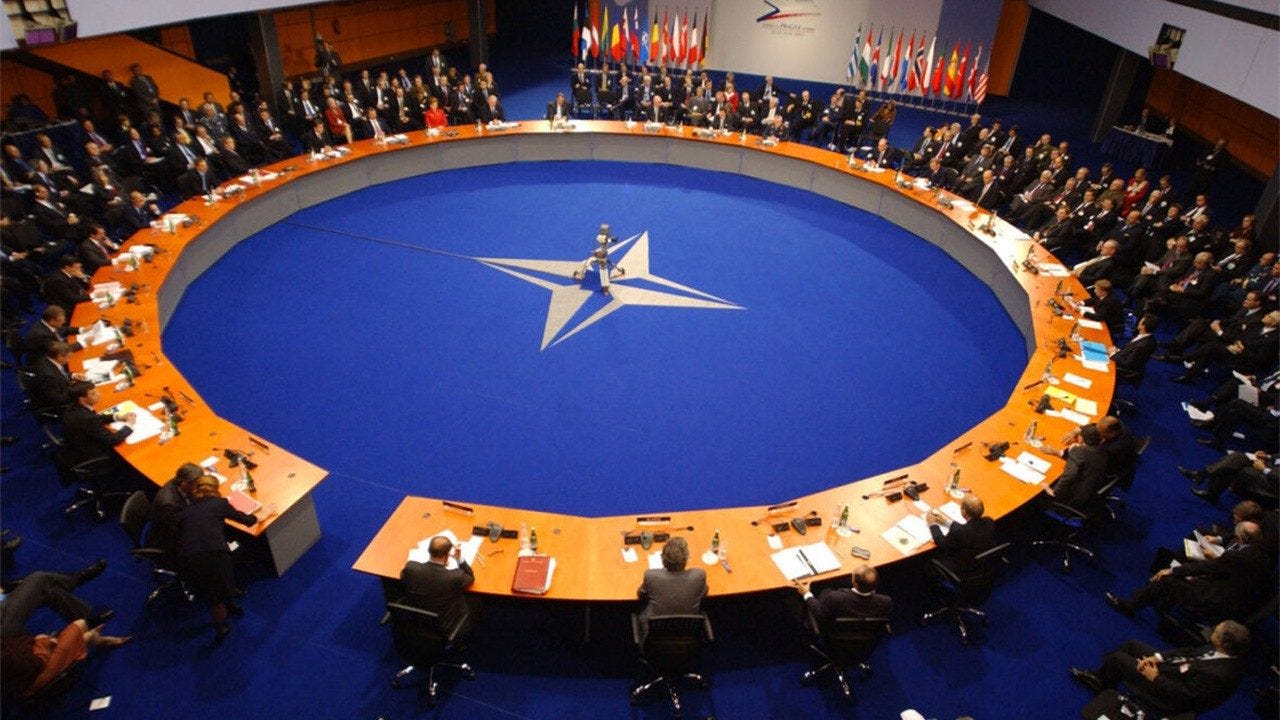
NATO faces renewed great-power competition. Russia’s war in Ukraine has underscored the need to deter a revisionist, technically capable Russia (with backing from China, Iran, DPRK). NATO leaders stress that “we are not at peace” and must prepare for high-intensity conflict as deterrence is holding. At the same time China’s military build-up and hybrid tactics (e.g. cyber and undersea interference) are viewed as growing challenges. In response, the 2022 NATO Strategic Concept and allied policies emphasize emerging threats and require doctrinal adaptation. For example, NATO’s Strategic Concept commits Allies to “promote innovation and increase investments” in emerging technologies to maintain a military edge.