

Defence Finance Monitor is a specialised source of analysis for professionals who seek to anticipate how strategic priorities shape investment patterns in the defence sector. In a landscape shaped by high-stakes political choices and rapid technological shifts, understanding the link between military doctrine, operational requirements, and industrial policy is not a competitive edge—it is a prerequisite.
We analyse how strategic imperatives set by NATO, the European Union, allied Indo-Pacific democracies, and national Ministries of Defence translate into procurement programmes, innovation roadmaps, and long-term industrial priorities. Rather than listing individual companies, we track how clearly defined strategic challenges—such as deterrence gaps, technological dependencies, or capability shortfalls—are converted into funding schemes and institutional demand. Only companies that respond to these challenges become relevant to institutional buyers and, by extension, to investors. This framework has already enabled a growing community of analysts and financial professionals to make more consistent, risk-aware decisions and to avoid costly misalignments.
Building on this methodology, we are developing a structured database of companies analysed and classified according to the strategic-technological criteria set out in our framework. Subscribing to Defence Finance Monitor therefore provides not only access to in-depth reports, but also to a continuously expanding database of European and allied defence firms assessed against clear benchmarks. Each company is positioned according to its alignment with EU and NATO priority capability areas, its contribution to European strategic autonomy, its level of interoperability and deterrence value, and its role in reducing dependencies on non-allied suppliers. Classification also covers technology readiness levels, participation in EU and NATO programmes, intellectual property assets, and dual-use applications. This allows subscribers to compare, benchmark, and identify the most strategically relevant actors within a coherent, transparent, and decision-oriented taxonomy.
Subscribing to Defence Finance Monitor means gaining access to a strategic intelligence service that connects financial decisions with defence priorities. At the core of our work is a structured database of European and allied defence companies, classified according to strategic-technological criteria such as autonomy, interoperability, deterrence, and supply chain resilience. In today’s environment, profitable investment requires more than market data: it requires understanding how limited public resources are channelled toward specific capability gaps, sovereign technologies, and the reduction of non-allied dependencies. By combining in-depth reports with a continuously expanding company database, Defence Finance Monitor enables investors to anticipate demand, benchmark firms against institutional priorities, and avoid costly misalignments.
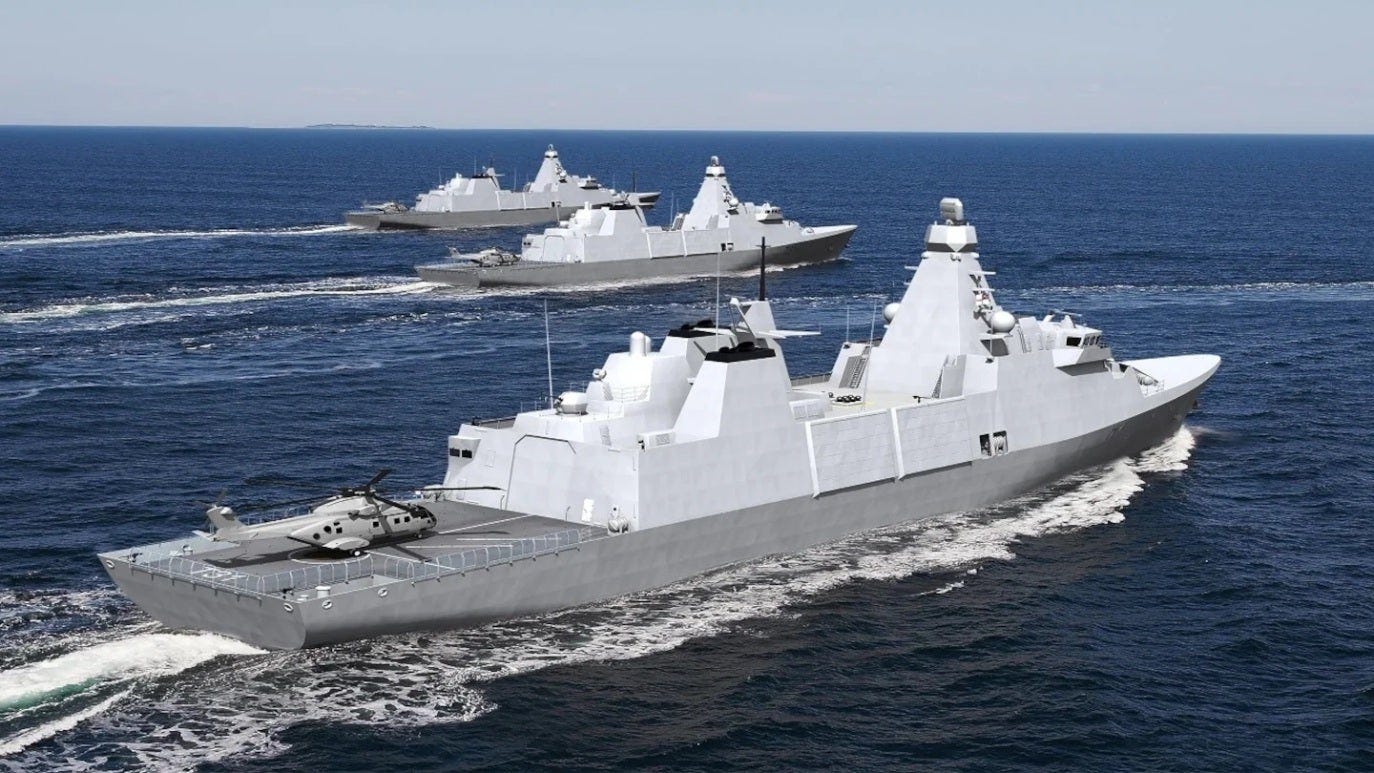
UK Warship Exports and Strategic Partnerships with Scandinavia
The United Kingdom is positioning itself as a central actor in the naval rearmament of Northern Europe, deepening its industrial and military cooperation with Scandinavian allies. Advanced negotiations are underway with Denmark and Sweden for the construction of new Type-31 frigates, in addition to the major contract recently concluded with Norway for Type-26 vessels. This development comes at a time of heightened geopolitical tension in the Arctic and North Atlantic, where Russian submarine activity has reinforced the need for stronger maritime security. The potential deals also illustrate how defence exports are becoming a key component of the UK’s strategy to combine national security objectives with economic growth. Shipyards in Scotland, particularly Rosyth, stand to benefit directly, with long-term employment and technological development tied to the construction of the new warships.
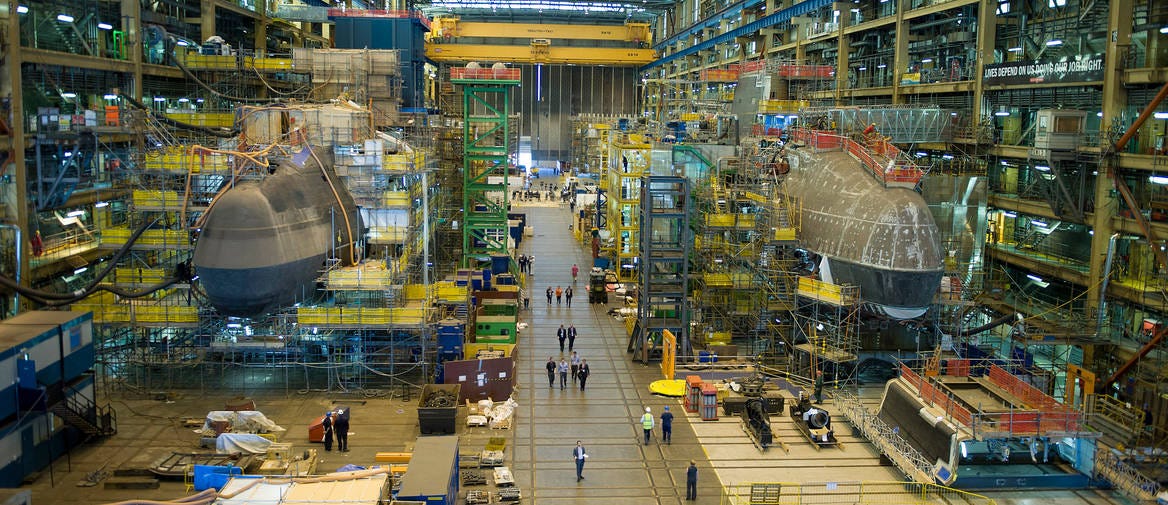
The UK’s New Defence Industrial Strategy: Security and Growth
The United Kingdom is entering a new phase in its approach to defence, one in which military expenditure is explicitly linked to industrial and economic development. The government has announced the launch of a national defence industrial strategy, designed not only to strengthen national security but also to stimulate regional economies, create new jobs, and anchor advanced manufacturing within the country. This represents a significant departure from the post-Cold War vision of a “peace dividend,” replacing it with what officials now describe as a “defence dividend.”

Venture Capital Fuels the Rise of European Defence Tech Start-Ups
The European defence technology sector has entered a phase of rapid expansion, marked by the surge of start-ups that are reshaping the continent’s security and industrial landscape. The war in Ukraine, coupled with uncertainty over the long-term reliability of U.S. guarantees, has acted as a catalyst for private investment. Companies once marginal in the eyes of venture capital funds are now attracting unprecedented financing, positioning themselves as central players in the new European defence ecosystem. This shift reflects not only a reaction to immediate geopolitical crises but also a structural transformation in how Europe perceives its technological and strategic autonomy.
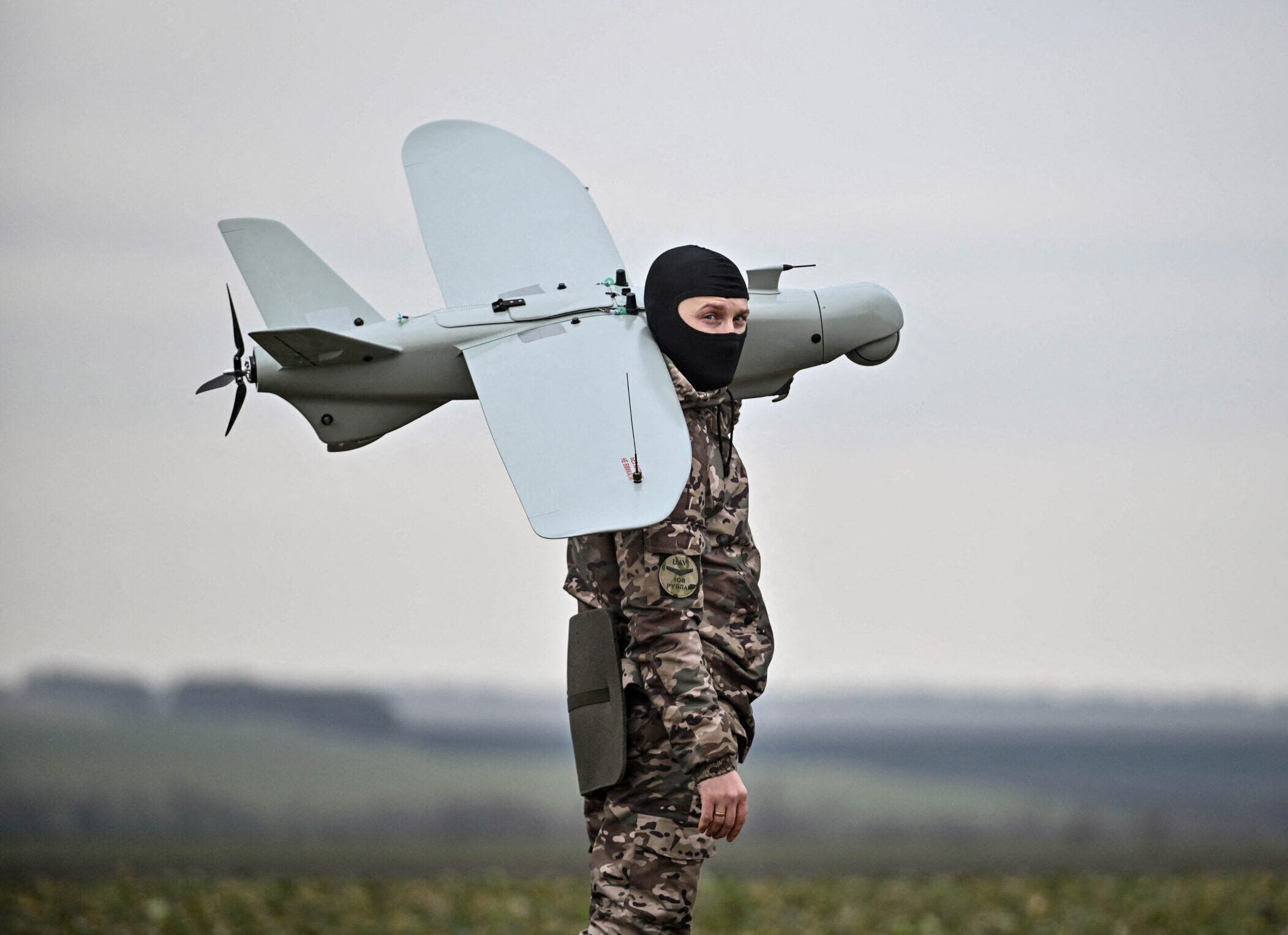
Emerging Technologies, Hybrid Warfare and Multi-Domain Integration
The twenty-first century has redefined the contours of war, shifting attention from the traditional battlefield to a diffuse, interconnected and constantly evolving operational space. Emerging technologies have opened unprecedented scenarios in which conflict is no longer limited to clashes between regular armies but extends to critical infrastructures, digital networks, satellites, communication systems and even the public perception shaped by social media. The notion of hybrid warfare emerges within this framework, indicating the coordinated and combined use of military, economic, technological and informational instruments to influence and destabilize adversaries without formally declaring war. Multi-domain integration complements this vision, as it implies the ability to link and synchronize land, maritime, air, space and cyber operations into a single strategic design. This transformation challenges not only technical capabilities but also the strategic culture of states, forcing a revision of consolidated concepts of deterrence, defense and sovereignty.
Company Profiles & Industrial Intelligence

Factiverse (Norway) – AI Platform Against Disinformation: Strategic-Technological Analysis
The digital battlefield of the 21st century is awash with misinformation, and European defense planners are racing to counter this rising tide. In Norway, a small deep-tech company named Factiverse has emerged with a bold mission: to arm democracies with tools to verify information in real time. Founded by an unlikely duo – a machine learning researcher and an investigative journalist – the startup has attracted attention from newsrooms and NATO innovators alike. Factiverse’s AI-driven platform promises to detect false narratives across 100+ languages and media formats, helping institutions discern truth from deception at speed. As Europe pursues strategic autonomy in critical technologies, Factiverse stands out as a homegrown solution targeting one of today’s most insidious threats: disinformation. This introduction sets the stage for an in-depth analysis of how Factiverse’s technology and strategy contribute to Europe’s security and sovereignty in the information age.

Eduworks Corporation: AI-Driven Training and Defense Solutions
Eduworks Corporation is a small U.S.-based defense technology firm making a quiet impact in the niche of artificial intelligence for training and defense. Founded in 2001 in Oregon, Eduworks has spent two decades developing AI-powered tools that enhance how military and security organizations train their people and protect information integrity. The company’s unassuming profile belies its involvement in cutting-edge areas: Eduworks builds machine learning systems to personalize and accelerate training, and it has pioneered algorithms to detect “deepfake” audio in real time – a critical capability as information warfare escalates. Eduworks stands at the crossroads of transatlantic innovation, where NATO’s push for new technologies meets Europe’s drive for greater strategic autonomy. The firm’s emphasis on open standards and data-driven training resonates with NATO interoperability goals, even as its American roots raise questions about Europe’s reliance on allied suppliers. How can a 45-person company from the U.S. West Coast contribute to Europe’s defense technology sovereignty? Eduworks offers a case study in the balance between leveraging allied innovation and cultivating independent European capabilities, providing a window into the future of AI in defense training and multi-domain preparedness.

BioSistemika d.o.o. (Slovenia) – Strategic-Technological Analysis
BioSistemika d.o.o. is a Slovenian deep-tech company at the intersection of biotechnology and digital innovation. Founded as a spin-off of Slovenia’s National Institute of Biology in 2010, it has evolved from a niche lab software developer into a recognized player in Europe’s bioinformatics and laboratory automation landscape[1][2]. The company’s journey reflects the rising importance of biotech and data technology for European strategic autonomy. BioSistemika’s solutions – from smart pipetting aids to cutting-edge DNA data storage – are enabling more efficient laboratories and novel approaches to data management. Notably, this small firm has attracted European Union and NATO support for its innovations, positioning it as an emerging contributor to Europe’s technological sovereignty. With a focus on replacing traditional processes with digital, AI-assisted, and sustainable alternatives, BioSistemika exemplifies how Europe’s innovation ecosystem can generate dual-use technologies that strengthen both the civilian research base and defense capabilities. The following analysis delves into the company’s profile, technology portfolio, and strategic significance for Europe’s autonomy and security objectives.
Alea Quantum Technologies: Photonic Quantum Hardware for European Secure Communications
Alea Quantum Technologies is emerging as a pivotal player in Europe’s quest for sovereign quantum-secure communications. Founded in 2022, this Copenhagen-based deep-tech company has rapidly gained attention for developing what it calls the world’s fastest Quantum Random Number Generators (QRNGs) – hardware devices that produce truly unpredictable numbers by exploiting quantum physics[1]. In an era where cyber warfare and espionage threats are escalating, Alea’s photonic quantum hardware addresses a critical strategic need: enabling unbreakable encryption keys to protect sensitive data against both current adversaries and future quantum-computing attacks. Built upon two decades of university research, Alea epitomizes the translation of European scientific excellence into a dual-use defense capability[2]. Its technology, originally pioneered at the Technical University of Denmark, now promises to fortify European networks – from government ministries to military communications – with EU-made, quantum-grade security. The company’s rapid progress and alliances within NATO and EU innovation programs suggest it is more than a promising startup; Alea is on track to become a linchpin in Europe’s drive for strategic autonomy in the quantum era. By delivering homegrown quantum encryption components, the firm is helping Europe reduce dependence on foreign suppliers (including Chinese and other non-allied sources) while boosting NATO’s collective security posture. Readers following Europe’s defense tech landscape will find Alea Quantum Technologies a compelling case of a small company at the forefront of a big strategic shift, where quantum technology meets geopolitical necessity.
Wayren: Secure Decentralized Communications for European Defense
Wayren is an emerging European defence-technology venture pioneering decentralized cybersecurity and communication solutions for mission-critical operations. Founded in 2020 by former cyber defence officers, this Estonian startup has developed a resilient platform that keeps soldiers and commanders connected even under extreme conditions[1][2]. Born out of Estonia’s renowned digital and military innovation ecosystem, Wayren harnesses deep expertise in cyber warfare and tactical communications to address one of modern defense’s most pressing needs: secure, uninterrupted information flow on the battlefield. The company’s flagship Singularity platform creates ad-hoc mesh networks that allow disparate devices – from infantry radios to drones – to seamlessly share data across the battlespace[1][2]. In an era when Europe seeks greater strategic autonomy, Wayren stands out for providing a sovereign alternative to foreign communications gear, reducing reliance on non-allied suppliers. Backed by a recent €7.9 million investment from a major defense consortium, the company is poised to integrate its technology into next-generation European defense systems. Wayren’s story exemplifies the new wave of European dual-use startups leveraging innovation and allied cooperation to strengthen Europe’s security and digital sovereignty.

Microamp Solutions (Poland) – 5G mmWave Networks and RF Amplifiers for Defense
Microamp Solutions is a Polish deep-tech company at the forefront of Europe’s push into ultra-fast wireless communication. Specializing in millimeter-wave (mmWave) 5G networks, it delivers private connectivity solutions that transmit massive data volumes with near-zero latency[1][2]. Born in 2019 from cutting-edge academic research, Microamp’s founders harnessed expertise in RF power amplifiers to create compact 5G networks that can be rapidly deployed in the field[3][4]. Today, the company is translating this know-how into defense and dual-use applications, helping European industries and armed forces access secure, high-bandwidth communications without relying on foreign telecom giants. A string of innovation awards and R&D grants attests to Microamp’s technical leadership in Eastern Europe’s 5G arena[5]. By collaborating with major players like Thales and the European Space Agency, and by participating in NATO’s innovation programs, Microamp is positioning itself as a key enabler of Europe’s technological autonomy. This introduction offers a glimpse into Microamp’s journey and strategic significance, inviting readers to explore how a young Polish startup is strengthening Europe’s defense connectivity and reducing reliance on high-risk suppliers.

Materials Testing Inc (Canada) – Advanced Materials Testing for Critical Sectors
Materials Testing Inc. is not a household name in Europe’s defense industry, yet this long-standing firm has quietly become a pivotal player in a niche critical to military readiness. With roots dating back over half a century in materials inspection, the company has reinvented itself through cutting-edge robotics and autonomous systems. Its innovation arm is leveraging AI-driven robots to tackle a traditionally labor-intensive challenge: inspecting and repairing the vital infrastructure that underpins defense capabilities. From shipyard welds to airfield structures, Materials Testing Inc.’s technologies promise to reduce maintenance costs and downtime while enhancing safety and reliability. Now, through NATO’s tech accelerator programs, this firm is stepping onto the transatlantic stage. The intrigue lies in how a specialized inspection company evolved into a strategic asset aligning with Europe’s push for technological sovereignty and resilient defense infrastructure. It’s a transformation story that hints at broader shifts in the defense tech landscape, and it leaves observers curious about the strategic value such a company can deliver to Europe’s autonomy goals.