

Defence Finance Monitor is a specialised source of analysis for professionals who seek to anticipate how strategic priorities shape investment patterns in the defence sector. In a landscape shaped by high-stakes political choices and rapid technological shifts, understanding the link between military doctrine, operational requirements, and industrial policy is not a competitive edge—it is a prerequisite.
We analyse how strategic imperatives set by NATO, the European Union, allied Indo-Pacific democracies, and national Ministries of Defence translate into procurement programmes, innovation roadmaps, and long-term industrial priorities. Rather than listing individual companies, we track how clearly defined strategic challenges—such as deterrence gaps, technological dependencies, or capability shortfalls—are converted into funding schemes and institutional demand. Only companies that respond to these challenges become relevant to institutional buyers and, by extension, to investors. This framework has already enabled a growing community of analysts and financial professionals to make more consistent, risk-aware decisions and to avoid costly misalignments.
Building on this methodology, we are developing a structured database of companies analysed and classified according to the strategic-technological criteria set out in our framework. Subscribing to Defence Finance Monitor therefore provides not only access to in-depth reports, but also to a continuously expanding database of European and allied defence firms assessed against clear benchmarks. Each company is positioned according to its alignment with EU and NATO priority capability areas, its contribution to European strategic autonomy, its level of interoperability and deterrence value, and its role in reducing dependencies on non-allied suppliers. Classification also covers technology readiness levels, participation in EU and NATO programmes, intellectual property assets, and dual-use applications. This allows subscribers to compare, benchmark, and identify the most strategically relevant actors within a coherent, transparent, and decision-oriented taxonomy.
Subscribing to Defence Finance Monitor means gaining access to a strategic intelligence service that connects financial decisions with defence priorities. At the core of our work is a structured database of European and allied defence companies, classified according to strategic-technological criteria such as autonomy, interoperability, deterrence, and supply chain resilience. In today’s environment, profitable investment requires more than market data: it requires understanding how limited public resources are channelled toward specific capability gaps, sovereign technologies, and the reduction of non-allied dependencies. By combining in-depth reports with a continuously expanding company database, Defence Finance Monitor enables investors to anticipate demand, benchmark firms against institutional priorities, and avoid costly misalignments.
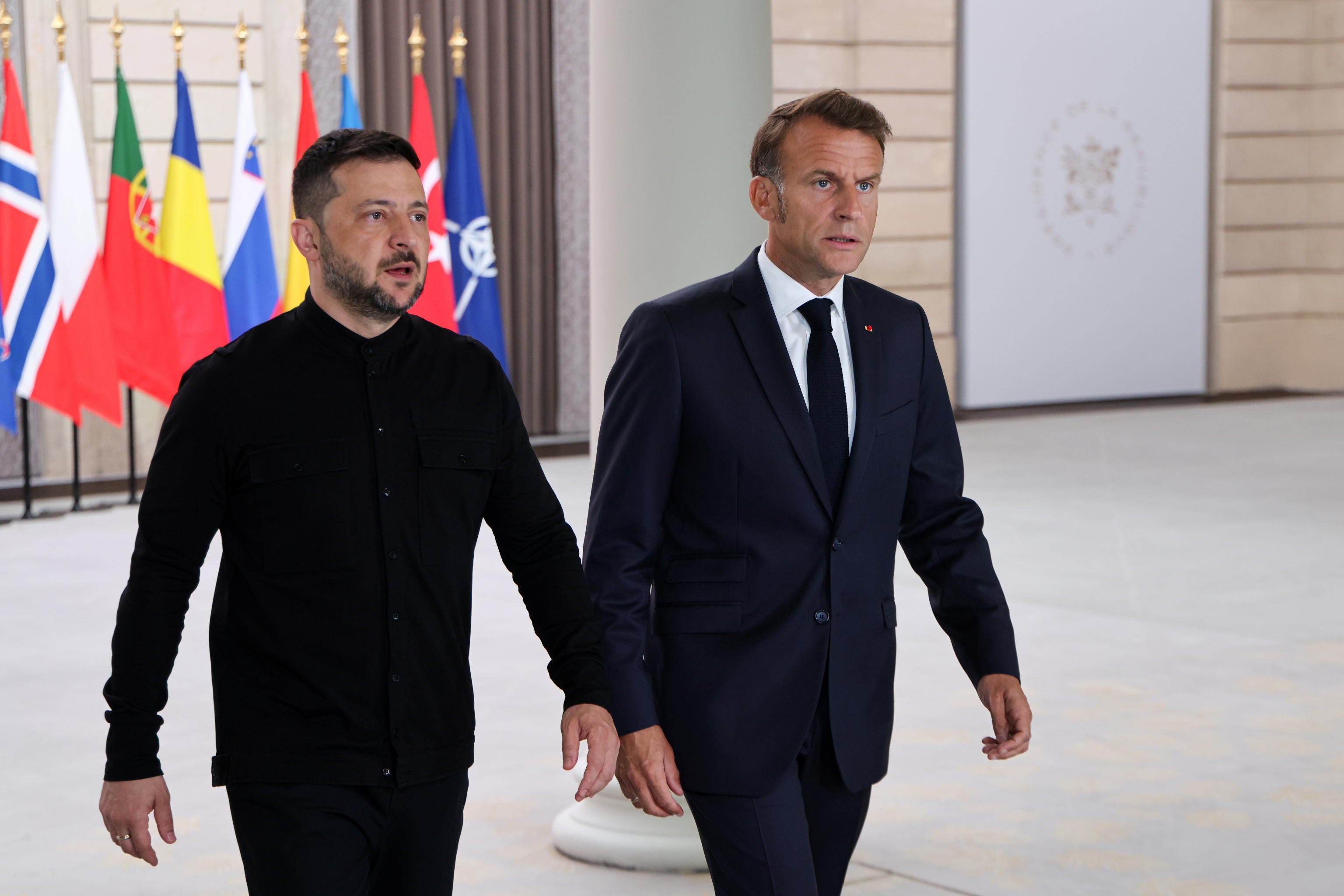
European Deterrence in Ukraine: The Heart of Future Security or Insecurity
The war in Ukraine has highlighted the fragility of European security and the urgency of developing credible deterrence mechanisms that go beyond financial or rhetorical commitments. According to recent debates, the most important element of any guarantee for Ukraine’s future stability must be a well-armed European deterrence force on the ground. This would not be a symbolic deployment but a concrete military presence stationed behind the front lines, ready to intervene rapidly. Its function would be twofold: to provide immediate operational support to Ukrainian units in case of renewed Russian offensives, and to send a clear strategic message to Moscow. Without such guarantees, every truce risks being temporary, as Russia would exploit the pause to rest, re-arm, and prepare for a new cycle of aggression. In this sense, deterrence becomes not an optional element of strategy, but the cornerstone of any long-term settlement.
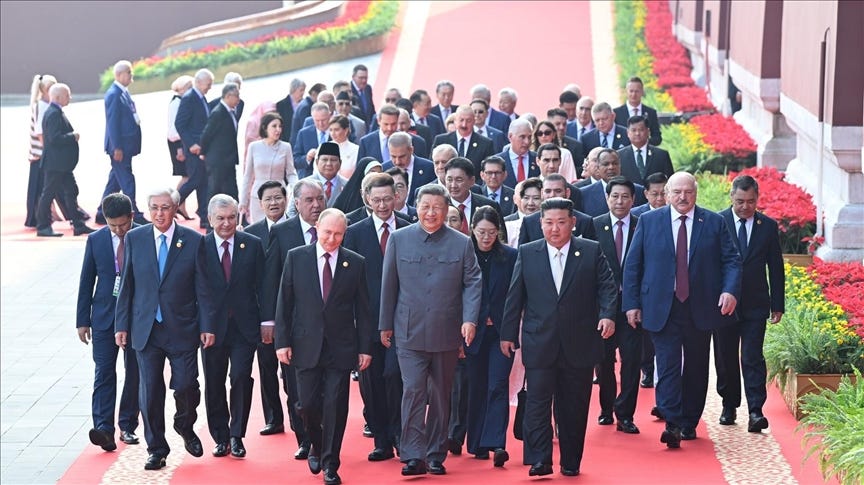
Strategic Analysis of the Beijing Summit (September 2025)
In early September 2025, Beijing hosted an unprecedented gathering of leaders from China, Russia, India, and North Korea – a constellation of powers increasingly aligned in opposition to U.S. and Western influence. The events included a Shanghai Cooperation Organisation (SCO) summit in Tianjin and a massive military parade in Beijing commemorating the 80th anniversary of WWII’s end. Chinese President Xi Jinping was flanked by Russian President Vladimir Putin and North Korea’s Kim Jong Un in a show of strategic solidarity notably shunned by Western leaders. Indian Prime Minister Narendra Modi also attended the SCO summit hosted by Xi, where images of Modi walking hand-in-hand with Putin and Xi symbolized India’s tilt towards this emerging axis.

Clausewitz in the Digital Age
Carl von Clausewitz’s well-known formula that war is “the continuation of politics by other means” still serves as a central analytical device, but it must be reconsidered in light of the profound transformations that define today’s strategic environment. Strategy continues to be the art of using power to achieve political objectives, but the means through which this is done now extend far beyond the armies and arsenals of the nineteenth century. In the digital era, capabilities include cyber operations, information systems, data platforms, and artificial intelligence, which can be deployed beneath the threshold of conventional conflict while nonetheless influencing security, stability, and freedom of action. What does not change is the essential problem: connecting ends and means in a competitive environment, translating political goals into credible theories of victory. What has changed are the channels of coercion, the metrics of risk, the speed of decision-making, and the permeability of boundaries between civilian and military spheres. Clausewitz’s logic remains a compass, reminding us that technological innovation should not obscure the primacy of political purpose nor lead to tactical illusions.

Weaponization of Interdependence: The New Strategic Logic of the Twenty-First Century
In the international relations of the twenty-first century, economic and technological interdependence is no longer interpreted solely as a guarantee of stability and cooperation, but increasingly as an instrument of power and coercion. The concept of the “weaponization of interdependence” refers to the transformation of economic, financial, and technological ties into strategic levers to be deployed against adversaries or rivals. Whereas globalization was once believed to produce a pacifying effect through the spread of trade and investment, today those very global connections are revealed as vulnerabilities exploitable by state and non-state actors. The ability to restrict access to markets, resources, technologies, or infrastructures allows effective pressure to be applied without resorting directly to military force. This evolution marks a radical change in the logic of power, redefining the boundaries between economy and strategy and compelling states to rethink their posture in a context of mounting systemic competition.