

Defence Finance Monitor is a specialised source of analysis for professionals who seek to anticipate how strategic priorities shape investment patterns in the defence sector. In a landscape shaped by high-stakes political choices and rapid technological shifts, understanding the link between military doctrine, operational requirements, and industrial policy is not a competitive edge—it is a prerequisite.
We analyse how strategic imperatives set by NATO, the European Union, allied Indo-Pacific democracies, and national Ministries of Defence translate into procurement programmes, innovation roadmaps, and long-term industrial priorities. Rather than listing individual companies, we track how clearly defined strategic challenges—such as deterrence gaps, technological dependencies, or capability shortfalls—are converted into funding schemes and institutional demand. Only companies that respond to these challenges become relevant to institutional buyers and, by extension, to investors. This framework has already enabled a growing community of analysts and financial professionals to make more consistent, risk-aware decisions and to avoid costly misalignments.
Building on this methodology, we are developing a structured database of companies analysed and classified according to the strategic-technological criteria set out in our framework. Subscribing to Defence Finance Monitor therefore provides not only access to in-depth reports, but also to a continuously expanding database of European and allied defence firms assessed against clear benchmarks. Each company is positioned according to its alignment with EU and NATO priority capability areas, its contribution to European strategic autonomy, its level of interoperability and deterrence value, and its role in reducing dependencies on non-allied suppliers. Classification also covers technology readiness levels, participation in EU and NATO programmes, intellectual property assets, and dual-use applications. This allows subscribers to compare, benchmark, and identify the most strategically relevant actors within a coherent, transparent, and decision-oriented taxonomy.
Subscribing to Defence Finance Monitor means gaining access to a strategic intelligence service that connects financial decisions with defence priorities. At the core of our work is a structured database of European and allied defence companies, classified according to strategic-technological criteria such as autonomy, interoperability, deterrence, and supply chain resilience. In today’s environment, profitable investment requires more than market data: it requires understanding how limited public resources are channelled toward specific capability gaps, sovereign technologies, and the reduction of non-allied dependencies. By combining in-depth reports with a continuously expanding company database, Defence Finance Monitor enables investors to anticipate demand, benchmark firms against institutional priorities, and avoid costly misalignments.
European Defence Industry
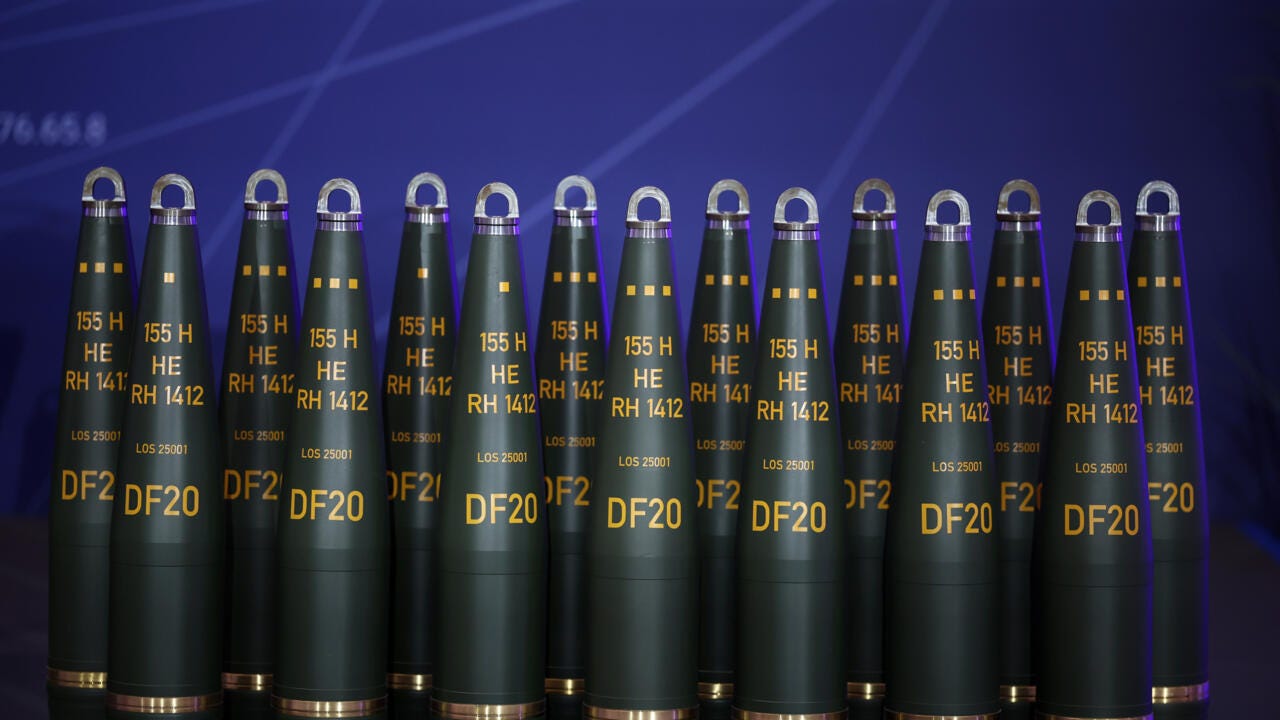
Rheinmetall Opens Europe’s Largest Ammunition Plant in Germany
Rheinmetall’s new artillery ammunition plant in Unterluess, northern Germany, marks a substantive expansion of Europe’s industrial capacity for 155 mm shells amid sustained demand from Ukraine and NATO allies. At full ramp by 2027, the facility targets an annual output of roughly 350,000 rounds, with approximately 25,000 expected in 2025, supported by a total investment of about €500 million. The inauguration drew NATO Secretary General Mark Rutte, German Defense Minister Boris Pistorius, and Vice Chancellor Lars Klingbeil, underscoring the project’s strategic relevance for alliance readiness and stockpile regeneration. Rheinmetall also plans complementary capabilities on site for rocket motors and potentially warheads, indicating a broader munitions ecosystem. Management emphasized that the plant went from groundbreaking to opening in approximately 14 months, signaling a policy shift toward accelerated timelines in Europe’s defense production.
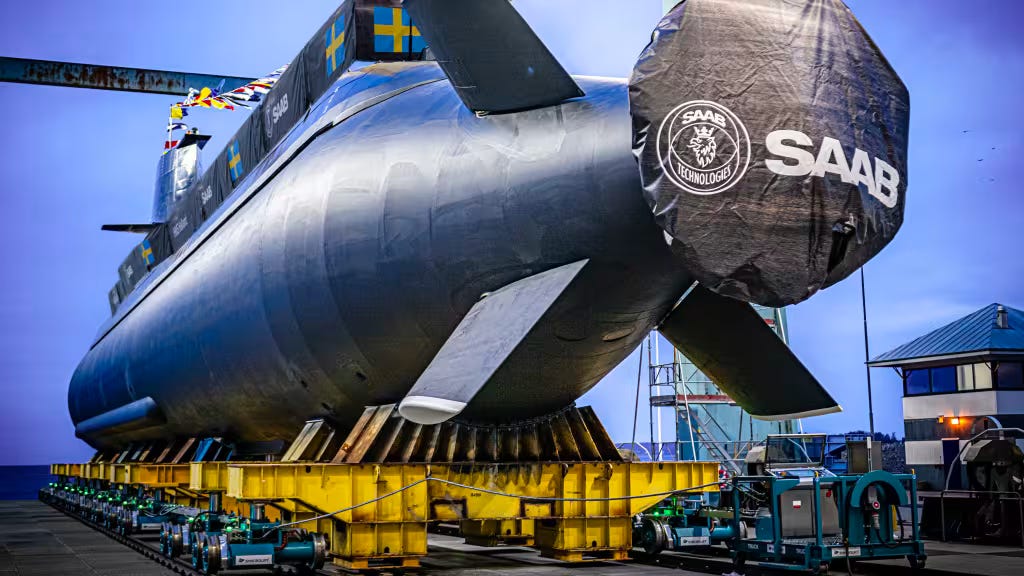
Saab Strengthens Supply Chain with Acquisition of Deform AB
On 18 August 2025, Saab announced the acquisition of Deform AB, a long-standing Swedish supplier based in Degerfors. The move deepens an already close relationship, as Deform has provided specialty parts for Saab’s submarine production, particularly within the Kockums business area. By bringing Deform into the Saab group, the company aims to secure critical supply chains for Sweden’s defense industry while ensuring the long-term stability of Deform’s operations. The acquisition highlights Saab’s strategy of consolidating domestic suppliers to guarantee resilience in advanced manufacturing for naval defense platforms.
Asian Defence Industry

New Zealand Selects MH-60R Seahawk and Airbus A321XLR to Renew Aircraft Fleets
On 21 August 2025, the New Zealand Government announced its preferred options to replace two critical elements of the NZDF’s air fleet. The MH-60R Seahawk has been identified as the future maritime helicopter, while two Airbus A321XLRs will replace the ageing Boeing 757 transport aircraft. More than NZD 2 billion has been budgeted for the Seahawk purchase, which will be conducted through the U.S. Foreign Military Sales programme, with final government approval expected next year. The new helicopters will be fully interoperable with Australia, the United States, and other partner forces, enhancing New Zealand’s ability to contribute to multinational coalition operations and increasing the surveillance and combat capabilities of its frigates.
Capital Markets & Investment Flows

Xtrackers Europe Defence Technologies UCITS ETF launches with focus on defence, space and cybersecurity
DWS has introduced the Xtrackers Europe Defence Technologies UCITS ETF (ISIN LU3061478973), an exchange-traded fund launched on 12 August 2025 that tracks European equities with consolidated revenues or patent exposure to defence, space and cybersecurity themes. The fund seeks to replicate physically and in full the STOXX Europe Total Market Defence, Space and Cybersecurity Innovation Index. It is an equity vehicle capitalizing income, denominated in euro, and positioned for developed European markets. As of 29 August 2025, the fund reported a net asset value of EUR 28.28 and assets under management of EUR 2.42 million, reflecting its initial scaling phase following launch.
Company Profiles & Industrial Intelligence
Infineon Technologies and Europe’s Strategic Semiconductor Autonomy
Infineon Technologies is more than a semiconductor manufacturer – it has become a linchpin in Europe’s quest for technological sovereignty. Headquartered in Germany, this company’s microchips quietly power everything from electric cars to security systems, making Infineon a strategic asset at the heart of Europe’s high-tech ecosystem. In recent years, as global chip supply shocks and geopolitical frictions have exposed Europe’s vulnerabilities, Infineon has stepped forward with major investments on European soil. Its new “Smart Power Fab” in Dresden, for instance, is emblematic of a continental drive to reclaim capacity in power electronics and space-grade components. Infineon’s innovations – wide-bandgap power devices, secure microcontrollers, radar sensors – are not headline grabbers to the general public, but they underpin the advanced capabilities of Europe’s defense, automotive, and industrial sectors. By quietly substituting foreign-made chips with European-designed and -fabricated ones, Infineon is helping fortify Europe’s technological autonomy. This introduction only hints at the company’s pivotal role. The full strategic-technological analysis reveals how deeply Infineon is intertwined with Europe’s defense modernisation and why its success is increasingly viewed as a matter of continental security and resilience.
Filtronic – Strategic-Technological Analysis in the European Defense Context
Filtronic is a long-established European innovator at the cutting edge of radio frequency (RF) and millimeter-wave technology, quietly powering some of the continent’s most advanced defense and space communications systems. Headquartered in the United Kingdom, this publicly listed engineering company designs and manufactures the high-performance RF components that enable secure battlefield networks, next-generation radar arrays, and satellite broadband links. With a heritage tracing back to a university lab in the late 1970s, Filtronic has evolved into a critical niche supplier for major defense primes and space ventures. Its RF modules are embedded in everything from shipborne radars to Low Earth Orbit (LEO) satellite ground stations, positioning the company as a strategic asset in Europe’s quest for technological sovereignty. In an era when Europe seeks greater autonomy over key technologies and resilience against supply chain shocks, Filtronic’s story offers a compelling look at how a specialized firm can deliver outsized strategic value. By blending decades of research pedigree with modern agile innovation, the company is helping Europe reduce dependency on foreign suppliers in critical domains like high-frequency communications. The following analysis will explore how Filtronic’s capabilities align with European strategic objectives – enhancing NATO interoperability, strengthening deterrence, and securing supply chains – and where gaps remain to be filled for Europe’s defense-technological edge.
Sopra Steria: Enabling Europe’s Defense Data Sovereignty and AI Integration
Sopra Steria is emerging as a linchpin in Europe’s drive for technological sovereignty. This Paris-headquartered firm has long been known as a leader in digital consulting and IT services, but it is now also at the forefront of defense innovation. In recent years, the company has forged deep partnerships with European defense institutions and has taken on a larger role in critical military programs. From securing a prestigious European Defence Agency contract to build a federated AI-driven “defence data space”[1], to signing a groundbreaking cooperation agreement with France’s Ministry of the Armed Forces[2][3], Sopra Steria is aligning its tech expertise with Europe’s strategic autonomy goals. It is also actively championing sovereign cloud standards – backing the EU’s cybersecurity certification for cloud (EUCS) to ensure that sensitive European data remains secure from foreign interference[4][5]. These moves position Sopra Steria as more than an IT provider; it is becoming an enabler of interoperability and data security for Europe’s next-generation defense systems. The company’s evolution into a defense-tech partner for European governments and NATO allies signals its commitment to helping Europe reduce dependency on non-allied suppliers and strengthen collective technological deterrence.
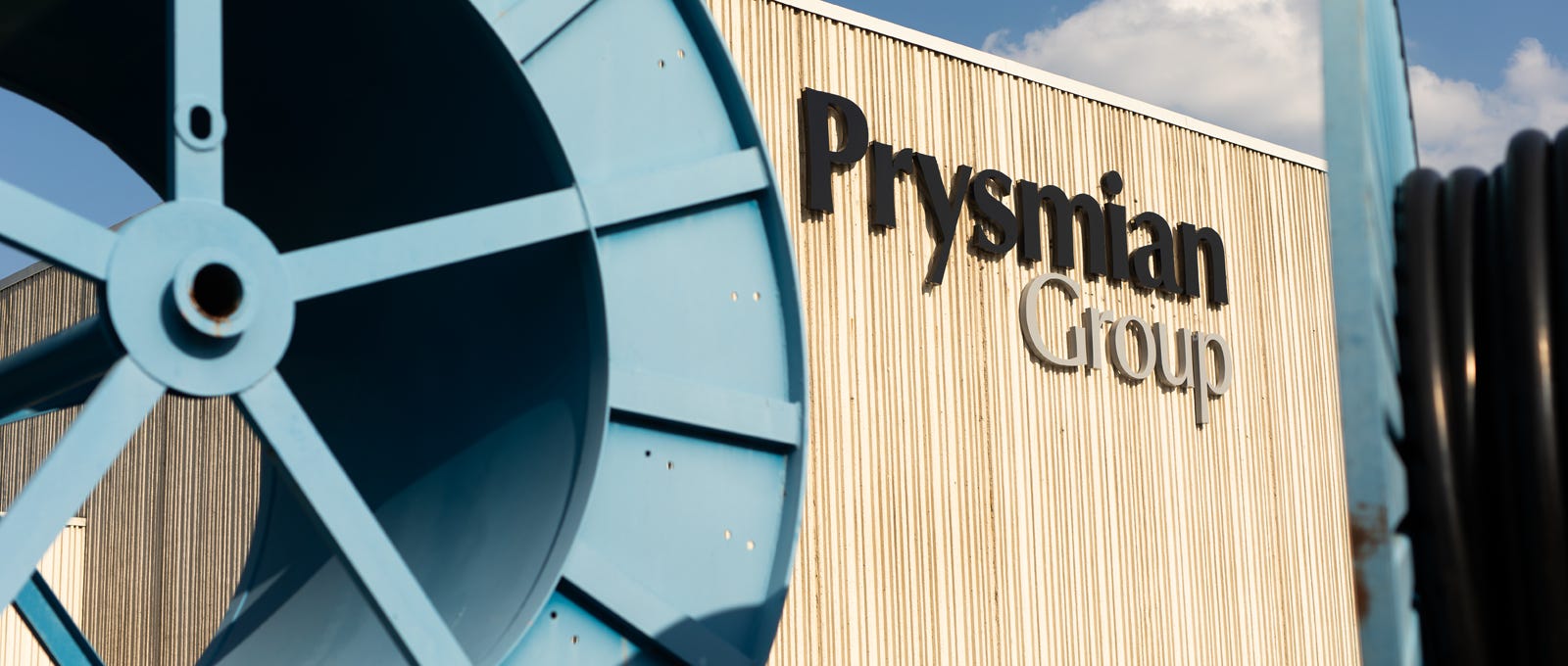
Prysmian Group: A Strategic Asset for Europe’s Energy and Data Security
Prysmian Group stands as the invisible backbone of Europe’s energy and information networks. Headquartered in Italy, this century-old company has quietly become a linchpin for critical infrastructure, from undersea power links connecting national grids to fiber-optic cables carrying Europe’s data. In an era when geopolitical tensions have thrust everyday infrastructure into the realm of security and defense, Prysmian’s technologies are gaining strategic prominence. The company’s cables lie on ocean floors and underground, enabling renewable energy integration and digital communication across borders. Its leadership in high-performance cable systems – and recent moves to bolster rapid repair capabilities – underscores a broader European push for resilience[1][2]. Prysmian’s story is not one of flashy weapons or space-age gadgets, but of a steadfast industrial champion whose innovations quietly fortify Europe’s autonomy. This introduction highlights how a manufacturer of “mere” cables has become a strategic asset – a narrative that may surprise readers and entice a deeper look into Prysmian’s pivotal role in Europe’s security and sovereignty.
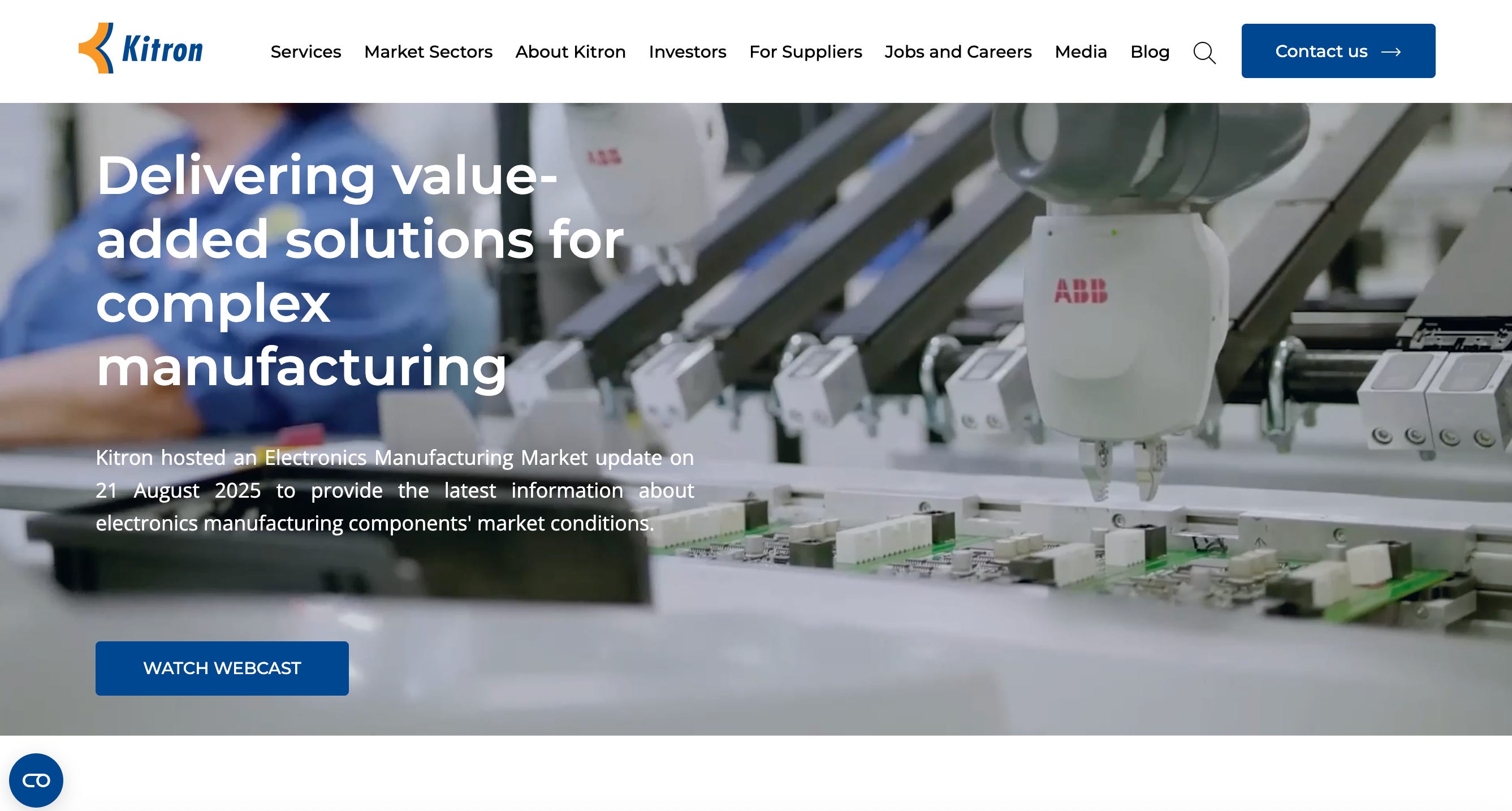
Kitron ASA: A Strategic Electronics Partner for European Defense Autonomy
In an era where Europe seeks to reclaim control over critical defense technologies, one lesser-known firm has quietly become indispensable. Kitron ASA is a Scandinavian electronics manufacturer powering some of NATO’s most advanced systems – from the F-35 stealth fighter’s communications modules to next-generation naval missiles[1][2]. Headquartered in Norway, Kitron builds the “brains” inside radars, encrypted networks, and autonomous drones, positioning itself as a behind-the-scenes linchpin of European defense innovation. While not a household name, Kitron’s growing order backlog and rapid expansion in defense electronics signal its rising strategic profile. The company has leveraged surging European defense budgets and a renewed focus on supply-chain sovereignty to secure high-value contracts in radar systems, missile guidance, and unmanned aerial vehicles[3]. With production anchored in Europe – including new facilities in Norway and the Czech Republic – Kitron offers EU and NATO partners a trusted, on-continent alternative to offshore electronics suppliers. As defense spending hits historic highs and Europe strives to reduce dependency on non-allied sources, Kitron’s role in enabling indigenous capabilities has never been more critical. This report provides a comprehensive analysis of Kitron ASA’s strategic-technological positioning, examining how this mid-cap EMS (Electronics Manufacturing Services) provider contributes to European strategic autonomy, NATO interoperability, and the reduction of risky dependencies in the defense supply chain.