

Defence Finance Monitor is a specialised source of analysis for professionals who seek to anticipate how strategic priorities shape investment patterns in the defence sector. In a landscape shaped by high-stakes political choices and rapid technological shifts, understanding the link between military doctrine, operational requirements, and industrial policy is not a competitive edge—it is a prerequisite.
We analyse how strategic imperatives set by NATO, the European Union, allied Indo-Pacific democracies, and national Ministries of Defence translate into procurement programmes, innovation roadmaps, and long-term industrial priorities. Rather than listing individual companies, we track how clearly defined strategic challenges—such as deterrence gaps, technological dependencies, or capability shortfalls—are converted into funding schemes and institutional demand. Only companies that respond to these challenges become relevant to institutional buyers and, by extension, to investors. This framework has already enabled a growing community of analysts and financial professionals to make more consistent, risk-aware decisions and to avoid costly misalignments.
Subscribing to Defence Finance Monitor means gaining access to a strategic intelligence service designed to support financial decisions in the defence sector. Our work is based on a clear method and principle: In today’s environment, there is no profitable investment without strategic understanding. Resources are limited. Knowing where public money is going—and why—makes the difference between reacting to the market and making informed decisions ahead of time.
Strategic Context & International Security

U.S. Consumer Power: From Strategic Asset to Potential Vulnerability
In the post-World War II era, the international economic system was structured around a clearly defined pivot: the absorptive capacity of the U.S. market. Privileged access to that market enabled defeated economies such as Italy, Germany, and Japan to launch rapid industrial reconstruction, benefiting from American domestic demand as a driver for their exports. This model transformed U.S. consumption into a tool of geoeconomic power, capable of sustaining the growth of allied economies while simultaneously reinforcing the centrality of the United States within the global trade network. The same paradigm was repeated in the 1990s and 2000s with China, whose economic “miracle” was largely fueled by its ability to place a significant share of its manufacturing output in the United States. For decades, the American market functioned as a central attractor of the system, binding trade flows, political alliances, and financial stability into a relationship of mutual interdependence.
Company Profiles & Industrial Intelligence

Fractile – Strategic-Technological Analysis
Fractile is a cutting-edge European deep-tech startup pioneering a radical new approach to artificial intelligence hardware. Founded in 2022 by an Oxford-trained engineer, the company has swiftly attracted attention for its ambitious goal: to shatter the performance limits of today’s AI chips. From a base in London, Fractile emerged from stealth with backing from prominent venture funds and even NATO’s own innovation fund – a rare honor that underscores its strategic potential. The young company is designing novel processors that promise to run advanced AI models hundreds of times faster and at a fraction of current costs. This bold claim, coupled with a mission to make Europe more technologically self-reliant, positions Fractile as more than just another chip startup. In a world where AI capability is increasingly synonymous with geopolitical strength, Fractile offers Europe a home-grown solution to reduce dependence on foreign suppliers. Its story – from academic roots to alliance-backed venture – is a compelling glimpse into how Europe’s tech innovators are aligning with defense and security objectives. The analysis that follows will delve into Fractile’s corporate profile, technological portfolio, and strategic significance for European autonomy and NATO readiness.
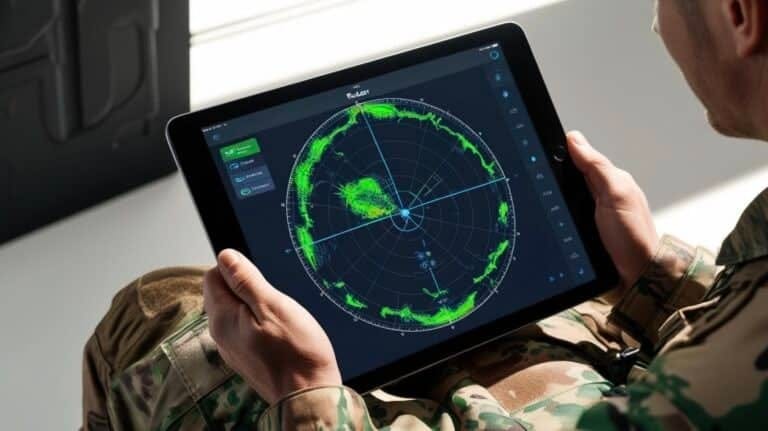
Roark Aerospace: Advancing European Defense Autonomy through Innovation
Roark Aerospace is a London-based defense technology company that has rapidly emerged as a pioneering developer of autonomous defense systems and sensor networks. Founded in 2022 by veterans of the UK security and tech sector, Roark operates at the cutting edge of counter-drone and intelligence solutions. In just a few years it has built what it claims to be one of the world’s largest networks for real-time drone detection and hyperspectral imaging. The company’s mission is to deliver unprecedented situational awareness across land, air, and sea domains by fusing advanced sensors, artificial intelligence, and robotics into a single integrated platform. Roark’s bold initiatives – from “drone detection as a service” covering dozens of cities to AI-driven surveillance drones – exemplify a new wave of European defense innovators focused on strategic autonomy. At a time when Europe is striving to reduce dependencies on foreign suppliers and counter rapidly evolving threats, Roark Aerospace offers a compelling example of home-grown technological prowess. The company’s story, portfolio, and strategic alignment with NATO and EU objectives provide insight into how a nimble startup can strengthen Europe’s defense capabilities in an era of geopolitical uncertainty.
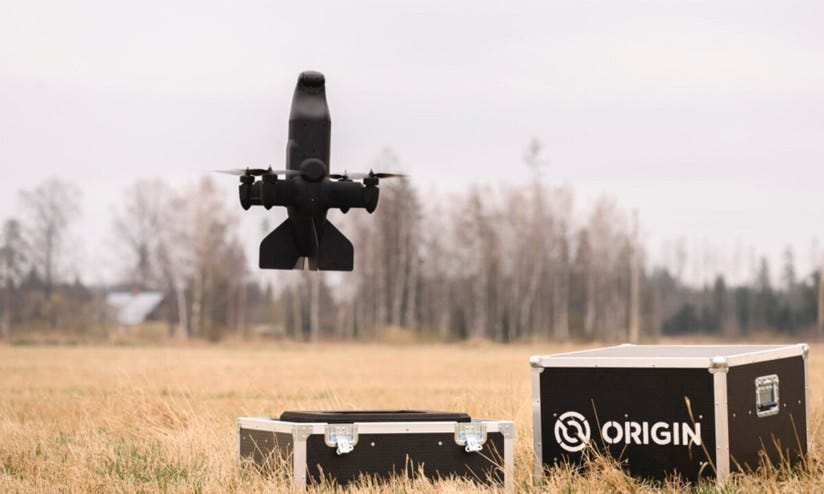
Origin Robotics: Strategic-Technological Analysis
Origin Robotics is a rising Latvian defense technology company developing advanced autonomous drone systems tailored for Europe’s security needs. Founded in 2022 by veteran UAV entrepreneurs in Riga, Latvia, the firm has quickly gained recognition for its cost-effective precision strike and counter-drone platforms. Origin’s drones – notably the BEAK precision-guided strike UAV and the BLAZE counter-unmanned aerial system (C-UAS) interceptor – exemplify European ingenuity in modern warfare technology. In an era when small drones and loitering munitions are reshaping battlefields, Origin’s innovations offer European armed forces an affordable, sovereign alternative to expensive imported missiles and Chinese-made drones. The company’s systems have already proven their value in conflict, reportedly delivering high-precision effects in Ukraine at a fraction of the cost of Western missiles. By leveraging local engineering talent and European funding, Origin Robotics is positioning itself as a key contributor to Europe’s strategic autonomy in the defense robotics domain.

Orasio: A Strategic-Technological Analysis for European Autonomy
Europe’s drive for technological sovereignty has given rise to a new breed of defense startups – and Orasio is a prime example. Headquartered in Paris, Orasio is tackling one of the continent’s critical capability gaps: intelligent video surveillance built entirely on European terms. Founded by Florian Fournier – a veteran of the French tech scene – alongside AI expert Arnaud Delaunay and former government advisor Fabio Gennari, the company is translating Europe’s strategic autonomy ambitions into cutting-edge software. Orasio’s AI platform can spot threats as diverse as a weapon in a crowd or the start of a fire, all while respecting strict EU data privacy rules. Backed by venture funds from France, Germany and Poland, Orasio has rapidly gained support as “Europe’s answer to foreign-dominated video surveillance platforms”. This introduction sets the stage for an in-depth analysis of how Orasio’s technology and strategy align with European defense needs – and why its success could strengthen Europe’s hand in an era of contested innovation.