

Defence Finance Monitor is a specialised source of analysis for professionals who seek to anticipate how strategic priorities shape investment patterns in the defence sector. In a landscape shaped by high-stakes political choices and rapid technological shifts, understanding the link between military doctrine, operational requirements, and industrial policy is not a competitive edge—it is a prerequisite.
We analyse how strategic imperatives set by NATO, the European Union, allied Indo-Pacific democracies, and national Ministries of Defence translate into procurement programmes, innovation roadmaps, and long-term industrial priorities. Rather than listing individual companies, we track how clearly defined strategic challenges—such as deterrence gaps, technological dependencies, or capability shortfalls—are converted into funding schemes and institutional demand. Only companies that respond to these challenges become relevant to institutional buyers and, by extension, to investors. This framework has already enabled a growing community of analysts and financial professionals to make more consistent, risk-aware decisions and to avoid costly misalignments.
Subscribing to Defence Finance Monitor means gaining access to a strategic intelligence service designed to support financial decisions in the defence sector. Our work is based on a clear method and principle: In today’s environment, there is no profitable investment without strategic understanding. Resources are limited. Knowing where public money is going—and why—makes the difference between reacting to the market and making informed decisions ahead of time.

Quantum Technologies in Defence: Strategic Trends and Opportunities
Recent official strategies and programs across NATO, the EU, and allied nations demonstrate a surging focus on quantum technologies as critical enablers of future defence capabilities. NATO’s first-ever Quantum Technologies Strategy (Jan 2024) warns that quantum breakthroughs could “revolutionise sensing; imaging; precise positioning, navigation and timing; communications; computing; modelling; simulation; and information science”, with “far-reaching implications for […] security and defence”. These technologies are dual-edged: they promise unparalleled military advantages but also pose risks if adversaries gain quantum superiority. Allied governments are therefore racing to build a “quantum-ready” ecosystem – one that can harness quantum for military use while protecting against quantum-driven threats. Key defence-relevant quantum domains include quantum sensing and imaging, quantum navigation and timing, quantum radar, and quantum encryption/communication. This report analyzes each domain’s technological and strategic trends (2023–2025), maps value-chain segments poised for growth, profiles notable companies (startups, spin-offs, mid-caps and primes) active in defence-oriented quantum efforts (especially those in NATO/EU programs), highlights government-funded projects/pilots, and discusses investment implications for venture, private equity and institutional investors. The analysis draws exclusively on official documents and programs from NATO, the European Commission (DG DEFIS, EDA, EIC, EDF), NATO’s DIANA accelerator and Innovation Fund, and allied nations including the UK, Norway, Japan, South Korea, and Australia.
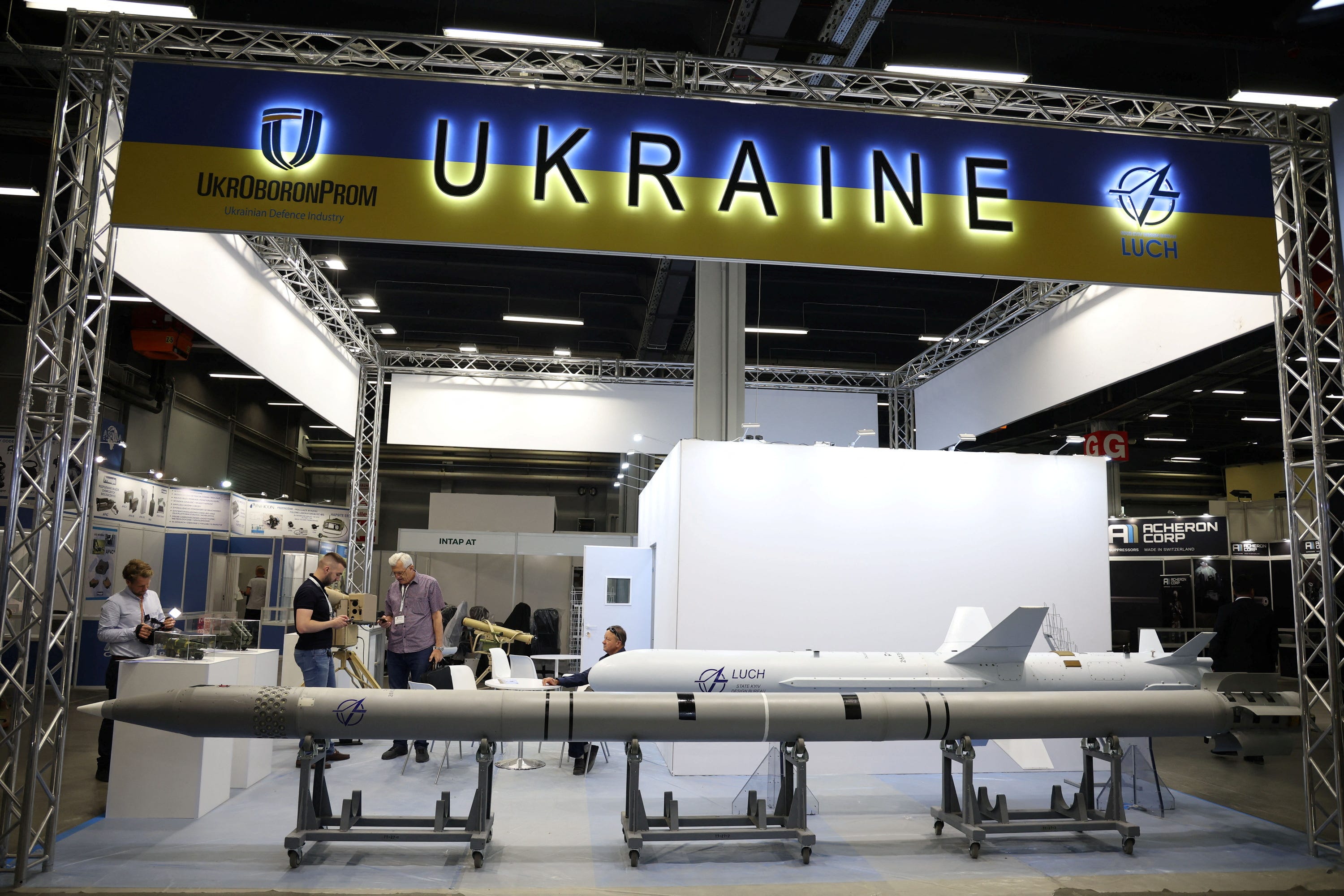
Shifting the Paradigm: Western Military Aid and the Rise of Ukraine’s Indigenous Defense Industry
One of the most consequential transformations in the architecture of post-2022 Western military assistance has not occurred on the battlefield, but within the industrial policy frameworks of allied support to Ukraine. As the war evolves into a long-duration conflict, the logic of emergency resupply—based on the depletion of allied stockpiles—is proving unsustainable both politically and operationally. In its place emerges a new paradigm: enabling Ukraine to become a sovereign defense producer. This shift reflects broader geopolitical and strategic recalibrations, where resilience and autonomy are redefined not only in territorial or tactical terms, but also in terms of productive capacity. In this context, the future of military assistance is no longer measured solely by the quantity of arms transferred, but by the institutionalization of Ukraine as an integrated, capable node within the Euro-Atlantic defense ecosystem.
Helsing – Strategic Technological Profile (Germany)
Helsing is a fast-rising European defense technology company that has swiftly moved from obscurity to the forefront of NATO’s innovation drive. Founded in 2021 in Munich, this startup-turned-unicorn develops cutting-edge artificial intelligence (AI) software and autonomous systems aimed at giving democratic nations a military edge. In just four years, Helsing has attracted €1.37 billion in venture funding and a €12 billion valuation – unprecedented for a European defense firm. Its AI-driven “digital battlefield” software and swarming drones are already proving their worth from Ukraine’s front lines to high-tech fighter jet trials. By pledging to sell only to democratic governments and embedding ethics and human oversight into its AI, Helsing positions itself as a “good guy” innovator. The company’s dramatic growth and bold pan-European partnerships – including work on Europe’s next-generation fighter and NATO-aligned projects – have many hailing Helsing as a critical enabler of Europe’s strategic autonomy. This report dives into how Helsing’s technologies and strategy contribute to a stronger European defense posture.
Resilient Air Defense: The Role of Passive and Proliferated Sensors
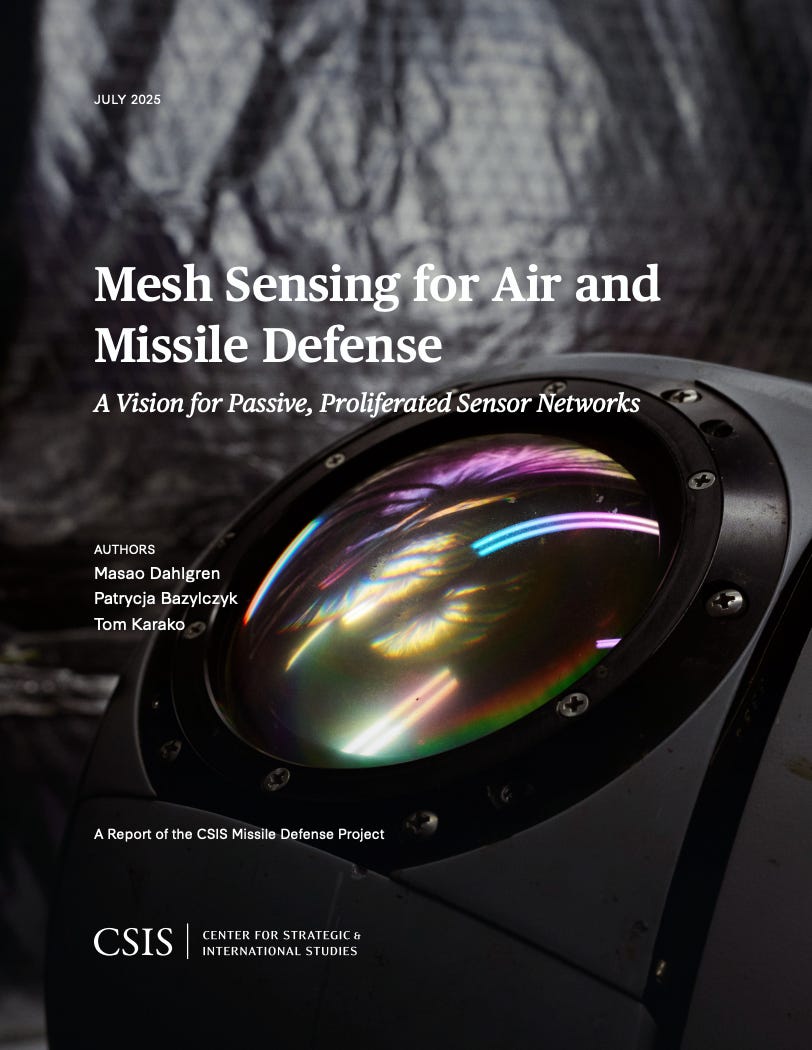
The evolution of the operational environment in which armed forces operate today increasingly exposes air and missile defense systems to complex and multidimensional threats. Modern adversaries possess precision-strike capabilities, stand-off platforms, and persistent surveillance tools that can rapidly identify and exploit vulnerabilities in defensive architectures. In this context, exclusive reliance on a small number of high-emission active radars is a critical limitation. Current systems, though high-performing, are also highly detectable and become prime targets. For this reason, as highlighted in the CSIS report Mesh Sensing for Air and Missile Defense (July 2025), a paradigm shift is required—toward distributed, passive, and resilient sensing architectures capable of operating under constant threat while retaining the ability to detect, track, and support the interception of incoming weapons systems.