

Defence Finance Monitor is the trusted resource for those who aim to anticipate—not merely follow—the dynamics of a sector where investment decisions are inseparable from public strategy. In a landscape shaped by high-stakes political choices and rapid technological shifts, understanding the link between military doctrine, operational requirements, and industrial policy is not a competitive edge—it is a prerequisite.
We analyse how strategic imperatives set by NATO, the European Union, allied Indo-Pacific democracies, and national Ministries of Defence translate into procurement programmes, innovation roadmaps, and long-term industrial priorities. Rather than listing individual companies, we track how clearly defined strategic challenges—such as deterrence gaps, technological dependencies, or capability shortfalls—are converted into funding schemes and institutional demand. Only companies that respond to these challenges become relevant to institutional buyers and, by extension, to investors. This framework has already enabled a growing community of analysts and financial professionals to make more consistent, risk-aware decisions and to avoid costly misalignments.
Subscribing to Defence Finance Monitor means gaining access to a strategic intelligence service designed to support financial decisions in the defence sector. Our work is based on a clear method and principle: In today’s environment, there is no profitable investment without strategic understanding. Resources are limited. Knowing where public money is going—and why—makes the difference between reacting to the market and making informed decisions ahead of time.
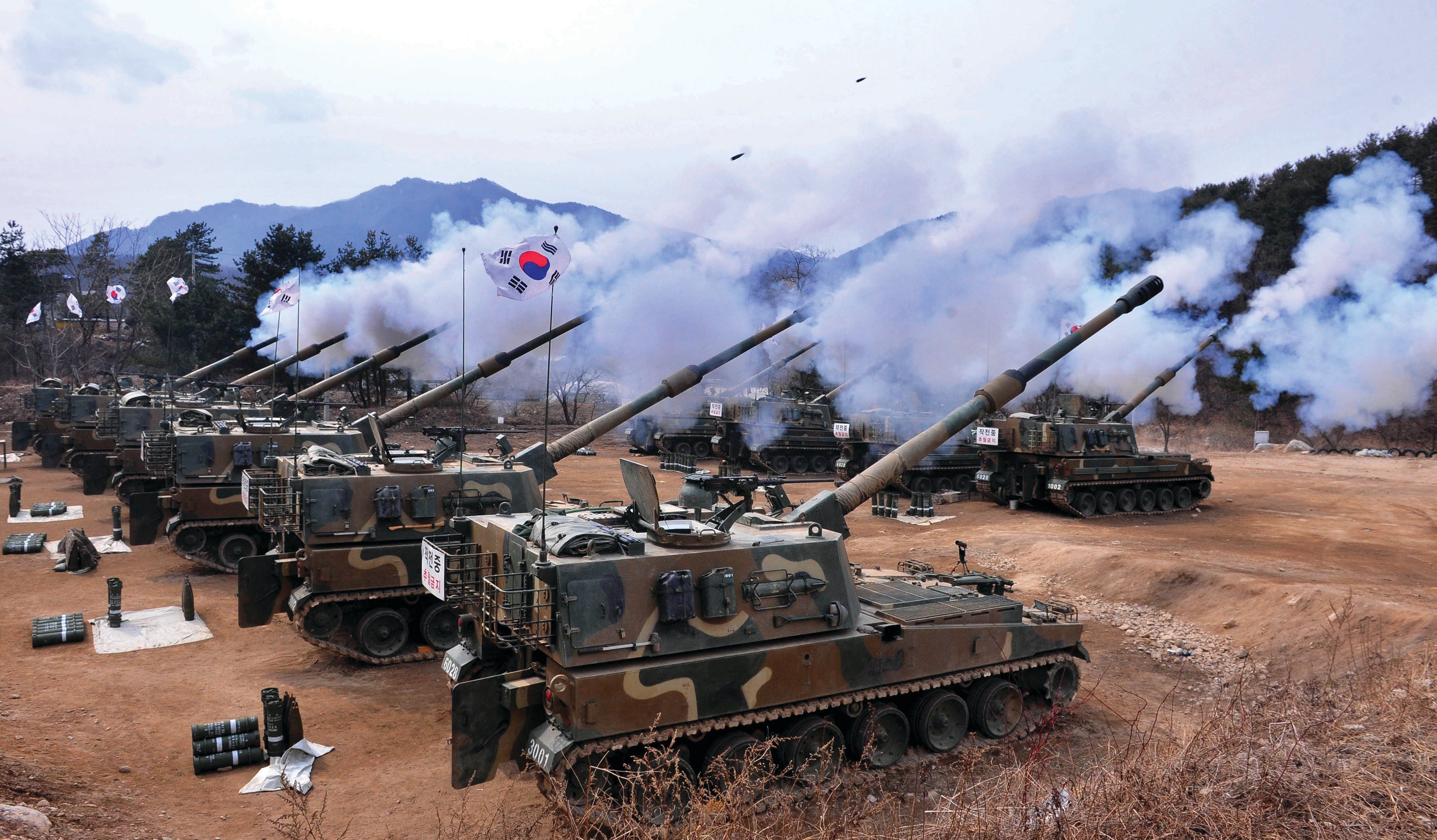
Strategic Burden-Shifting in Northeast Asia: U.S. Analysts Call for Deep Troop Cuts in Korea
A new report released on July 9, 2025 by Defense Priorities, a Washington-based think tank aligned with the "restrainer" school of U.S. foreign policy, proposes a drastic reduction in the U.S. military presence on the Korean Peninsula. Authored by Dan Caldwell and Jennifer Kavanagh, the report recommends slashing U.S. forces in South Korea from the current 28,500 to approximately 10,000 troops. This shift would transfer primary responsibility for the defense of the Republic of Korea (ROK) back to Seoul while allowing the United States to reallocate military assets toward the broader Indo-Pacific theater, with an emphasis on deterring Chinese power projection.
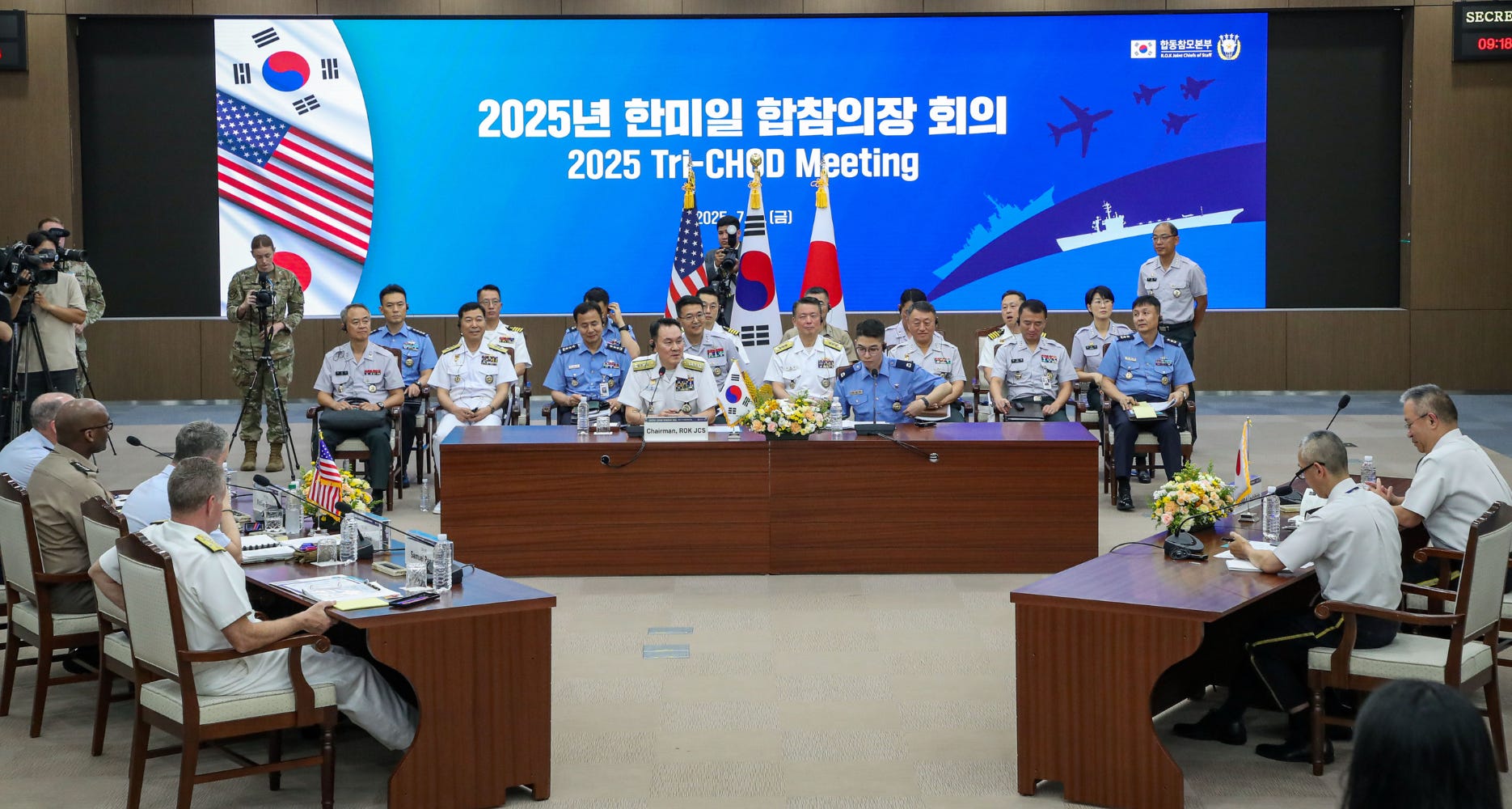
Strategic Deepening in Northeast Asia: U.S., South Korea, and Japan Reinforce Trilateral Defense Cooperation
In a decisive demonstration of alliance cohesion, defense chiefs from the United States, South Korea, and Japan convened in Seoul on 11 July 2025, pledging deeper collaboration to counter North Korea’s mounting threats. During their 22nd Trilateral Chiefs of Defense (Tri‑CHOD) summit, the three nations reaffirmed their unified commitment to North Korea’s “complete denuclearization” and agreed to amplify joint defense coordination across political, strategic, and operational domains. Coinciding with this diplomatic milestone, they launched a trilateral aerial maneuver over international waters near Jeju Island, deploying U.S. B‑52H strategic bombers alongside South Korean KF‑16s and Japanese F‑2 fighters—a powerful symbol of deterrence and alliance synergy.

India Boosts Drone Industry with $234 Million Strategic Incentive
India has approved a $234 million incentive program to strengthen its domestic drone manufacturing sector in response to escalating regional tensions and the growing strategic role of unmanned systems. The initiative, which spans civil and military applications, aims to reduce the country’s reliance on imported components and foster a competitive national ecosystem capable of supporting defense autonomy and industrial resilience.
If China Invaded Taiwan: Who Would Enter the War?
An outright Chinese invasion of Taiwan would be one of the most destabilizing events imaginable for Asia and the entire global order. This scenario raises urgent questions about which countries, if any, would intervene militarily to defend Taiwan. Analysts stress that much would depend on the circumstances – above all, the role of the United States. It is widely assessed that without a U.S. military intervention, Taiwan would likely stand alone, as no other nation is expected to commit forces unilaterally against China. However, if the United States were to intervene, it could trigger a broader coalition response, drawing in regional allies and partners – albeit with varying degrees of reluctance, capability, and risk. In essence, who enters the war (and to what extent) hinges on strategic calculations of deterrence and alliance commitments under fire. This report provides a comprehensive analysis, akin to a think-tank assessment, of the potential military responses by key countries and groups of countries in the event of a Chinese invasion of Taiwan. It evaluates all major hypotheses, from U.S. neutrality to full U.S.-led coalition defense, and considers how each actor’s response might shape the conflict’s course. Throughout, the focus remains on military responses and deterrence scenarios, drawing only on authoritative sources and avoiding speculative or purely journalistic accounts.