

Defence Finance Monitor is an editorial brand of the Stroncature group, for strategic, financial, and industrial analysis, designed to bridge the gap between the financial sector and the defense ecosystem, with an initial focus on Europe and a clear mission: to analyze, select, and promote only those technologies, enterprises, and initiatives that contribute to the strength, resilience, and prosperity of liberal democracies. At a time of growing geopolitical instability and renewed strategic competition, DFM positions itself as a hub of economic intelligence, supporting those who invest, innovate, and produce in alignment with the structural interests of open societies.
Performance Drone Works: From Racing to Military Tech
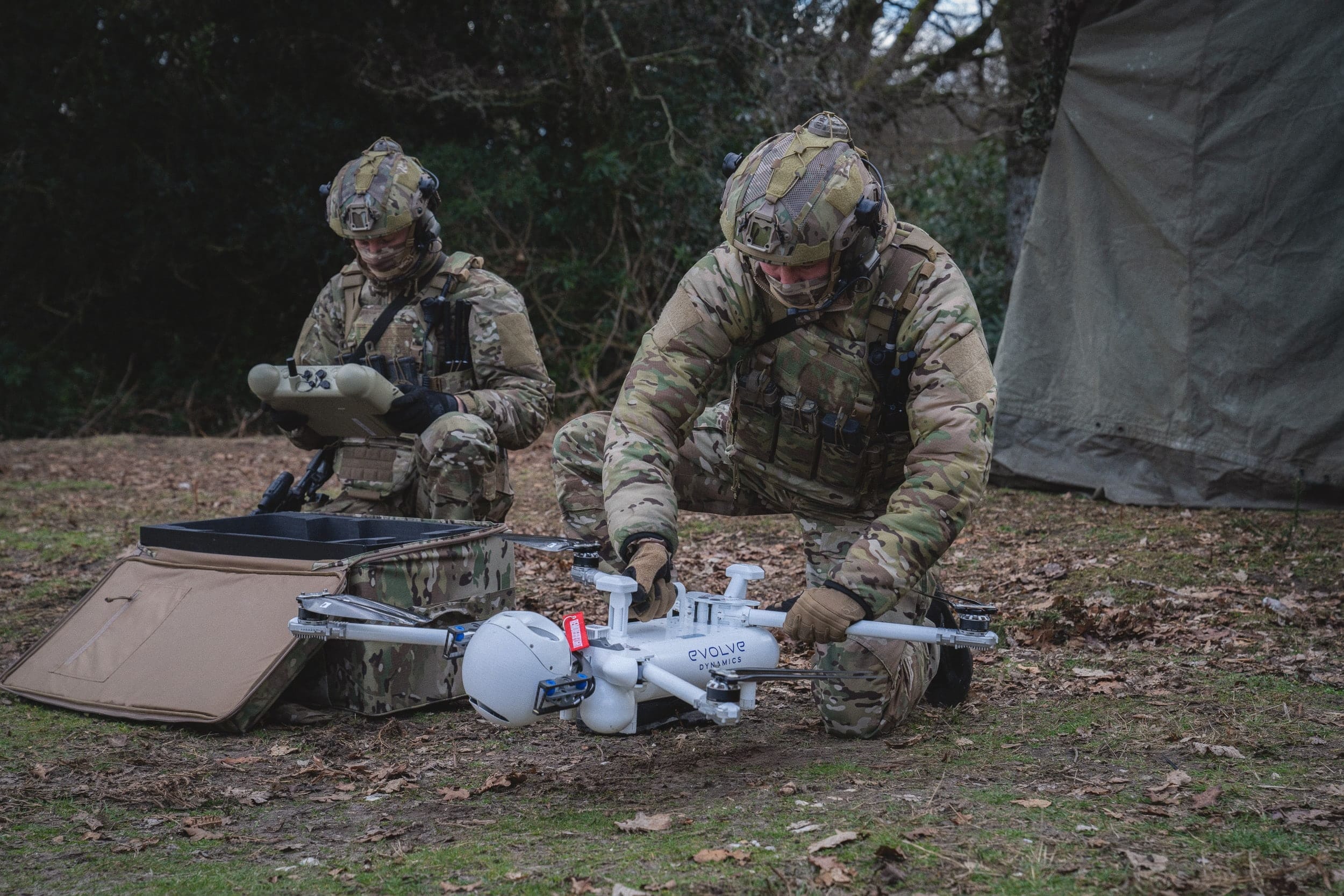
Performance Drone Works (PDW), an Alabama-based startup, has charted an unconventional path from the adrenaline-fueled world of drone racing to becoming a supplier of cutting-edge military drones for the U.S. Army. Founded in 2018 by former drone racing enthusiasts, PDW was born out of the Drone Racing League culture, where engineers honed skills building ultra-fast quadcopters. The company recognized that the same high-performance, agile drone technology used to zip through obstacle courses at 90 mph could have serious battlefield applications. In its early days, PDW focused on tailoring those racing-derived designs to military needs – emphasizing durability, payload capacity, and secure controls. This approach paid off quickly. By 2024, Performance Drone Works had secured its first contracts with the U.S. Department of Defense, leveraging its nimble development style to address gaps in the military’s small unmanned aircraft inventory. Essentially, PDW’s story is one of turning a hobbyist sport into an innovative defence business, illustrating the crossover between consumer tech and modern warfare.
Europe’s Defence Industry Faces Consolidation Challenges
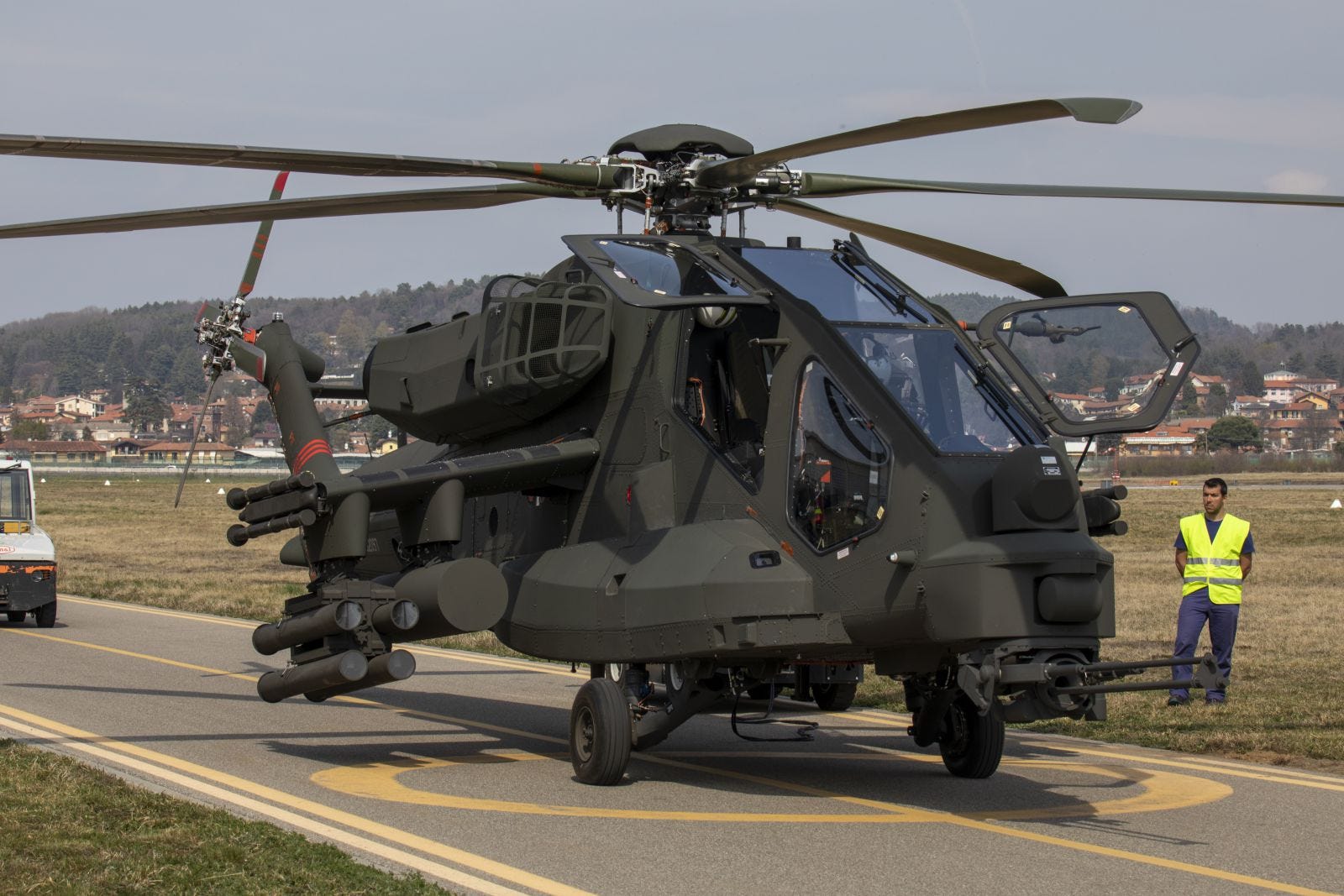
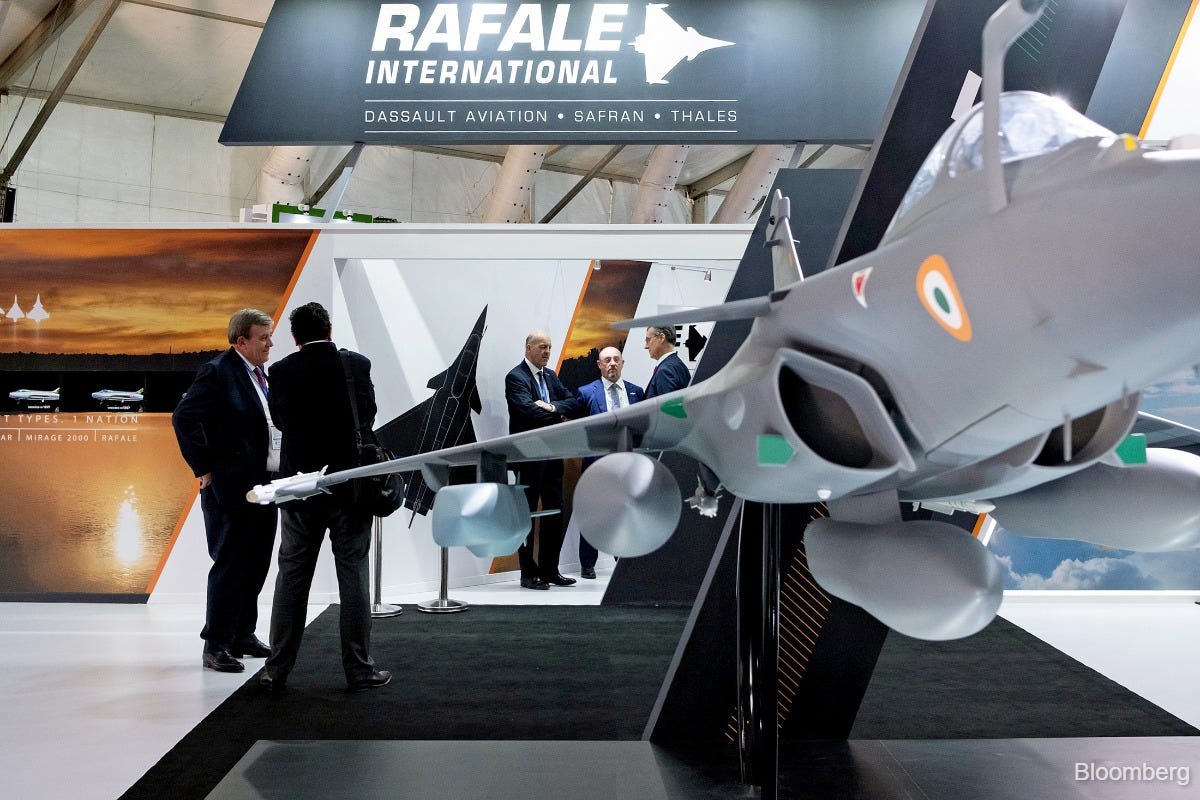
As Europe dramatically increases defence spending, attention is turning to the continent’s fragmented defence industry – and whether it can consolidate to meet new demand and compete globally. Europe’s defence sector remains splintered along national lines, with numerous mid-sized firms and duplicate development programs in different countries. This fragmentation is inefficient and subscale relative to the U.S., where giants like RTX and Lockheed Martin dominate. For example, Europe currently has three separate fighter jet models (Eurofighter Typhoon, France’s Rafale, and Sweden’s Gripen) dividing a market that in the U.S. is served largely by the F-35 alone. European nations each maintain their own tank, warship, and artillery projects in many cases. This landscape poses major consolidation challenges even as governments pour money into new projects. “Europe would struggle to fight a major war with Russia in the short term” under the current fragmented model, warns one analysis, highlighting how duplication and lack of scale hinder output. Indeed, during the Ukraine war, Europe has at times struggled to rapidly supply standard ammunition and equipment because of diverse inventories and limited cross-border production coordination.
ESG and Defence: Reconciling Ethics and Security
The rise in military spending and geopolitical threats is forcing a re-examination of environmental, social, and governance (ESG) principles as they relate to defence investments. For years, many institutional investors excluded defence stocks on ethical grounds, akin to “sin” industries like tobacco. But Russia’s war in Ukraine and NATO’s renewed focus on deterrence have upended the debate. An increasing number of asset owners and advisers now argue that supporting democratic nations’ defence can align with social responsibility – posing the question: can investing in defence be reconciled with ESG values? This complex debate is playing out in boardrooms and policy circles across Europe. The shift is evident in portfolio decisions: Europe’s largest money managers raised their average exposure to aerospace and defence stocks to 1.1% in 2024, up from 0.7% two years prior. As one pension executive put it, “We’ve come to a point where if you rule out defence, you’re the one who has to explain, not the other way around”.
Private Equity Eyes Defence: A New Investment Frontier
After decades on the sidelines, private equity firms are aggressively moving into the defence sector, seeing it as a new frontier for investment amid rising global tensions. The once–shunned arms industry – long avoided by PE over ethical concerns and slow growth – is now viewed as ripe with opportunity as governments ramp up military spending. “As Europe rearms, private equity firms are scouring for investment opportunities in the once-shunned defence sector,” Bloomberg reported, noting that defence assets “once seen as toxic” are now in high demand. The war in Ukraine and mounting geopolitical risks have fundamentally changed investor attitudes. In 2025, private investors poured roughly $790 million into defence deals by spring – approaching the annual total of any year in the past two decades. This surge signals that big private capital sees defence as a growth market, not a pariah.
NATO-EU Integration – Autonomy and Alliance in Tandem
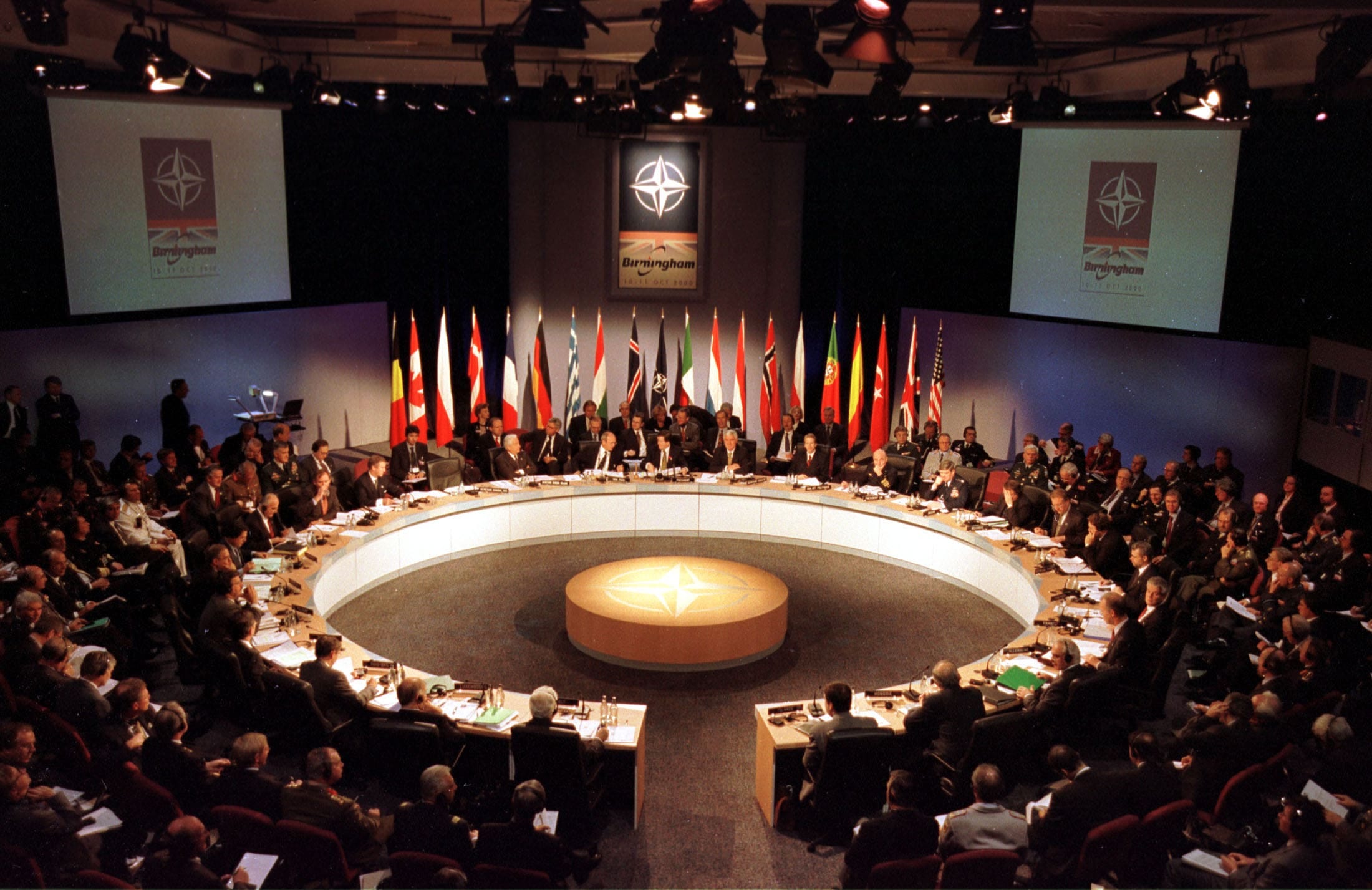
Europe’s pursuit of strategic autonomy goes hand in hand with a profound evolution in NATO-EU integration. Rather than weakening the transatlantic alliance, a more capable and autonomous Europe is increasingly seen as an asset to NATO. In fact, NATO officially recognizes the European Union as a “unique and essential partner”, highlighting unprecedented levels of practical cooperation between the two organizations. This marks a significant shift from past eras when calls for European autonomy raised American suspicions about a decoupling from NATO. Today, there is a broad understanding on both sides of the Atlantic that a stronger European defense component will bolster the overall Western security architecture. NATO’s 2022 Strategic Concept, for instance, welcomed EU defense efforts like Permanent Structured Cooperation (PESCO) and noted they can complement NATO by filling critical capability gaps. The Ukraine war has further solidified this integrative trend: EU nations have coordinated massive military aid through both EU and NATO channels, demonstrating that autonomy and alliance solidarity are mutually reinforcing. The guiding principle emerging is NATO-EU synergy – Europe builds strength to act independently if needed, but ideally deploys those strengths in concert with NATO for collective defense and crisis management.
Integrating ESG Principles into Strategic Autonomy

Europe’s quest for strategic autonomy does not occur in a vacuum separate from its fundamental values. On the contrary, the EU is striving to integrate Environmental, Social, and Governance (ESG) principles into its autonomy agenda, seeking a model of security and economic resilience that is also sustainable and aligned with European ideals. This approach recognizes that autonomy achieved at the expense of climate goals or social standards would be a pyrrhic victory, undermining the very “European way of life” it aims to protect. In practical terms, this means the EU is working to reconcile increased defense spending and industrial policy with its commitments to carbon reduction, ethical governance, and social responsibility. For instance, even as military budgets rise, European institutions and industries are researching how to green the defense sector, reducing fossil fuel reliance of armed forces and cutting emissions from manufacturing of equipment. NATO and the EU alike have acknowledged that climate change is a “threat multiplier” and are developing plans to shrink the military carbon footprint and improve energy efficiency of operations. By driving innovation in areas like sustainable fuels for jets or electrified military vehicles, Europe aims to ensure that bolstering security does not derail its climate objectives. This dual focus reinforces Europe’s distinctive strategy: achieving autonomy in a way that is future-proof and responsible.
Germany’s Defense Spending, Preparedness, and Strategic Autonomy: 2025 and Beyond
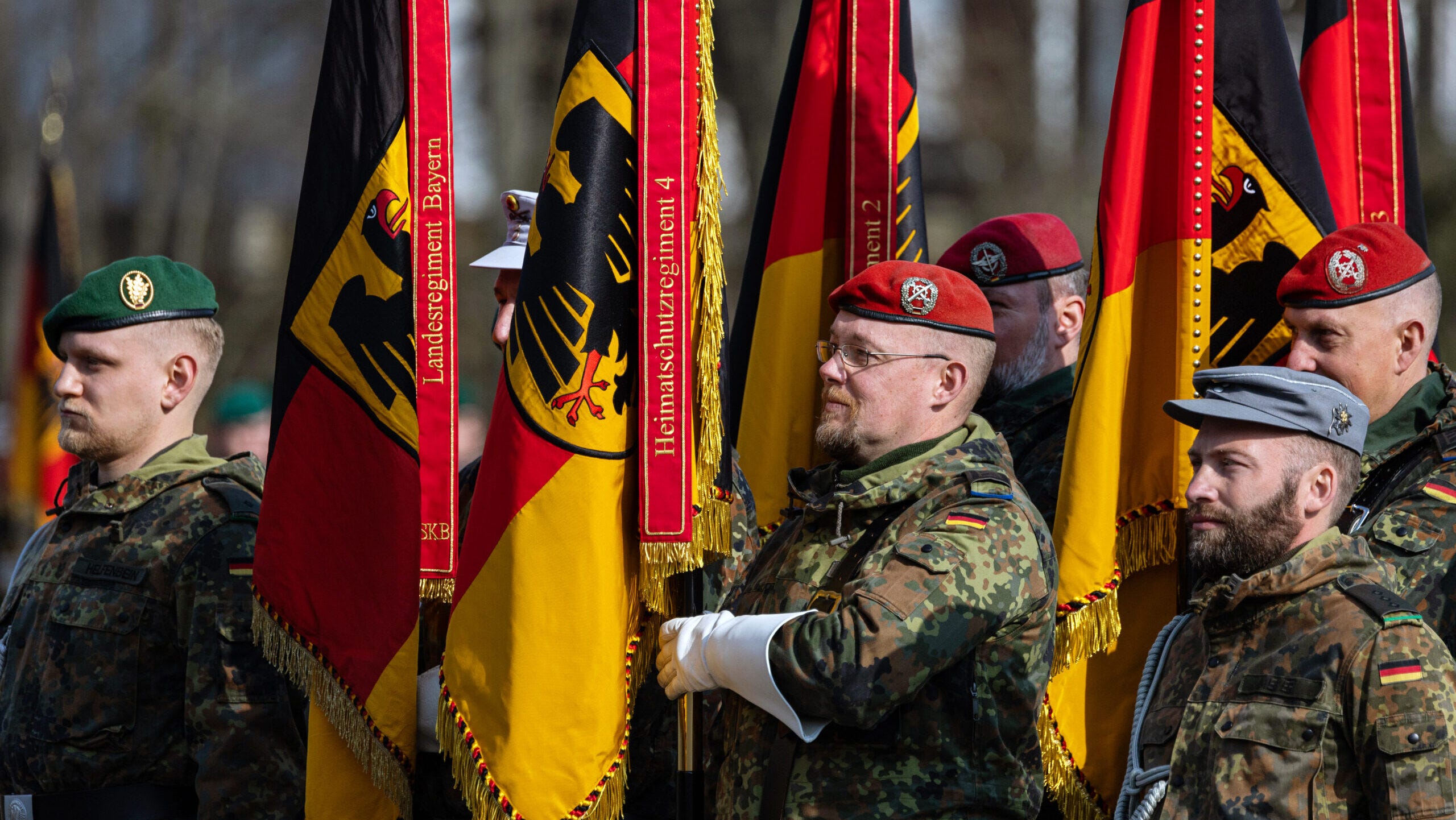
Germany’s defense spending has risen sharply in the wake of Russia’s war in Ukraine, reaching levels unseen since the Cold War. In 2024, Berlin’s military outlays surged to about $88.5 billion, roughly €80 billion, making Germany the world’s fourth-largest military spender and the highest in Europe since reunification. This amounted to approximately 1.9% of Germany’s GDP – a significant jump from 1.6% in 2023, though still just shy of NATO’s longstanding 2% target. By 2025 the trend continues upward: the regular defense budget is set around €60–63 billion (up from €52 billion in 2024) with additional funds coming from a one-time €100 billion special arms modernization fund. When counting these special fund expenditures, Germany is effectively approaching the 2% of GDP mark in 2025. Indeed, the infusion of extra funds has been crucial – without it, Germany struggled to meet the 2% goal in 2024 due to slow procurement disbursements. The recent spending spike – a 28% increase from 2023 – reflects a historic policy shift: after years of underspending, Germany is now financially bolstering its long-neglected Bundeswehr in line with the “Zeitenwende” (turning point) doctrine. Yet, even at nearly 2% of GDP, German defense investment remains modest compared to some front-line NATO states and below what many analysts deem necessary for the threats ahead.