

Defence Finance Monitor is an independent analysis and intelligence platform dedicated to examining the political, strategic, military, and technological dimensions of European defence transformation, with a focus on their relevance to investment decision-making. The objective is not to provide financial advice or equity research, but to clarify how the evolving priorities of liberal democracies—such as deterrence, strategic autonomy, and interoperability—translate into concrete technological demands and industrial programmes.
Each publication offers a structured and in-depth assessment grounded in primary sources, official documents, and sectoral data. The purpose is to assist investors, analysts, and institutional actors in identifying which companies, systems, and technologies are functionally aligned with long-term strategic needs, thereby offering insight into the emerging industrial architecture that will underpin Europe’s defence posture over the next decade.
Defence Industry Trends
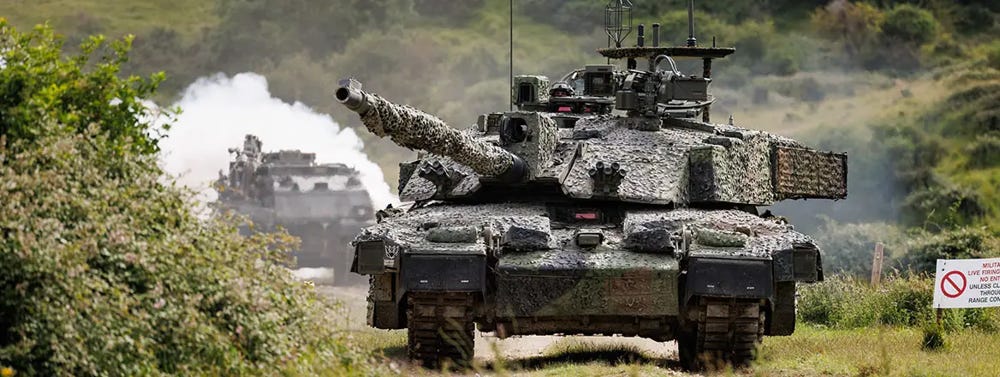
Main Battle Tanks and AFVs in the Future of European Land Forces
This analysis highlights the persistent strategic relevance of main battle tanks (MBTs) and armoured fighting vehicles (AFVs) in the evolution of European land forces, particularly in the context of high-intensity warfare scenarios. Drawing from operational lessons in Ukraine, it confirms that armoured forces remain central to deterrence and combined-arms operations, while also exposing vulnerabilities of legacy systems against modern threats such as loitering munitions, anti-tank guided missiles, and persistent surveillance. To address these challenges, European armed forces are accelerating the integration of MBTs with emerging technologies including active protection systems, AI-enabled C4ISR networks, and unmanned platforms, transforming tanks into digitally connected battlefield nodes. Modernisation programs are underway across Europe, with platforms like the Leopard 2A8, Challenger 3, and the MGCS poised to reshape the future of armoured capability.
For companies and investors, this transition offers significant industrial and financial opportunities. As defence spending in Europe reaches levels unseen since the 1950s, demand is growing not only for prime contractors producing vehicles but also for specialized suppliers in areas such as protection systems, electronics, advanced materials, sensor fusion, and logistics infrastructure. Moreover, the shift toward interoperability, digital architecture, and modular upgrades aligns with scalable, exportable solutions across NATO markets. Policymakers are moving to coordinate procurement and co-finance production, offering a more predictable framework for investment. The next decade will be decisive for the consolidation of Europe’s armoured industrial base, presenting a rare window for strategic positioning in a sector undergoing technological transformation and long-term rearmament.
Emerging Defence Technologies
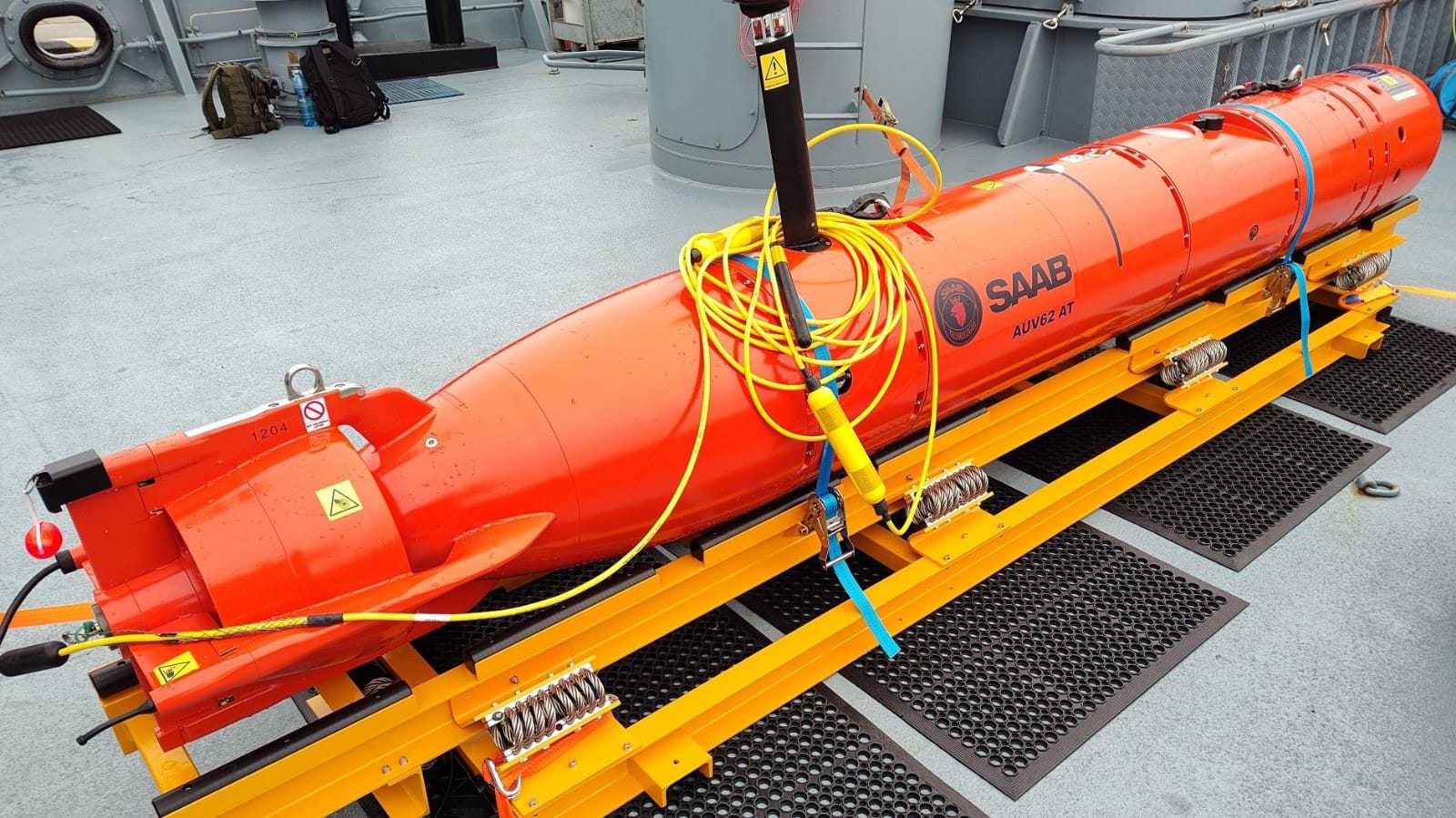
Autonomous Marine Robotics for ISR and Mine Warfare
Platform Developments: Modern AUVs have grown in scale and endurance. European navies are now fielding large and even extra-large UUVs to extend mission range. For example, the UK’s “Talisman” AUV (2.75 m diameter, 8.85 m length) offers ~2,500 nm range, and Norway’s HUGIN-1000 (1000 m depth, long-range) exemplifies the trend. A recent review notes that European states “started to focus on the establishment of large, ultra-large UUVs”. These bigger platforms carry heavy sensor suites or extended power systems, making them suitable for seabed mapping, ASW patrol, or long-endurance ISR. Smaller AUVs (1–3 m) remain common for tactical tasks like mine reconnaissance; e.g. France’s Exail A18-M and Saab’s AUV62-M are optimized for MCM. Surface unmanned platforms (USVs) are also maturing: modular USVs now conduct ocean survey and can serve as mother-ships to launch/recover AUVs or naval sensors. (For instance, UK-based Sea-Kit’s 12 m USV X-class has been certified for offshore survey and is being explored for defense demonstration.)
Company Profiles & Industrial Intelligence
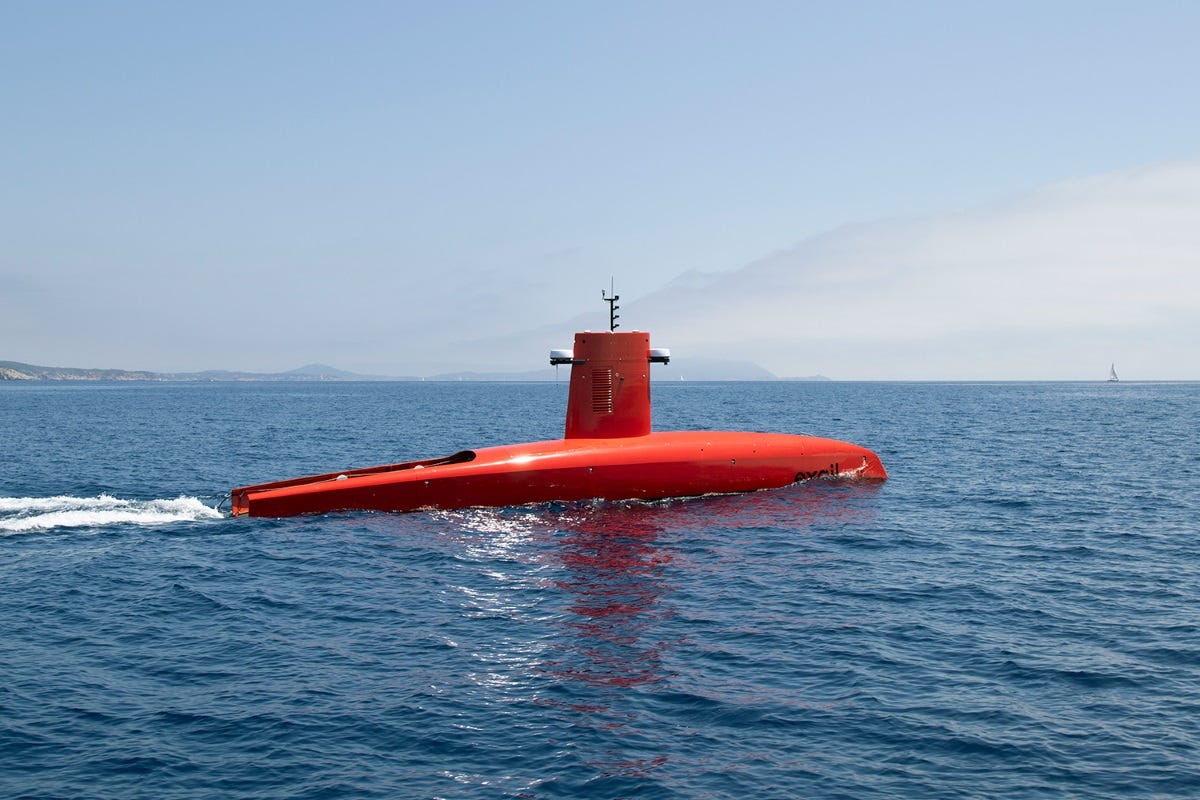
Exail Technologies: Industrial and Strategic Profile
Exail Technologies is a French high-tech industrial group formed in 2022 by merging ECA Group and iXblue. With over 2,000 employees worldwide and operations in 80+ countries, it combines ECA’s maritime robotics expertise (USVs, AUVs, ROVs) and iXblue’s navigation, photonics and inertial technologies. The group designs and manufactures the full technology stack – from components and sensors to complete systems – in-house. Its major industrial sites include Exail Robotics in La Garde (Toulon), which “designs and produces automated systems such as surface drones (USV), autonomous underwater drones (AUV) and ground robots (UGV)”, and a naval yard in La Ciotat where the DriX USVs are built. This vertical integration and French industrial footprint underpins Exail’s capabilities across robotics, maritime, navigation, aerospace and photonics.