

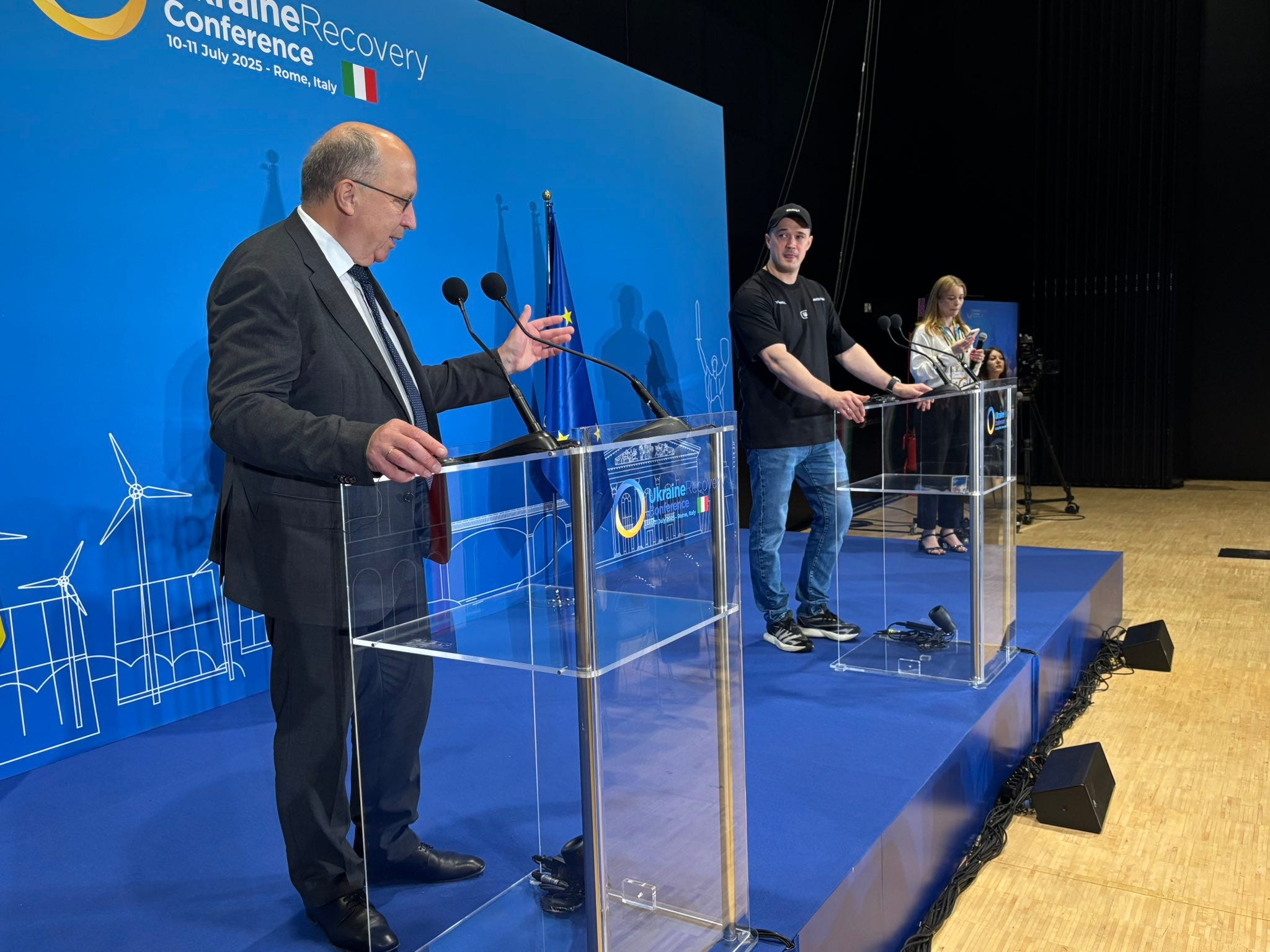
The European Commission has formally launched BraveTech EU, a new initiative aimed at integrating Ukraine’s wartime technological advancements into a broader European defense innovation strategy. Developed in partnership with the Ukrainian government, BraveTech EU brings together existing European frameworks—the European Defence Fund (EDF), the EU Defence Innovation Scheme (EUDIS), and Ukraine’s BRAVE1 platform—into a single structure. The objective is to foster rapid co-development, testing, and deployment of battlefield-proven defense technologies, while facilitating knowledge exchange and aligning regulatory and procurement practices across both jurisdictions.
The initiative will unfold in two phases. The initial “seed” phase will focus on matchmaking Ukrainian and EU companies, supporting joint R&D, and organizing defense-oriented hackathons. These activities aim to align innovation priorities and stimulate collaboration between startups, SMEs, and larger contractors. In the “scale-up” phase, Ukrainian firms will gain access to the EUDIS Business Accelerator, as well as grants and equity instruments provided through the European Defence Industrial Programme (EDIP) and the Ukraine Support Instrument (USI). Ukrainian startups will be fully integrated into the European defense innovation ecosystem and positioned to contribute to broader EU strategic goals.
BraveTech EU represents a structural innovation in EU defense policy, responding to Ukraine’s exponential growth in wartime production and technology development. Between 2022 and 2024, Ukraine’s defense tech sector expanded from €1 billion to €35 billion in value, fueled by frontline innovation and operational necessity. The initiative will help channel this momentum into European systems through joint ventures, technology transfers, and synchronized development timelines. The European Union Defence Innovation Office (EUDIO), based in Kyiv, will serve as the central coordination node for the partnership.
Commissioner for Defence and Space, Andrius Kubilius, described BraveTech EU as a strategic shift in EU–Ukraine defense integration. He emphasized that Ukraine’s dynamic defense industry offers the EU a rare opportunity to absorb battle-tested innovations into its own industrial base. His Ukrainian counterpart, Deputy Prime Minister Mykhailo Fedorov, highlighted the symbolic and strategic value of the initiative, noting that “Ukraine’s wartime innovation is Europe’s new defense paradigm.” He stressed that the cooperation will not only help counter immediate threats but also establish new standards of resilience through shared technological development.
Funding for BraveTech EU will be jointly provided by the EU and Ukraine, with €50 million committed from each side during the initial phase. These investments will support activities ranging from prototype development to procurement integration. For Ukraine, the initiative offers a stable pathway into European supply chains and regulatory frameworks. For the EU, it provides a direct pipeline to the most active and innovative defense technology ecosystem in Europe today. As war continues to reshape the global defense landscape, BraveTech EU signals a deliberate move by Europe to match speed with scale and to transform alliance-building into operational capability.