

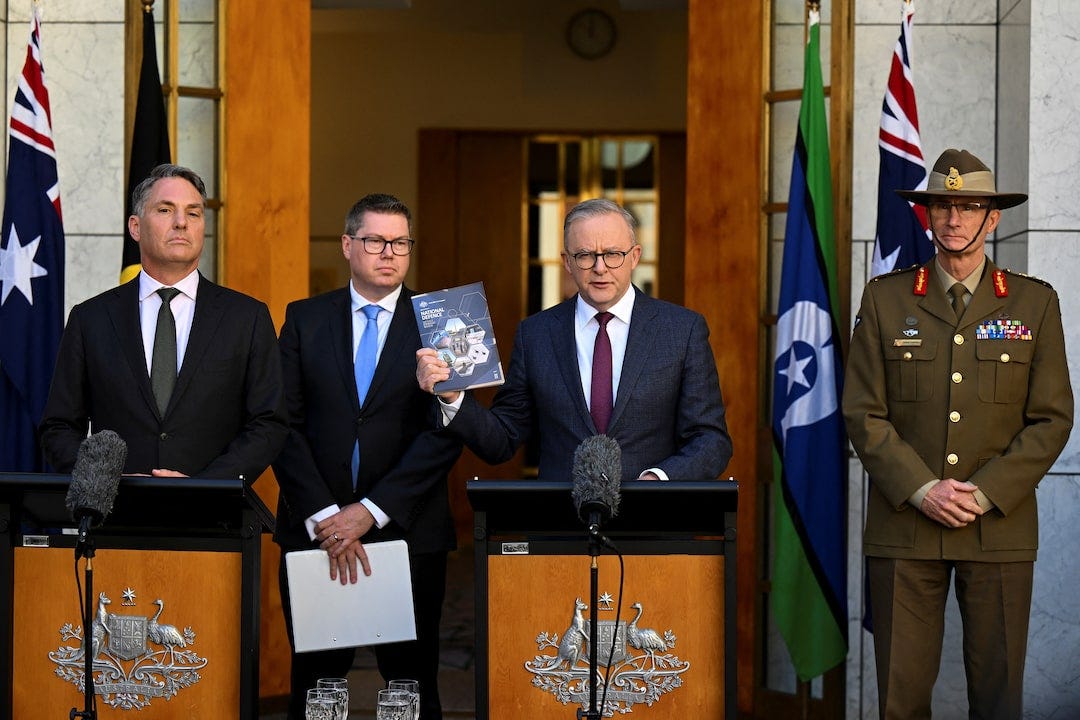
In a shifting global security environment, industrial resilience and domestic production capacity have become strategic imperatives for modern defence planning. Australia, increasingly conscious of its geostrategic position in the Indo-Pacific, is investing in its sovereign defence industrial base to ensure long-term capability and supply chain security. With a particular focus on manufacturing, innovation, and export readiness, the Albanese Government is implementing structural measures to scale up production, modernise infrastructure, and strengthen defence-related employment across the nation. This effort reflects a broader policy of enhancing national autonomy in support of military readiness and alliance interoperability.
As reported by the Australian Department of Defence on July 25, 2025, the Albanese Government has awarded over $17.3 million in new funding across 40 defence projects under the $170 million Defence Industry Development Grants (DIDG) program. The initiative supports manufacturing upgrades, capital equipment procurement, workforce training, and cybersecurity reinforcement, all tailored to enhance Australia’s sovereign capability. The grants are part of a competitive matching system, offering up to 50% co-financing for eligible defence suppliers and SMEs. Six of the funded projects are linked to the AUKUS nuclear-powered submarine program, underlining Canberra’s commitment to high-end deterrence platforms and strategic partnerships.
The projects span key domains such as guided weapons, naval systems, autonomous platforms, satellite technologies, and ISR capabilities. Companies like ANCA Engineering, Veem, and Fleet Space Technologies are acquiring advanced CNC machinery, 3D printing systems, and satellite assembly equipment to meet defence-grade manufacturing requirements. Others, such as HIFraser and Griffin Marine Services, are scaling production of critical components for maritime and undersea warfare. These targeted investments align with the government's goal of modernising national defence supply chains, securing industrial inputs, and enabling faster integration of new technologies into defence programs.
Alongside hardware development, the DIDG program dedicates resources to workforce upskilling and technical certification. Funding has been allocated to firms like Halliday Engineering, A.W. Bell, and Rubicon Associates to provide specialised training in project management, metrology, and design software for naval platforms. This approach ensures that technological investment is matched with human capital development, maintaining quality and compliance across the defence ecosystem. Additionally, several firms—such as Silentium Defence and Phasor Innovation—have received support to bolster cybersecurity and physical security frameworks, essential for compliance with defence information and data governance requirements.
A distinct feature of the initiative is its export focus. Grants have been awarded to companies like Currawong Engineering, Tectonica, and Mack Valves to improve production of dual-use systems and access foreign markets, particularly in the U.S. and Europe. The drive to certify Australian suppliers to international defence standards, such as AS9100D, reflects Canberra’s strategy to position itself as a competitive and reliable partner in the global defence value chain. At the same time, the investments strengthen Australia’s ability to retain domestic IP, sustain critical know-how, and hedge against supply disruptions in the event of regional contingencies.
In summary, the Australian Government’s expanded grant program represents a deliberate effort to align national industrial policy with long-term defence strategy. It reinforces the foundations of a modern, agile, and self-reliant military production base capable of supporting future ADF operations and alliance commitments. For defence planners, industry leaders, and international partners, the initiative signals Australia’s intent to evolve from a system integrator into a platform contributor—capable of not only procuring, but producing and exporting, the next generation of defence technologies from the Indo-Pacific.