

The AUKUS agreement was conceived as a landmark trilateral initiative to redefine strategic balance in the Indo-Pacific. Announced in 2021, its central pillar—providing Australia with nuclear-powered submarines—aimed to elevate Canberra to the status of a leading maritime power in the region, countering the expanding presence of China’s navy. The plan involved a phased acquisition: short-term procurement of Virginia-class submarines from the United States, followed by the development of a new AUKUS-class platform jointly with the United Kingdom. Yet, as deadlines approach and budgetary commitments mount, structural limitations in U.S. industrial capacity are casting doubt on the feasibility of the entire programme. Australia’s strategic calculus, based on confidence in allied delivery capabilities, is now entering a phase of growing uncertainty.
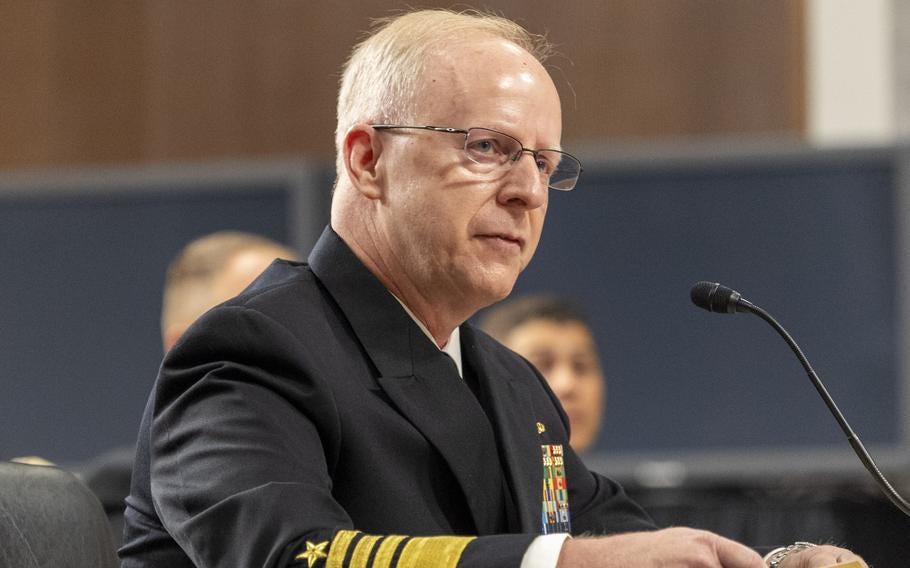
As reported by The Guardian on July 28, 2025, Admiral Daryl Caudle, nominee for Chief of Naval Operations, told the U.S. Senate Armed Services Committee that the current shipbuilding rate is insufficient to meet even domestic demand. To fulfil its own requirements, the U.S. Navy needs to produce 2.0 Virginia-class submarines per year; to meet AUKUS commitments, this figure must rise to 2.3. Presently, the U.S. is producing just 1.13 units annually. Caudle was unequivocal: without a 100% increase in production, the U.S. will not be able to deliver any submarines to Australia. His remarks underscore the structural limits of the American naval-industrial base, despite substantial federal investment and sustained allied contributions—Canberra has already paid $1.6 billion to support U.S. shipyards, with total commitments rising to $4.7 billion.
The implications for Australia are profound. Under current timelines, Canberra is scheduled to receive between three and five U.S.-built submarines from 2032 onward, before fielding its own AUKUS-class vessel in the early 2040s. However, the delays in U.S. production threaten a capability gap as the ageing Collins-class fleet nears obsolescence. Malcolm Turnbull, former Australian prime minister, has argued that there is a “very, very high” likelihood that Virginia-class submarines will never be delivered to Australia. He further criticised the Australian government and parliament for failing to interrogate the operational risks associated with the deal. Unlike the detailed testimony provided to the U.S. Congress, Turnbull noted, Australian institutions remain inadequately informed about the strategic and industrial feasibility of the programme.
The root of the crisis lies in systemic bottlenecks within U.S. shipbuilding. Despite a $5.7 billion injection aimed at boosting Columbia- and Virginia-class submarine output, a joint statement from three U.S. rear admirals earlier this year confirmed that the necessary ramp-up has not occurred. The challenge is not merely one of funding, but of workforce, productivity, and infrastructure. Admiral Caudle stressed that marginal gains or isolated process improvements will not suffice; what is needed is a “transformational improvement” across the industrial base. This includes “creativity, ingenuity, and outsourcing improvements”—all within an increasingly politicised and time-constrained environment. The underlying message is clear: the delivery promises of AUKUS cannot be guaranteed without a dramatic and as yet unrealised shift in American shipbuilding capacity.
Despite these concerns, Australian Defence Minister Richard Marles remains optimistic. During a press briefing in Sydney, he stated that “work on AUKUS continues apace” and reaffirmed confidence in U.S. efforts to raise production rates. He highlighted the presence of 120 Australian workers at Pearl Harbor contributing to Virginia-class sustainment and insisted that payments to the U.S. industrial base would continue. However, this optimism contrasts with growing scepticism in policy and expert circles, where the absence of a “Plan B” is seen as a critical strategic oversight. Critics argue that Australia has placed all its deterrence and maritime defence hopes in a programme increasingly vulnerable to supply chain and political shocks outside Canberra’s control.
The broader strategic consequences of a delayed or unfulfilled AUKUS submarine programme are significant. For Australia, the absence of a credible undersea deterrent undermines its regional posture at a time when tensions over Taiwan, the South China Sea, and critical maritime chokepoints are rising. For the United States, failure to deliver on AUKUS would damage its reliability as a security guarantor and weaken allied trust in integrated defence initiatives. For China, it could be interpreted as evidence of the West’s structural incapacity to match its pace in maritime power projection. Without timely adjustments—such as interim diesel-electric platforms, industrial partnerships beyond the U.S., or revised sequencing—the risk is not just delay, but strategic erosion. The time for political reassurance has passed; operational contingency planning is now imperative.