

The consolidation of advanced space and defense technology companies reflects a broader realignment in the global security industrial base. As strategic competition intensifies in space and across high-technology domains, the control and integration of specialist capabilities—particularly in sensing, data processing, and command and control—are becoming decisive factors for both operational advantage and market positioning. Transactions in this sector are rarely simple financial manoeuvres; they are also strategic reallocations of technology, talent, and industrial capacity to align with evolving mission requirements. The transfer of a niche, high-performance provider from one industrial ecosystem to another can have implications for capability development timelines, alliance interoperability, and the competitive balance in critical technology markets. In this environment, private equity and corporate acquisitions serve as both catalysts for innovation and as mechanisms for concentrating intellectual property and production know-how within strategically oriented platforms.
According to Business Wire (12 August 2025), ATL Partners has completed the sale of Geost, LLC—a subsidiary of its portfolio company LightRidge Solutions—to Rocket Lab USA, Inc., a wholly-owned subsidiary of Rocket Lab Corporation (Nasdaq: RKLB). Geost is recognised as a leading provider of electro-optical and infrared (EO/IR) sensing systems for national security space missions, with applications in missile warning, missile defense, and space domain awareness. Acquired by ATL in 2021, Geost expanded its technical capabilities, deepened customer relationships, and scaled its engineering and manufacturing capacity under ATL’s ownership. The sale marks a strategic exit for ATL, which is simultaneously rebranding LightRidge’s remaining assets—Trident Systems and Ophir Corporation—into a unified Trident Solutions platform focused on mission-critical defense electronics, national security space, and advanced airborne systems.
The strategic logic of Rocket Lab’s acquisition lies in the vertical integration of high-precision optical sensing into its existing space systems and services portfolio. By incorporating Geost’s payload expertise, Rocket Lab enhances its ability to deliver complete, end-to-end solutions for government and defense customers, bridging satellite bus design, launch services, and specialised mission payloads. This acquisition also positions Rocket Lab to compete more directly in programmes that require sovereign or trusted supplier status in EO/IR technologies, a critical consideration for national security customers. From ATL’s perspective, the divestiture allows capital and management attention to be focused on scaling Trident Solutions into a multi-domain electronics platform, capable of delivering spaceflight units, atmospheric and airborne sensors, and command-and-control solutions across orbits and operational theatres.
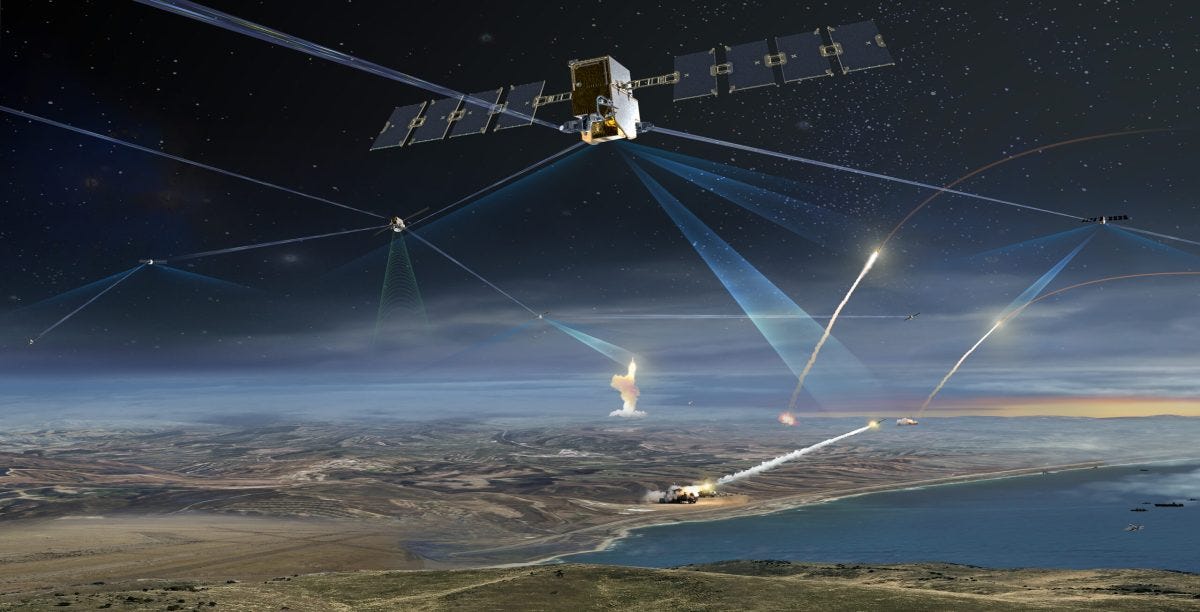
Geost’s track record illustrates the increasing convergence between missile defense and space situational awareness requirements. Its EO/IR systems support persistent monitoring, high-fidelity target discrimination, and rapid cueing of defensive systems—functions that are increasingly in demand as hypersonic threats and orbital congestion complicate traditional early warning architectures. The company’s role in next-generation missile warning and space tracking programmes highlights how niche technology providers can exert disproportionate strategic influence. Under Rocket Lab, Geost’s technologies can be more tightly integrated into responsive space architectures, leveraging Rocket Lab’s rapid launch cadence and small satellite platforms to deploy distributed sensing constellations with reduced timelines and cost profiles compared to traditional programmes of record.
For the broader defense industrial landscape, this transaction reflects two intertwined trends: the specialisation and scaling of mission-critical technology providers, and the use of platform companies like Trident Solutions to aggregate complementary capabilities under cohesive management structures. By retaining Trident Systems and Ophir Corporation, ATL is preserving and expanding a base of expertise in defence electronics that can address airborne, maritime, and spaceborne mission sets. At the same time, Rocket Lab’s integration of Geost underscores the strategic value of fusing payload innovation with vertically controlled space mission delivery. As geopolitical competition accelerates investment in missile defense and space domain awareness, such corporate moves are shaping not only industrial market shares but also the pace and scope of technological advantage in the most contested operational domains of the coming decades.