

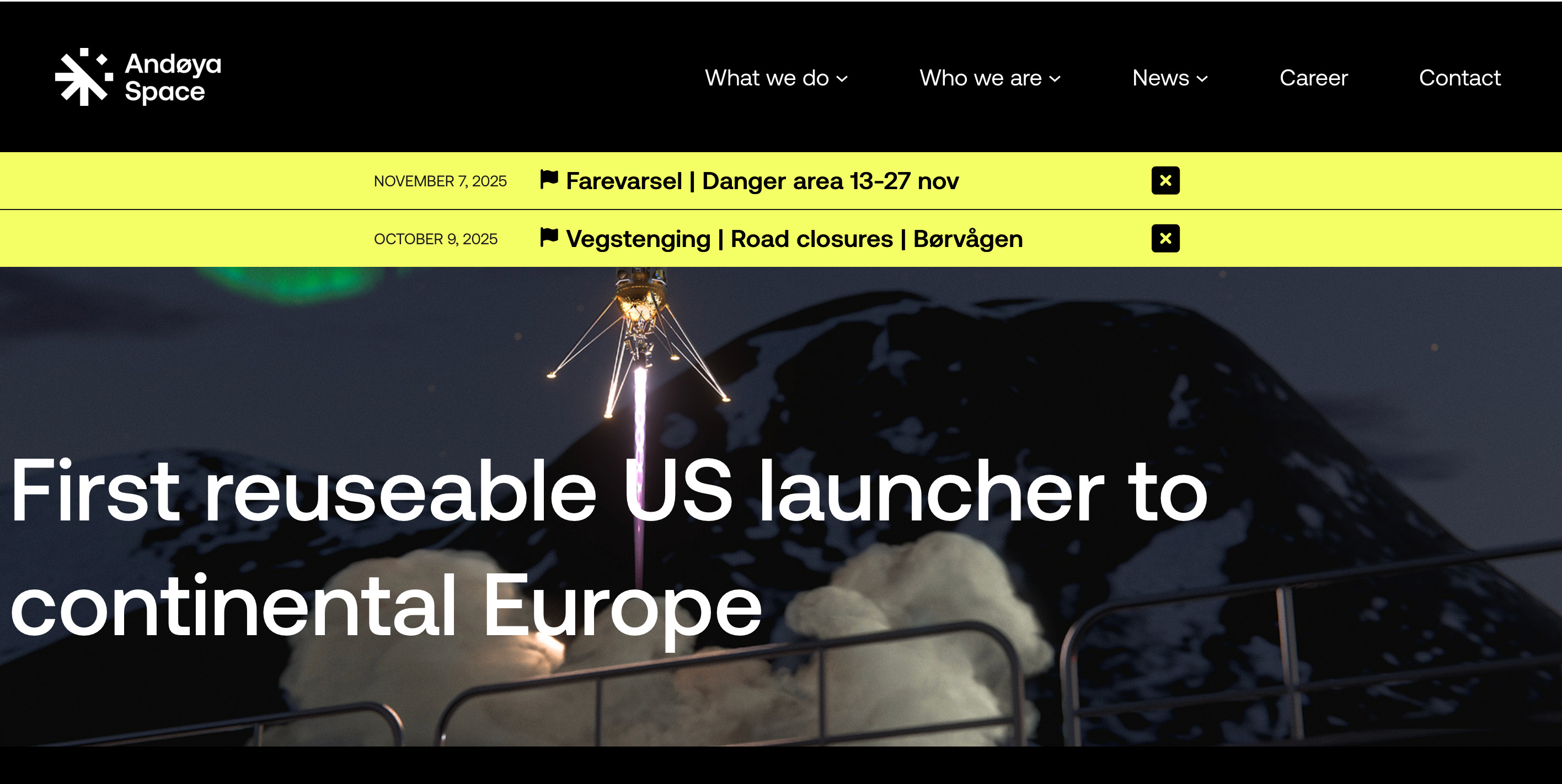
On a remote Norwegian island above the Arctic Circle, an unassuming space center has quietly become a linchpin in Europe’s quest for strategic autonomy. Andøya Space, headquartered on Andøya in Northern Norway, has evolved from a Cold War-era rocket range into a multifaceted aerospace company with global reach. For over six decades, it has enabled scientists and engineers to probe the upper atmosphere and test cutting-edge technologies. Today, this once purely scientific outpost is transforming into a full-fledged spaceport offering orbital launch services from European soil. Its unique polar location and vast over-ocean range have attracted partnerships with Europe’s defense giants and emerging launch startups alike. As geopolitical tensions and great-power competition sharpen Europe’s focus on self-reliance, Andøya Space is leveraging its heritage and geography to position itself at the heart of Europe’s space and security ambitions. With dual civilian and military applications, it exemplifies how a regional facility can assume outsized importance for continental defense, deterrence, and technological sovereignty. The following analysis explores Andøya Space’s role in strengthening European strategic autonomy, NATO interoperability, and the reduction of dependencies on non-allied suppliers, all through the lens of its capabilities in space launch and advanced test services.